


How to Strip Paint from Wood Furniture: A Complete UK DIY Guide
What if the only thing standing between you and a stunning oak centrepiece is a single afternoon of work? The most effective method for how to strip paint from wood furniture involves applying a non-DCM chemical stripper and waiting for the paint to bubble. Use a stiff-bladed scraper to lift the softened layers before neutralising the wood with white spirit or water. For flat surfaces with heavy buildup, an electric heat gun often works faster and more cost-effectively than chemicals.
It's natural to worry about damaging delicate wood or making a massive mess in your home. Understanding how to strip paint from wood furniture allows you to restore character to your home without the high cost of buying new pieces. This guide provides the essential steps for how to strip paint from wood furniture successfully while complying with current UK safety regulations. You'll gain the knowledge to select the right gear and the confidence to achieve a professional finish on any project.
Key Takeaways
- Identify the most effective removal method for your project, from using heat guns on flat surfaces to applying chemical strippers on intricate details.
- Master the professional techniques for how to strip paint from wood furniture without damaging the delicate grain or leaving a mess.
- Find out which essential tools, such as adjustable heat guns and ergonomic scrapers, are required to make the stripping process faster and more efficient.
- Learn how to safely use modern, UK-compliant chemical strippers and heat tools to prepare your wood for a flawless new finish.
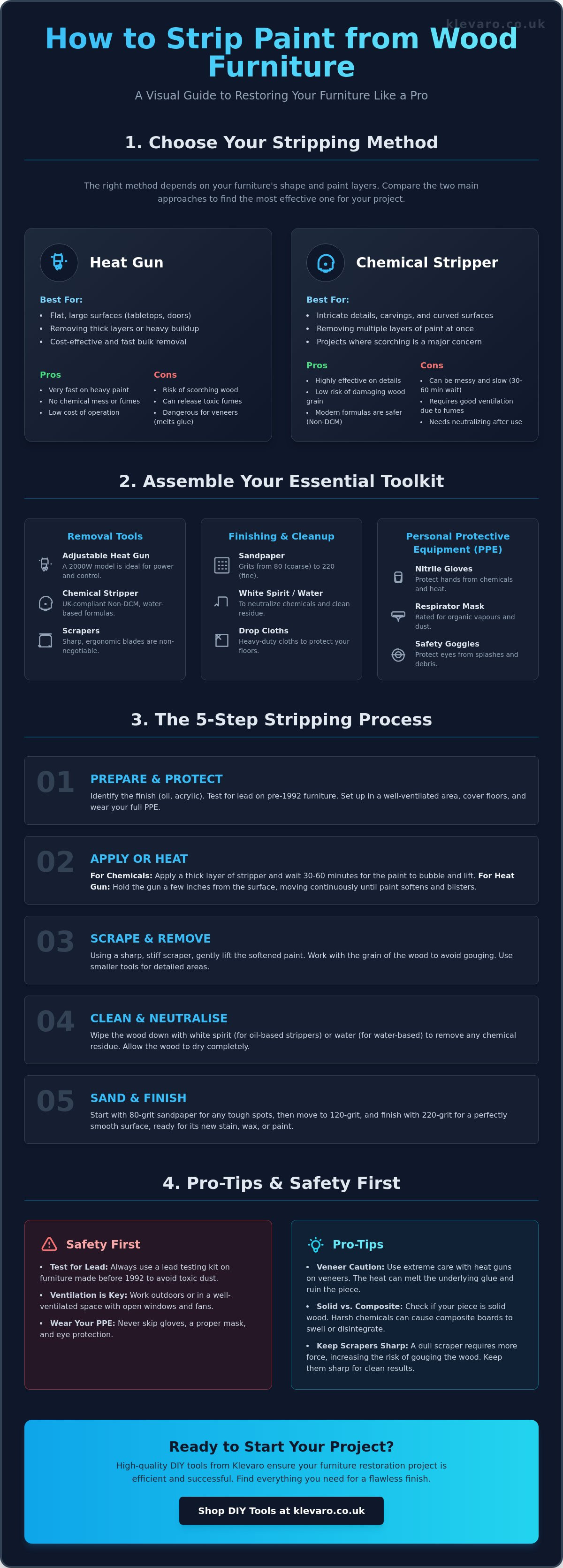
The most effective way to strip paint from wood furniture involves using a chemical stripper or a heat gun for thick layers, followed by fine sanding.
The most effective approach for how to strip paint from wood furniture is to use a chemical stripper for intricate details and a heat gun for flat surfaces. This combination allows you to remove decades of paint without damaging the underlying wood grain. Always finish the process with fine-grit sanding to create a smooth surface ready for staining or waxing.
Choosing the right chemical stripper is essential since the UK restricted Dichloromethane (DCM) for consumer use. Modern water-based or bio-based alternatives are now the standard for home restoration projects because they are safer for indoor use. These products typically require a dwell time of 30 to 60 minutes to penetrate multiple layers of old gloss effectively.
Heat guns are incredibly efficient for bulk removal on wide panels like tabletops or wardrobe doors. A standard 2000W heat gun provides the necessary power to soften heavy oil-based paint in seconds for easy scraping. Using this tool is a popular alternative for how to strip paint from wood furniture when you want to avoid liquid chemicals. You can explore our range of DIY tools to find high-quality heat tools and ergonomic scrapers.
Identifying the type of finish on your furniture
Examine your furniture to determine if you are dealing with oil-based gloss, modern acrylic, or older lead-based paints. Gloss paint typically flakes in large chips, while acrylic remains more flexible and gummy when heated. Be extremely cautious with wood veneers, as excessive heat can melt the underlying glue and cause the decorative surface to peel away permanently.
Check the edges of drawers or the underside of the piece to confirm if it is solid wood or a composite material. This prevents permanent damage from applying harsh chemicals to porous manufactured boards that might swell or disintegrate. This identification step is crucial for choosing the safest removal method for your specific piece.
Safety protocols for UK furniture restoration
Safety is the priority when working with old finishes. Use a lead testing kit for any piece with an unknown history to avoid creating toxic dust during the restoration process. UK regulations on lead paint changed significantly in 1992, so older items carry much higher risks of contamination.
Ensure your workspace is well-ventilated by opening windows or working outdoors whenever possible. Wear appropriate PPE, including nitrile gloves and a mask rated for organic vapours or fine dust particles. It's also wise to use heavy-duty drop cloths to protect your flooring from chemical spills and hot paint scrapings.
Essential tools for stripping paint include chemical strippers, scrapers, heat guns, and high-quality sanding equipment.
To successfully strip paint from wood furniture, you need a high-quality heat gun with adjustable settings and sharp, ergonomic scrapers. Non-toxic chemical strippers like Citristrip are preferred for indoor use to minimise fumes. You also require a range of sandpaper from 80 to 220 grit to achieve a professional-grade smooth finish.
Adjustable heat guns allow you to dial in specific temperatures for different wood species. Hardwoods like oak can withstand higher heat, while softwoods like pine require a gentler touch to avoid scorching. Using a reliable heat gun ensures you can tackle multiple layers of old gloss paint with precision and ease.
Sharp blades are non-negotiable for furniture restoration because a dull scraper forces you to apply dangerous pressure. Follow these steps to strip paint safely by ensuring you don't create lead-laden dust when sanding older pieces. Once the bulk of the paint is gone, progress through your sandpaper grits for a tactile, ready-to-stain surface.
Choosing the right scrapers and hand tools
Shavehooks or triangular scrapers are best for mouldings and tight furniture corners. Avoid metal scrapers on soft woods like pine to prevent gouging the delicate surface. Explore our range of hand tools to find the precision scrapers needed for your project.
Power tools for faster paint removal
Electric detail sanders are invaluable for reaching the inner corners of drawers and chair rungs. When using heat guns, always use a wide nozzle for flat surfaces and a concentrator for edges. Refer to our tools and equipment collection for reliable power tools that simplify the task of how to strip paint from wood furniture.
Choosing between sanding, heat guns, and chemical strippers depends on the furniture type and the number of paint layers.
The choice of method for how to strip paint from wood furniture depends on the piece's complexity and the thickness of the paint buildup. Chemical stripping is the best option for intricate details but requires thorough cleanup. Heat guns are superior for flat surfaces with heavy buildup, while manual sanding is most effective for thin, single-layer finishes. For high-value UK antiques, a hybrid approach using chemicals for carvings and light sanding for flat panels often produces the most professional results. This strategy ensures you don't damage delicate features while maintaining efficiency on larger areas.
Chemical stripping is the least physically demanding method because the product does the hard work for you. However, it requires the most cleanup. You must neutralise the wood with white spirit or water after scraping to ensure the new finish adheres properly. This method is particularly useful for vertical surfaces if you choose a paste-based formula that won't run or drip. It's a messy process, so always protect your floors with heavy-duty plastic sheeting before you begin.
Heat guns are highly effective for thick, old paint. They work by softening the paint into a malleable state that you can lift off in large ribbons. Be cautious when working near upholstery or in tight spaces, as the intense heat can pose a fire risk if used improperly. Manual sanding is a cost-effective alternative for thin layers, but it generates significant dust. In a home interior, this dust can settle on every surface, making it the most disruptive method for indoor projects.
When to use chemical paint strippers
Apply chemicals when the furniture has intricate carvings, spindles, or turned legs that scrapers cannot reach. The liquid or gel can penetrate deep into these details to lift paint that heat or sanding would miss. Chemicals are also the safest choice for removing paint from delicate veneers. Heat guns can easily melt the glue holding the veneer in place, causing it to bubble or peel away. Using a chemical agent preserves the structural integrity of these thinner wood layers.
The benefits of using a heat gun on flat furniture
Heat guns are ideal for large wardrobes, sideboards, and dining tables with wide, flat panels. This method is 'dry,' meaning you can move to the sanding stage immediately without waiting for the wood to dry. This saves significant time compared to chemical methods that require long drying periods before finishing. Learn more about selecting the right equipment in our guide to essential DIY tools. Using the right heat settings ensures you strip the wood without scorching the delicate fibres underneath.
Follow these steps to strip paint safely and achieve a professional wood finish on your furniture.
To achieve a professional result when learning how to strip paint from wood furniture, start by removing all metal hardware and laying down heavy-duty drop cloths. Apply your chosen stripping agent or heat in small, manageable sections approximately 30cm square. Always scrape in the direction of the wood grain to prevent gouging the timber. Once the paint is removed, neutralise the surface using white spirit or a dedicated wash to ensure your new stain or paint adheres perfectly. This methodical approach prevents the stripping agent from drying out and protects the underlying wood from damage.
Preparation is the most critical phase of any restoration project. Before you begin, remove all handles, hinges, and locks to prevent chemical damage or heat discolouration. Protect your workspace by covering the floor with heavy-duty drop cloths, as paint sludge can permanently stain carpets or tiles. Working in small sections ensures that the stripping agent stays wet and active, making the paint much easier to lift. If the surface dries before you scrape, you'll simply have to reapply the product, wasting time and materials.
Working with the grain is a fundamental rule in furniture restoration. If you scrape across the grain, you risk leaving permanent scratch marks that will show through your final finish. Neutralising the wood is equally important. Many chemical strippers leave a residue that can react with new varnish or wax, causing it to peel or remain tacky. Follow the manufacturer's instructions precisely, as some products require a water wash while others need white spirit to properly clean the pores of the wood.
Step-by-step chemical stripping process
Apply a generous layer of stripper using a disposable brush, ensuring you don't "over-brush" the product, which can break the active seal. Wait for the paint to bubble or soften, which typically takes 30 to 45 minutes depending on the specific product. Gently remove the softened sludge with a scraper and deposit the waste into a metal container for safe disposal. Finally, clean any remaining residue using grade 00 or 000 steel wool dipped in white spirit to reveal the clean grain beneath.
Perfecting the surface with sanding
Once the wood is completely dry, start sanding with a coarse grit to remove any stubborn paint flecks. Progress through medium and fine grits to create a tactile surface ready for finishing. Use a sanding block on flat panels to maintain an even level and prevent rounding off crisp furniture edges. For more advice on maintaining your workshop equipment, consult our circular saw and power tool guide. This ensures your tools are always in top condition for your next project.
Equip yourself for success and shop our professional-grade DIY tools to make your next furniture project a breeze.
High-quality DIY tools from Klevaro ensure your furniture restoration project is efficient and successful.
Using the right equipment is the final secret to how to strip paint from wood furniture with professional results. High-quality scrapers and sanders prevent the frustration of gouged wood or uneven surfaces. Investing in durable, trusted tools reduces the physical effort required to transform old, tired pieces into stylish home decor. A well-stripped piece of furniture becomes a striking focal point, adding both character and market value to your property. We provide everything you need to finish your project with confidence and ease.
The UK home improvement market reached a value of £11.2 billion in 2024, reflecting a massive trend toward upcycling. With 72% of Britons planning home improvements in 2026, restoring existing furniture is a sustainable way to refresh your living space. Klevaro supports this creative community by offering fast UK delivery on all essential gear. From precision scrapers that reach into every corner to the protective gear that keeps you safe, we ensure your workshop is fully equipped for success.
Choosing reliable tools means you spend less time fighting with the equipment and more time enjoying the creative process. Our selection of gear is curated to meet the needs of both beginners and seasoned DIY enthusiasts. We understand that a successful project relies on tools that don't fail halfway through the job. That's why we focus on quality and durability in every product we stock, helping you achieve a showroom finish every time.
Completing your home transformation
Once your furniture is stripped and sanded, it's time to think about the final look. Explore our home and garden collection for the finishing touches that bring your vision to life. Consider how your newly restored piece fits with your existing furniture and decor to create a cohesive style. For more advice on the final stages of your project, read our guide on choosing and using paint. These resources help you transition from the messy stripping phase to a beautiful finished product.
Why source your tools from Klevaro?
We provide quality guaranteed tools that help you fix, build, and create with total confidence. Our curated selection includes only the best-selling gear, ensuring you have access to the same equipment used by professionals. Enjoy the convenience of a trusted UK store that offers easy returns and expert customer support whenever you need it. Join the Klevaro community today to receive more expert tips and inspiration for your next home improvement journey.
Start your furniture restoration project today
Mastering how to strip paint from wood furniture is the most effective way to breathe new life into your home decor. To achieve a perfect result, match your removal method to the piece's shape by using heat for flat panels and chemicals for detailed carvings. Always progress through sandpaper grits from 80 to 220 to ensure the grain is smooth and ready for its new finish. These simple steps allow you to reveal the natural beauty of the timber while preserving its structural integrity for years to come. You now have the knowledge to transform any tired antique into a stunning focal point.
Successful DIY projects rely on having the right gear at your side. High-quality scrapers and adjustable heat guns make the process faster and significantly less messy. Before you begin, ensure you have all the safety essentials and a clear workspace to protect your home. You can shop Klevaro's full range of DIY tools and equipment to find professional-grade supplies with Quality Guaranteed. As a Trusted UK Store, we offer Fast UK Delivery so you can start your transformation as soon as possible. Get ready to create something truly special for your home.
Frequently Asked Questions
Is it better to sand or strip paint from wood furniture?
Stripping is generally better for furniture with multiple layers of paint or intricate details because it reaches into crevices that sanding cannot. Sanding is ideal for removing thin, single layers of paint or for the final smoothing of the wood after a chemical stripper has been used. Using a chemical stripper also reduces the risk of clogging sandpaper and prevents the accidental rounding of sharp furniture edges. It is a more efficient way to manage how to strip paint from wood furniture without damaging the timber.
Can I strip paint from wood furniture without chemicals?
You can use a heat gun or mechanical sanding to remove paint without using chemical agents. A heat gun softens the paint so it can be scraped off, which is a dry method that requires no neutralisation. Alternatively, manual or power sanding can remove paint, though this creates significant dust and is much slower for thick or old layers of gloss. This approach is a practical choice for those who prefer to avoid liquid strippers in their home environment.
How do I remove paint from intricate wood carvings?
The best method for intricate carvings is using a gel-based chemical stripper and small tools like wire brushes, steel wool, or dental picks. Apply the stripper and allow it to sit until the paint in the crevices softens completely. Gently pick out the paint from the details, being careful not to gouge the wood surface. Once the crevices are clear, use a neutralising wash to clean the area and prepare the grain for a fresh finish.
Is stripping paint from old furniture dangerous?
Stripping paint can be dangerous if the furniture contains lead-based paint, which was common in the UK until 1992. Sanding lead paint creates toxic dust, while heating it can release harmful fumes into your workspace. Always use a lead testing kit before starting, wear a high-quality respirator, and ensure your work area is properly ventilated. These safety steps are essential for protecting your health during any restoration project involving vintage British furniture.
How long does it take to strip a piece of furniture?
A standard chest of drawers usually takes 4 to 8 hours of active work to strip completely. The total time depends on the size of the piece and the number of paint layers present. Chemical strippers require additional waiting time, often between 30 minutes to several hours, to react with the paint. You should also factor in at least 24 hours for the wood to dry completely if you used a liquid stripper before you apply a new stain or wax.
What is the best tool for scraping paint off wood?
A high-quality pull scraper with a replaceable tungsten carbide blade is widely considered the best tool for flat surfaces. For furniture with curves and mouldings, a combination shavehook with a triangular or heart-shaped head is essential for reaching into different profiles. Ensure your blades are kept sharp throughout the process. A dull blade requires more pressure and is more likely to slip and damage the wood when you are learning how to strip paint from wood furniture.
Leave a comment