


Choosing and Using Paint: The Complete UK DIY Guide for 2026
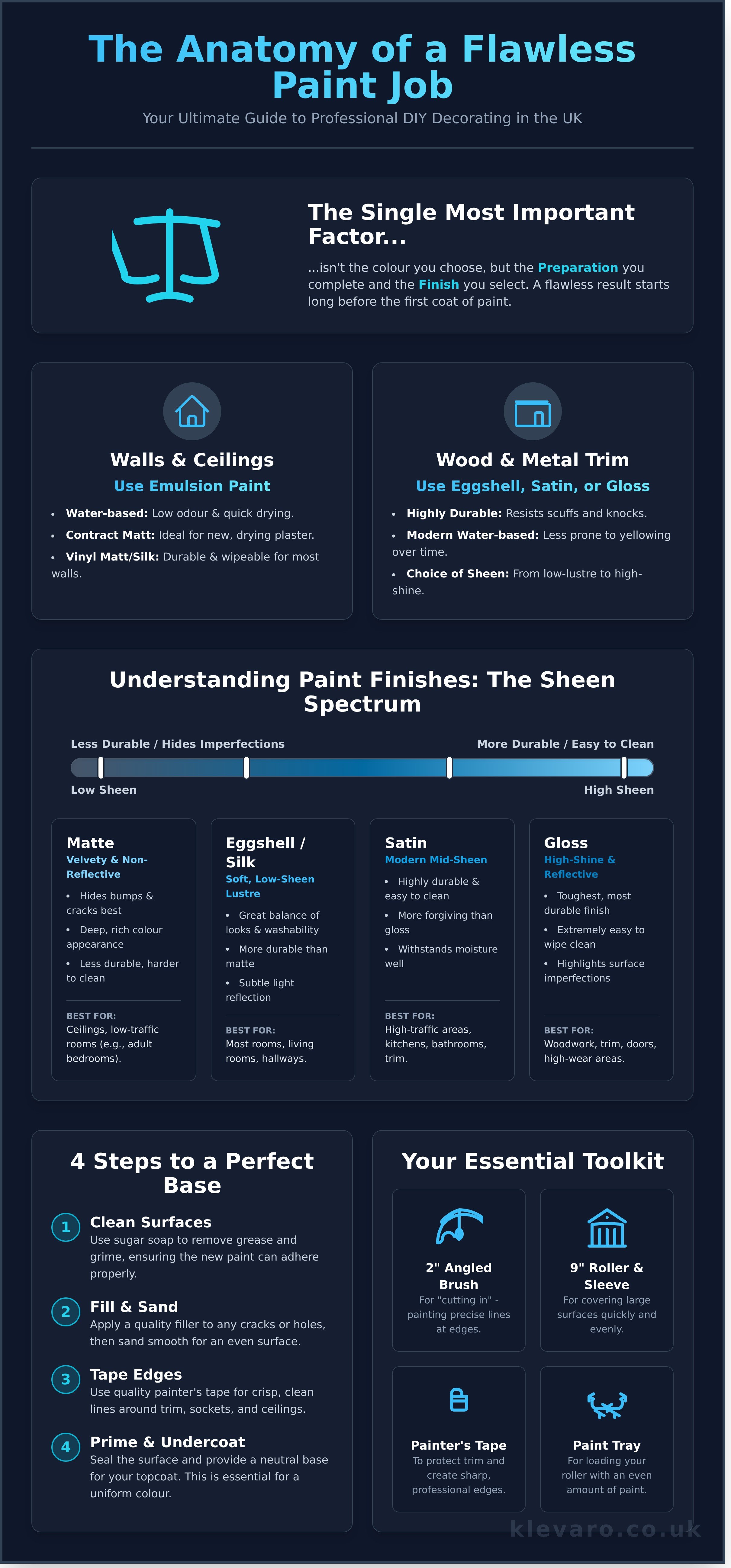
The single most important factor for a flawless paint job isn't the colour you choose, but the preparation you complete and the finish you select.
For most UK interior walls, a matt or silk vinyl emulsion is the best choice, applied over a properly sanded and primed surface. Skirting boards and doors require a more durable eggshell or satinwood paint. The essential tools for this are quality painter's tape, a 2-inch angled brush for cutting in, a 9-inch roller with a medium-pile sleeve, and a sturdy paint tray.
We know the world of primers and finishes can feel confusing, and the fear of patchy results is real. This guide cuts through the noise, giving you the practical knowledge to transform any room with confidence. We’ll cover every step, from understanding different paint types to mastering the techniques that guarantee a professional-quality finish every time.
Key Takeaways
- Emulsion is the standard water-based paint for interior walls and ceilings, making it the ideal starting point for most UK DIY decorating.
- The finish you choose directly impacts durability; higher sheens like silk are tougher and easier to clean, perfect for high-traffic areas.
- A flawless result starts with preparation. Cleaning surfaces with sugar soap and using a quality filler ensures your new paint adheres smoothly.
- Understand the difference between paint bases: modern water-based paints are best for most interior jobs, offering easy cleanup and low odour.
What are the main types of paint used for UK home DIY?
The paint you need for a UK home DIY project is determined by its base material and the surface you're decorating. For interior walls and ceilings, the standard choice is a water-based emulsion. Woodwork and metal surfaces, like skirting boards and radiators, require a more durable finish such as gloss, satin, or eggshell. Specialist paints are also available for high-moisture rooms like kitchens and bathrooms to prevent mould. Understanding these core categories is the first step to achieving a professional finish. Choosing the right product is simple once you understand the main types of paint and their specific jobs.
Interior wall and ceiling emulsions
Emulsion paint is a water-based decorative coating containing pigments and resins, designed for large surface areas. These modern formulas are perfect for indoor projects because they contain low levels of VOCs (Volatile Organic Compounds), resulting in fewer fumes and a healthier home environment. They also dry quickly, often becoming touch-dry in just 1-2 hours, so you can apply a second coat on the same day.
You'll commonly find two main options: contract matt and vinyl matt. Contract matt is a breathable, non-vinyl paint that is ideal for coating new plaster as it allows moisture to escape while the wall dries out. For most other walls, a durable vinyl matt is a better choice. Its vinyl content makes the finish tough and wipeable, perfect for high-traffic areas like hallways, living rooms, and kids' bedrooms.
Wood and metal paints for trim
Your trim, which includes skirting boards, door frames, and windowsills, needs a tougher coating to resist scuffs and knocks. These paints are available in water-based or traditional oil-based formulas; modern water-based options offer faster drying times, lower odour, and are less prone to yellowing over time. The finish you choose will transform the look of your room.
- Gloss: This is the classic choice for a high-shine, durable finish. Its reflective surface is incredibly easy to clean, making it great for busy households. However, this high sheen will highlight any imperfections on the surface, so good preparation is key to a flawless result.
- Satinwood: Offering a stylish mid-sheen finish, satinwood (or satin) provides a modern look that's less reflective than gloss. This makes it more forgiving on surfaces that aren't perfectly smooth. It delivers excellent durability and is a popular choice for a contemporary feel.
- Eggshell: For a sophisticated, low-sheen look, eggshell is the perfect option. It has a very subtle lustre, similar to the shell of an egg, and provides a durable, washable finish. It’s a fantastic way to get a flatter finish than satin without compromising on toughness.
Don't forget about specialist paints designed for specific challenges. Kitchen and bathroom paints are formulated with mould-resistant and moisture-blocking properties, ensuring they withstand steam and condensation far better than standard emulsions. For a truly professional job, always start with the right primer and undercoat. This essential first step seals porous surfaces, hides strong colours, and gives your topcoat a smooth, even base to stick to.
Understanding paint finishes and their practical applications
Choosing the right paint finish, or "sheen," is just as important as picking the perfect colour. The finish determines a paint's durability, washability, and how it interacts with light. Higher sheen levels, like gloss, offer the greatest durability and moisture resistance, making them easy to clean. Lower sheen finishes, such as matte, are exceptional at hiding surface imperfections but are more susceptible to scuffs and stains. Your choice will directly impact both the look and long-term performance of your walls.
Think of sheen as a scale from no shine to high shine. Each step up the scale increases light reflection and toughness. This simple principle is the key to selecting a finish that not only looks great but is also practical for the room's function.
- Matte: Has a non-reflective, velvety texture that hides bumps and cracks well. It's ideal for ceilings and low-traffic areas like adult bedrooms or dining rooms.
- Eggshell & Silk: These offer a soft, low-sheen lustre that is more durable than matte. They are a popular and practical choice for most rooms, providing a great balance of hide and washability.
- Satin: A step shinier than silk, satin is highly durable and stands up well to cleaning. It’s perfect for high-traffic areas and moisture-prone rooms.
- Gloss: The toughest and shiniest of them all. Gloss is traditionally used for woodwork, trim, and doors because it can withstand significant wear and tear.
Matte vs Silk: Which is right for your walls?
Matte finishes absorb light, creating a deep, rich colour with almost no shine. With a Light Reflectance Value (LRV) of under 10%, they are the ultimate choice for older homes with uneven plaster or walls that aren't perfectly smooth. The lack of reflection masterfully conceals minor flaws, delivering a smooth, uniform appearance.
In contrast, silk finishes have a subtle sheen that reflects light, making spaces feel brighter and more open. While this is great for smaller rooms or north-facing spaces, be aware that this reflectivity will highlight every lump and bump on your wall. If you have children or pets, the superior "scrubbability" of silk makes it a clear winner for hallways, playrooms, and living areas where sticky fingers and scuffs are common.
The best finishes for kitchens and bathrooms
Standard emulsion paint just won't cut it in kitchens and bathrooms. These high-humidity, high-traffic environments demand specialist formulas designed to withstand unique challenges. Kitchen paint is specifically formulated to resist grease, cooking fumes, and frequent wiping without fading or wearing away. Its durable finish, usually a satin or soft sheen, ensures you can clean away splatters with ease.
For bathrooms, the primary enemy is moisture. Bathroom paint contains powerful anti-mould and mildew-resistant additives that prevent the growth of fungus in steamy conditions. Using a standard matte emulsion in a bathroom will often trap moisture, leading to bubbling, peeling, or cracking within 12-18 months. These specialist paints are often water-based for quick drying, but their protective formulas are what truly sets them apart. After choosing the right specialist paint, you can explore our full range of durable interior paints to find the perfect colour for your project.
Comparing water-based and oil-based paints for longevity
For most interior DIY projects, modern water-based paint is the superior choice for both ease of use and long-term appearance. These acrylic formulas have become the industry standard, offering excellent durability and colour stability. While traditional oil-based (or alkyd) paints were once favoured for their hard-wearing finish on woodwork, they are now used less frequently in the UK due to their strong fumes, long drying times, and tendency to yellow.
The biggest difference in longevity is colour. A modern water-based "quick-dry" gloss will stay brilliant white for years, whereas an oil-based gloss can begin to yellow within 12-18 months, especially in areas with little natural sunlight. Preparing your surface also differs significantly. You can't simply apply one type over the other without sanding and priming first, as the different chemical bases will prevent the new coat from adhering properly and lead to peeling.
The benefits of low-VOC water-based paints
Today’s water-based formulas offer fantastic benefits that make any painting project simpler and safer. Their biggest advantage is their low level of VOCs (Volatile Organic Compounds), which means better indoor air quality during and after painting. For a full breakdown of safe practices, always consult the official HSE paint safety guidelines before you start your project.
- Easy Cleanup: Forget harsh chemicals like white spirit. Brushes, rollers, and trays used with water-based paint clean up quickly with just soap and warm water.
- Fast Drying: Most formulas are touch-dry in just 1-2 hours and ready for a second coat in around 4 hours. This means you can easily apply two coats and finish a room in a single day.
- Flexible Finish: Acrylic paint creates a flexible film that resists cracking and chipping as surfaces like wood expand and contract with temperature changes.
When to still consider oil-based traditional paints
Despite the advantages of water-based options, traditional oil-based paints still have a place in certain situations. Their unique formulation allows them to "level out" as they dry, creating an exceptionally smooth, almost glass-like finish that is difficult to replicate. This makes them a consideration for high-end woodwork, furniture, or front doors where a flawless surface is the top priority.
They also offer incredible adhesion, sometimes sticking to poorly prepared or tricky surfaces better than their water-based counterparts. However, remember the trade-off. The oils in the paint oxidise over time, causing white and off-white shades to develop a distinct yellow tint. This process is accelerated in low-light areas like hallways or rooms with north-facing windows, so it's a poor choice for maintaining a crisp white look indoors.
Essential tools and preparation steps for a professional finish
The secret to a flawless finish isn't in the final coat of paint; it's in the meticulous preparation you do beforehand. Taking the time to properly prep your room is the single most important factor that separates an amateur job from a professional one. Get these steps right, and you're already 90% of the way to a perfect result.
First, clean every surface you plan to paint. Walls accumulate a surprising amount of dust, grease, and grime that can prevent paint from adhering properly. A simple solution of sugar soap and warm water is perfect for the job. Wipe everything down with a sponge and let it dry completely before you do anything else.
Next, tackle any imperfections. Even small cracks, dents, or old screw holes will stand out under a fresh coat. Fill these blemishes using a high-quality wood filler or a multi-purpose filler for plaster. Apply it with a putty knife, slightly overfilling the hole, then sand it perfectly smooth once dry. This creates the seamless, level base essential for a professional look.
Sanding is a non-negotiable step. A light sanding with 120-grit sandpaper creates a "key," which is a slightly roughened texture that gives the new paint something to grip onto. This dramatically improves adhesion and durability. Remember to sand your filled areas and give the entire wall a quick, gentle scuffing.
Finally, achieve those razor-sharp lines with good quality masking tape. Carefully apply it along skirting boards, window frames, door frames, and ceilings. Press the edge down firmly with a scraper or credit card to prevent any paint from bleeding underneath. This simple action is what creates that crisp, clean-cut distinction you see in professionally decorated rooms.
Your choice of applicators will define the quality of your finish. Don't let poor-quality brushes or rollers ruin your hard prep work. Investing in the right hand tools makes the job easier, faster, and delivers a far superior result.
Choosing between brushes and rollers
The right tool depends on the surface and the type of paint you're using. Rollers are brilliant for covering large, flat areas quickly, while brushes are essential for detailed work. Here’s how to choose:
- Synthetic brushes are a must for modern paints. Most emulsions are water-based, which can cause natural bristles to swell and "clump," leaving an uneven finish.
- Match your roller to your wall. Short-pile rollers (with a nap of 6-8mm) are best for smooth plaster walls. For textured surfaces like artex or masonry, a long-pile roller (18-25mm) is needed to get into all the crevices.
- A "cutting-in" brush is your best friend. These small, angled brushes are designed specifically for painting corners and edges with precision, making the job significantly neater.
The advantages of using a paint sprayer
For the ultimate smooth finish, especially on furniture, doors, or large feature walls, a paint sprayer is unmatched. While it requires more setup, the results and speed can be game-changing for your DIY projects.
- Get a factory-like finish. Sprayers atomise the paint, creating an incredibly fine, even layer without any brush marks or roller texture.
- Work up to four times faster. Once you’re set up, a sprayer can cover a large wall or multiple doors in a fraction of the time it would take with traditional methods.
- Masking is critical. The fine mist of overspray can travel, so you must thoroughly cover everything you don't want painted, including floors, furniture, and windows.
With your surfaces perfectly prepped and the right tools in hand, you’re ready for the fun part. Fix, build, and create with confidence by exploring our full range of quality decorating tools and essentials.
Transforming your space with Klevaro decorating essentials
You've done the hard work. The prep is finished, the cutting in is perfect, and the final coat is drying. Now it’s time for the most rewarding part: turning your freshly painted room into a space that truly feels like home. Success in any DIY project comes from having a reliable partner for your needs, and Klevaro is here to help you nail the finishing touches. We provide the quality gear and creative inspiration to bring your vision to life.
A new colour on the walls is a fantastic start, but it's the details that create a cohesive and stylish look. Think of your new walls as the perfect backdrop for expressing your personality. Our curated home and garden collection is packed with ideas to get you started, from practical storage solutions to statement furniture pieces. To complete your room's new look, pair your fresh paint job with updated home decor like cushions, throws, and unique ornaments.
We know that when inspiration strikes, you want to get started right away. That’s why Klevaro offers fast UK delivery on all orders. You can get the tools and decor you need delivered directly to your door, ensuring your project stays on schedule and your creative momentum never fades.
Building your decorating toolkit
A professional finish starts with the right equipment. Before you even think about the final styling, make sure your core toolkit is ready for any task. Having these essentials on hand means you can tackle preparation and application with confidence, avoiding last-minute trips to the shop.
- Preparation Gear: Start with a core set of scrapers for removing old finishes, various grits of sandpaper for a smooth surface, and a reliable filler for any cracks or holes.
- Application Essentials: Invest in high-quality brushes and rollers. They hold more paint and distribute it more evenly, which is the key to avoiding streaks and achieving a flawless finish.
- Protective Items: Don’t forget the basics that protect your home and yourself. Durable dust sheets and high-adhesion masking tape are non-negotiable for clean lines and a tidy workspace.
You can fix, build, and create with confidence when you have the right gear. Explore our full range of tools and equipment to find everything you need for this project and the next.
Adding the finishing touches
Once the paint is completely dry, the real fun begins. This is your chance to layer in personality and make the space uniquely yours. The right finishing touches will elevate your work from a simple paint job to a complete room transformation. It’s all about creating an atmosphere.
Consider how subtle elements can dramatically change the feel of the room. The right lighting, whether it's a new floor lamp or stylish ceiling fixture, can enhance your new wall colour and create a warm, inviting ambience. A carefully chosen home fragrance can instantly make the space feel more cosy and welcoming. Your freshly painted walls are the perfect canvas for new wall art, a gallery of family photos, or floating shelves to display your favourite items. These final details are what truly complete the picture.
Feeling inspired? Join the Klevaro community for more expert tips on home improvement, DIY projects, and interior styling. Get great ideas delivered straight to your inbox and become part of a network of passionate home creators.
Start Your Transformation: Your Perfect Finish Awaits
You're now equipped with the knowledge to make your next decorating project a stunning success. Remember that the secret to a professional finish lies in the details: choosing the right paint finish for each room and dedicating time to proper surface preparation. These steps ensure your hard work looks incredible and lasts for years to come.
Now it's time to bring your ideas to life. Having the right gear is essential, from quality rollers and brushes to dust sheets and masking tape. At Klevaro, we've got everything you need to fix, build, and create with confidence.
Shop our complete range of DIY tools and equipment and get everything you need delivered directly to your door. With Fast UK Delivery and our Quality Guaranteed promise on trusted brands, you can get started this weekend. And don't worry, our Easy Returns for DIY Projects policy has you covered if plans change. Your dream space is waiting.
Frequently Asked Questions
How many coats of paint do I usually need for a wall?
You will typically need two coats of paint for full, even coverage on a wall. The first coat acts as a base layer, and the second coat ensures a solid, professional finish by hiding any patches or roller marks left behind.
If you're making a dramatic colour change, like painting a dark colour over a light one, you may need a third coat. Always check the manufacturer's specific recommendations on the paint tin before you start.
Can I paint over silk paint with matte emulsion?
Yes, you can paint over a silk finish with matte emulsion, but you must prepare the surface first for the best results. Silk paint has a slight sheen that new matte paint can struggle to adhere to, which can lead to peeling later on.
To ensure a durable finish, give the silk wall a light sanding with 120-grit sandpaper to create a rougher surface, or 'key'. After sanding, wipe the wall clean of any dust before applying your first coat of matte emulsion.
What is the difference between a primer and an undercoat?
A primer is designed to seal a bare surface and provide a foundation for paint, while an undercoat creates a solid, even base for the topcoat to adhere to. Think of primer as the first treatment for a new or stripped surface.
Use primer on porous materials like fresh plaster or bare wood to stop them from soaking up your paint. Use an undercoat over an existing paint colour to block it out and give your new topcoat a uniform and vibrant finish.
How long should I wait between coats of paint?
You should wait between 2 to 4 hours before applying a second coat of standard water-based emulsion. This allows the first coat to become touch-dry, which prevents the roller or brush from dragging the paint and creating an uneven texture.
Oil-based paints take much longer to dry, typically requiring 16 to 24 hours between coats. Always check the specific recoat times on your paint tin, as drying can be affected by temperature and humidity.
Why is my paint peeling off the wall after it dries?
Paint peeling off a wall is almost always caused by poor surface preparation or underlying moisture. If the wall was dirty, greasy, or damp when you started, the paint can't form a strong bond and will likely flake or peel away.
Another common reason is painting directly onto a glossy or silk surface without sanding it first. To guarantee a long-lasting finish, make sure your walls are completely clean, dry, and properly primed before you begin painting.
How do I calculate how much paint I need for a room?
To calculate your paint needs, first measure the width of each wall and add the numbers together. Multiply this total width by the height of the room to get your total square meterage. Don't forget to subtract the area of any large windows or doors.
Most paint tins state their coverage (e.g., 12m² per litre). Simply divide your room's total area by this number to find out how many litres you'll need for one coat, then double it for the recommended two coats.
What is the best temperature for painting indoors?
The ideal temperature for painting indoors is between 10°C and 20°C. Painting in this range allows the paint to dry and cure correctly, giving you a smooth and durable finish that will stand the test of time.
If it’s too cold, the paint will take too long to dry properly. If it’s too hot or humid, it can dry too quickly, which often leads to visible brush marks and an uneven texture. A little ventilation from an open window helps, but avoid creating a strong draught.
Do I really need to sand before painting?
Yes, sanding is a crucial step for achieving a flawless, professional finish, especially on glossy surfaces or walls with minor imperfections. A quick sand creates tiny grooves that help the new paint grip the surface, preventing chips and peeling in the future.
You don't need to spend hours on it; a light scuff with a fine-grit sandpaper (around 120-grit) is usually enough. This simple action smooths out any small bumps and ensures your new paint adheres perfectly for a lasting result.
Leave a comment