


How to Unblock a Kitchen Sink Yourself: A Step-by-Step DIY Guide
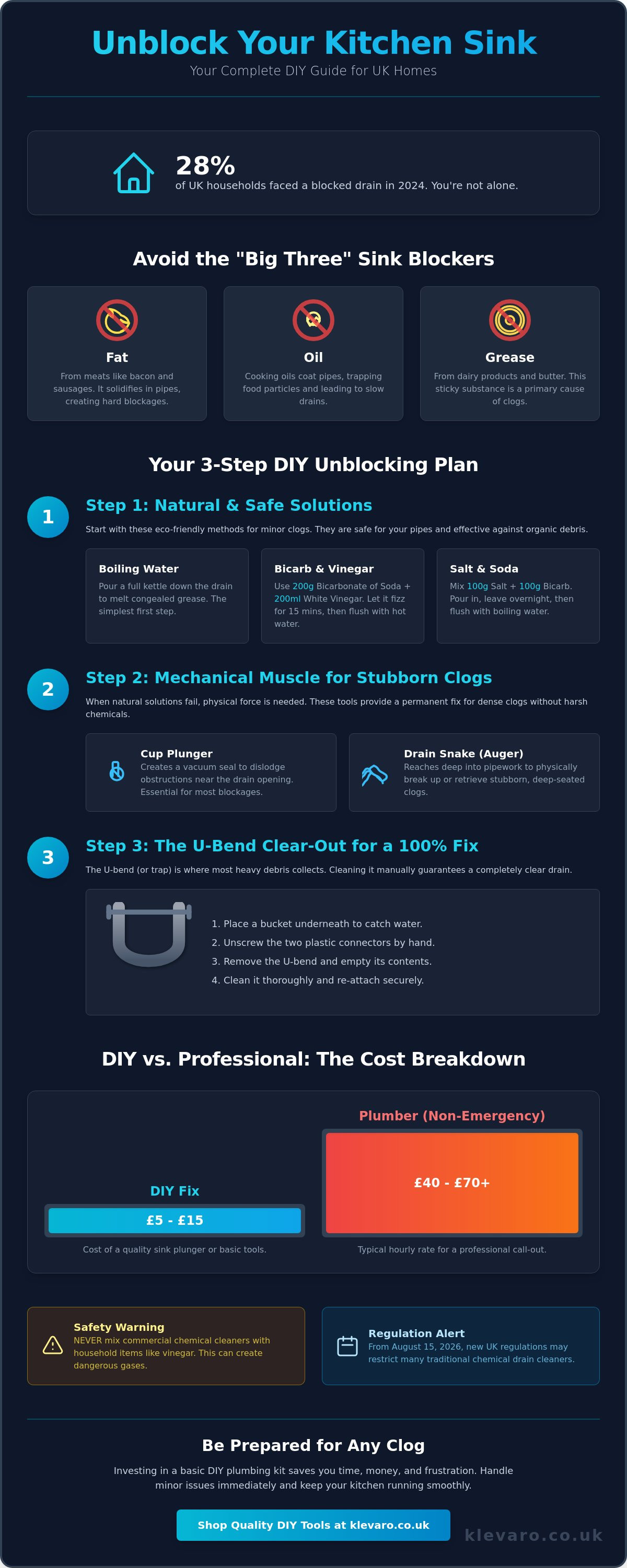
Did you know that 28% of UK households dealt with a blocked drain in 2024? You can learn how to unblock a kitchen sink yourself by using a manual plunger to create a pressure seal or by removing and cleaning the U-bend trap. Mechanical clearance is the most effective way to remove fat, oil, and grease without damaging your plumbing. These methods provide a permanent fix and avoid the risks associated with harsh chemical unblockers.
A standard sink plunger costs approximately £5 to £15, which is significantly cheaper than the £40 to £70 hourly rate for a non-emergency UK plumber. With new chemical labelling regulations arriving on August 15, 2026, many traditional cleaners may soon be restricted. Explore our range of reliable DIY tools to find manual drain snakes that reach deeper clogs. Quality tools ensure a fast and effective repair.
It’s incredibly frustrating when foul smells fill your home and you cannot use your kitchen. We understand the worry of damaging your pipes or facing a high bill from a professional. This guide teaches you the most effective ways to clear your drain using practical tools and household items. You will learn step-by-step techniques to restore a free-flowing drain and gain the confidence to maintain your home with ease.
Key Takeaways
- Use boiling water combined with bicarbonate of soda and vinegar to dissolve organic debris and grease without damaging your pipes.
- Master mechanical tools like the cup plunger and manual drain snake to clear deep-seated obstructions that household liquids cannot reach.
- Learn how to unblock a kitchen sink yourself by safely removing the U-bend trap to ensure a 100% clear and free-flowing drain.
- Identify and avoid the "Big Three" culprits—Fat, Oil, and Grease—to prevent future blockages and eliminate foul kitchen smells.
- Invest in a basic DIY plumbing kit to handle minor issues immediately and save on expensive professional emergency call-out fees.
The Fastest Ways to Unblock a Kitchen Sink Yourself
To unblock a kitchen sink yourself, start by bailing out any standing water and pouring boiling water directly down the plughole to melt congealed grease. Follow this with a mixture of 200g bicarbonate of soda and 200ml white vinegar to create a chemical reaction that fizzes away organic debris. If the drain remains slow, use a cup plunger to create a vacuum seal and dislodge the obstruction mechanically. A sink blockage is a concentrated build-up of fats, oils, and food waste within the U-bend or pipework.
Mechanical methods and natural solutions are often more effective than harsh store-bought liquids. These DIY techniques allow you to clear the system without risking damage to your pipes or the environment. Success depends on identifying the location of the clog and applying the right amount of pressure or heat to break it apart.
Using Boiling Water and Natural Cleaners
Boiling water serves as the first line of defence for fat-based clogs because it liquefies solidified grease. Many kitchen blockages occur when fats from cooking cool down and harden inside the pipework. Understanding the P-trap is vital, as this curved section is the most likely place for these substances to collect. High temperatures soften these deposits, allowing them to be flushed further into the main sewage system.
For a deeper clean, use a ratio of 200g bicarbonate of soda followed by 200ml of white vinegar. This combination produces a powerful fizzing action that physically scrubs the interior walls of your pipes. You should wait at least 15 minutes for the reaction to work before flushing the drain with a full kettle of hot water. If you want to keep your kitchen running smoothly, explore our kitchen and dining collection for high-quality home essentials.
The Salt and Soda Method for Overnight Clearance
Stubborn drains that are slow to clear often benefit from an abrasive treatment using common household minerals. Mix 100g of table salt with 100g of bicarbonate of soda and pour the dry mixture into the drain. Salt acts as a natural scouring agent, grinding against slimy build-up as it moves through the plumbing. This method is particularly effective for removing the thin layers of biofilm that trap food particles.
Leave this mixture to sit in the pipes overnight to give the minerals enough time to react with the blockage. In the morning, flush the system with plenty of boiling water to wash away the loosened material. You must never mix these natural methods with commercial chemical cleaners. Combining household items with corrosive store-bought acids can create dangerous gases or cause unexpected chemical reactions in your sink.
If these liquid solutions do not resolve the issue, you may need to use a manual tool. A standard cup plunger is a reliable choice for dislodging solid objects or thick sludge. Check out our range of hand and general tools to find the right gear for your home maintenance projects. Having the correct equipment makes it much easier to learn how to unblock a kitchen sink yourself without needing to call a professional.
Mastering the Plunger and Drain Snake for Stubborn Clogs
Mechanical tools like plungers and drain snakes are the most reliable way to clear a complete blockage without using corrosive acids. A standard cup plunger is essential for dislodging clogs near the sink opening by creating intense vacuum pressure. If the blockage is deeper in the system, a manual drain snake (auger) can reach into the pipework to physically hook and remove debris. These methods provide a permanent fix for dense grease and food waste that natural liquids cannot dissolve. Learning how to unblock a kitchen sink yourself using these tools ensures a free-flowing drain without the risk of pipe damage.
While many online guides suggest using pantry hacks like soda and vinegar, these often fail against heavy grease clogs. Statistics from 2024 show that 35% of homeowners attempt a DIY plumbing fix, but 20% of those attempts still require a professional because the methods used were too weak. To ensure your success, you can explore our range of hand tools for plumbing essentials that provide the necessary mechanical force. Investing in quality gear is a practical step that saves you from the £40 to £70 hourly rate charged by non-emergency plumbers.
How to Use a Plunger Correctly
To use a plunger effectively, you must first block the overflow with a damp cloth or tape to maintain vacuum pressure. This step prevents air from escaping, which is vital for moving the clog. Fill the sink with enough water to submerge the rubber cup of the plunger. Place the cup over the plughole to form a tight seal and use firm, rhythmic vertical strokes to push and pull the blockage. A UK guide to unblocking a sink confirms that 10 to 15 seconds of vigorous plunging is usually enough to dislodge most organic obstructions.
Deploying a Drain Auger or Pipe Snake
A drain snake or auger is necessary when the blockage is located further down the line where a plunger cannot reach. Feed the flexible metal cable into the drain until you feel resistance, then rotate the handle to "hook" onto the debris. Slowly pull the cable back out to remove the material rather than pushing it further away. You should feel for resistance carefully to avoid damaging plastic pipe joints or internal seals. Manual snakes for sinks typically cost between £10 and £20 for lengths up to 7.6 meters, making them a high-value addition to any home maintenance kit.
Having the right tools on hand makes home maintenance much more enjoyable and stress-free. If you are building your toolkit, you can find everything you need for your projects in our extensive collection. Being prepared means you can tackle a plumbing emergency the moment it happens, keeping your kitchen stylish and fully functional.
Clearing the Sink Trap (U-bend) for a Permanent Fix
The U-bend, also known as the P-trap, is the most common location for heavy kitchen blockages. Manually removing this section of pipework allows for a 100% clearance of the obstruction. This method is the most reliable way to learn how to unblock a kitchen sink yourself when mechanical plungers or natural cleaners prove insufficient. Most modern UK sinks use plastic compression nuts that you can unscrew by hand without professional assistance. Using a bucket to catch waste water prevents a mess and ensures the job is completed safely. This technique provides a permanent solution by physically extracting the solidified fats and food particles trapped in the curve of the pipe.
Physically cleaning the trap is often faster than waiting for chemical reactions to work. It also allows you to inspect the health of your plumbing and identify potential issues before they become emergencies. By mastering this simple task, you gain the confidence to maintain your home without relying on expensive external services.
Preparation and Safety
Preparation is the most important part of this process. Place a sturdy bucket directly beneath the trap to catch the stagnant water and sludge that will pour out once the joints are broken. Wear thick rubber gloves to protect yourself from bacteria and the foul smells of old food waste. If the sink is full of standing water, bail it out into a separate container first. This prevents the bucket under the sink from overflowing and causing water damage to your kitchen cabinets.
Disassembling and Cleaning the Pipework
Unscrew the plastic nuts at each end of the U-bend by turning them anti-clockwise. If the nuts are stubborn, you can use an adjustable wrench from your essential DIY toolkit to gain extra grip. Carefully pull the trap away and empty the contents into your bucket. Check the condition of the rubber washers and O-rings; if they look flattened or perished, replace them to prevent future leaks. Scrub the inside of the pipe with a flexible brush and warm soapy water until the plastic is clean.
Once the pipe is clear, slide the nuts and washers back into place and tighten them by hand. Run the tap slowly at first to check for any drips or leaks at the joints. If you find a leak, simply tighten the nuts slightly more until the seal is watertight. Having a reliable set of quality hand tools makes these home maintenance tasks much easier to manage. This simple DIY skill keeps your kitchen functional and saves you from paying a professional plumber for a basic five-minute job.
Preventing Future Blockages and Knowing When to Call a Pro
Prevention is significantly more effective than repeatedly learning how to unblock a kitchen sink yourself. You can stop clogs before they start by identifying the "Big Three" culprits: Fat, Oil, and Grease (FOG). A 2022 survey revealed that 65% of UK households admitted to pouring these substances down the sink, which contributes to the 300,000 sewer blockages occurring across the UK every year. Adopting a proactive home maintenance mindset ensures your kitchen remains a stylish and functional space without the stress of sudden plumbing failures.
Maintaining a free-flowing drain requires small, consistent actions rather than occasional emergency repairs. By integrating simple habits into your daily routine, you protect your plumbing and save on professional fees. A well-maintained home is a more enjoyable place to live, and having the right knowledge gives you the confidence to handle your property with care.
Daily Maintenance Habits
The most important habit is using a high-quality sink strainer to catch food scraps before they enter the pipework. You should never pour used cooking oil or fats down the drain; instead, let them cool in a container and dispose of them in the bin. Perform a hot water flush after every washing-up session to melt away any residual grease that might be clinging to the pipes. To keep your sink area organised and efficient, you can shop our kitchen and dining essentials for practical home solutions.
When DIY is Not Enough
You must recognise when a problem exceeds basic DIY capabilities to avoid making the situation worse. If multiple drains in your home are backing up simultaneously, this is a sign of a main sewer line blockage that requires professional equipment. Stop all work immediately if you notice water leaking from pipe joints or see structural cracks in the plumbing. Over-using chemical cleaners is also dangerous, as these products can generate heat that "cooks" and hardens organic clogs into a solid mass.
Research shows that over 50% of emergency plumbing call-outs are to fix DIY mishaps. With emergency call-out fees in the UK averaging between £75 and £110, it is often cheaper to call a professional early if your initial attempts with a plunger or snake fail. You can find more expert tips for home and garden maintenance in our community resources. Knowing your limits is part of being a dependable and creative home improver.
The Ultimate DIY Plumbing Kit for UK Homeowners
A complete DIY plumbing kit for UK homeowners consists of a cup plunger, an adjustable wrench, a manual drain snake, and a five-litre bucket. These tools allow you to learn how to unblock a kitchen sink yourself without paying the £75 to £110 average emergency call-out fee. Keeping these items in a dedicated kit ensures you can respond to clogs immediately, preventing stagnant water from damaging your kitchen cabinets. This investment pays for itself after a single use compared to professional hourly rates of £40 to £70.
Preparation is the key to reducing stress during a home emergency. When you have the right gear on hand, a blocked drain becomes a minor task rather than a household crisis. We believe that every homeowner should feel empowered to maintain their space with confidence and style.
Essential Tools for Sink Maintenance
- Cup Plunger: Essential for creating the vacuum pressure needed to dislodge organic clogs.
- Adjustable Wrench: Required for loosening plastic compression nuts on the U-bend trap.
- Manual Drain Snake: A 3 to 7.6-meter auger for reaching obstructions deep within the pipework.
- Five-Litre Bucket: Necessary for catching waste water during trap disassembly.
You should keep your plumbing tools in a dedicated box separate from your garden supplies. This prevents the spread of bacteria and ensures your gear remains clean for indoor use. To keep your sink area looking its best, browse our kitchen and dining essentials for high-quality sink accessories. If you're looking to expand your home workshop even further, read our circular saw guide to help you choose the best equipment for your next project.
Why Quality Tools Matter
Using high-quality equipment is vital for safety and efficiency. Cheap plastic plungers often fail under pressure or lose their seal, making the job much harder than it needs to be. Reliable tools from trusted sources ensure that your repairs are fast, effective, and permanent. At Klevaro, we provide durable gear that helps you fix, build, and create with total confidence.
You now have the knowledge and the strategy to keep your home running smoothly. By mastering these DIY techniques, you've transformed from a frustrated homeowner into a capable home improver. Grab your reliable hand tools, join the Klevaro community, and enjoy the satisfaction of a job well done. Your stylish, free-flowing kitchen is just a few minutes of practical work away.
Take Control of Your Kitchen Maintenance Today
By following the mechanical and natural methods outlined in this guide, you can eliminate clogs and prevent the 300,000 sewer blockages that occur annually across the UK. You have learned how to unblock a kitchen sink yourself using plungers, snakes, and simple trap maintenance. Focus on consistent prevention by avoiding the Big Three culprits to keep your plumbing in top condition for years to come.
Being prepared with the right equipment ensures you can fix issues the moment they arise. Equip your home with professional-grade tools from Klevaro to build your ultimate maintenance kit. As a Trusted UK Store with Quality Guaranteed and Fast UK Delivery, we're here to support all your home improvement projects. Our tools empower you to create a stylish, functional space with total confidence.
You now have the skills to transform your kitchen and handle any plumbing challenge that comes your way. It's time to put that knowledge into action and enjoy a free-flowing, beautiful home. We're excited to see what you build and fix next within the Klevaro community.
Frequently Asked Questions
Can I use a wire coat hanger to unblock a kitchen sink?
You can use a wire coat hanger as a makeshift tool, but it is much less effective than a professional drain snake. Straighten the hanger and leave a small hook at the end to fish out hair or debris near the surface. Be careful not to scratch the protective coating on your sink or damage plastic pipe joints. For a more reliable fix, use a dedicated tool from our collection to learn how to unblock a kitchen sink yourself safely.
Is it safe to use bleach to clear a drain blockage?
Bleach is not a safe or effective solution for clearing a drain blockage. It is a disinfectant rather than a degreaser, so it will not dissolve the fat and food waste causing the clog. Bleach can also react dangerously with other household cleaners to produce toxic chlorine gas. Mechanical tools are always a better choice for your safety and the longevity of your plumbing system.
Why does my kitchen sink smell even after I unblock it?
Foul smells persist because bacteria and decaying organic matter often remain trapped in the biofilm on your pipe walls. Even if water is flowing, this thin layer of slime releases gases that rise back up the drain. You can resolve this by flushing the system with a mixture of baking soda and vinegar followed by boiling water. This kills the bacteria and neutralises the acidic odours at the source.
How often should I clean my sink U-bend?
You should clean your sink U-bend every 6 to 12 months to prevent debris from building up. This proactive habit ensures that small deposits of grease don't have the chance to harden into a solid obstruction. It is a quick task that takes less than 10 minutes if you have a bucket and gloves ready. Regular maintenance is the best way to avoid the stress of a sudden emergency.
Will a dishwasher tablet unblock a sink?
A dishwasher tablet can help clear very minor grease build-ups because it contains concentrated surfactants and degreasers. Simply place the tablet over the plughole and pour a kettle of boiling water over it to dissolve the fats. While this is a handy trick for slow drains, it won't work on solid clogs or deep obstructions. Use a plunger for those heavier jobs to ensure a complete fix.
What is the best natural alternative to chemical drain cleaners?
The most effective natural alternative to chemical cleaners is a mixture of 200g bicarbonate of soda and 200ml white vinegar. This combination creates a chemical reaction that physically breaks apart organic debris without damaging your pipes. It is an eco-friendly way to maintain your home and keep your kitchen smelling fresh. This method is a key part of learning how to unblock a kitchen sink yourself without using toxic substances.
Can I use a vacuum cleaner to suck out a blockage?
You can only use a wet and dry vacuum cleaner to suck out a blockage. Standard household vacuums will be permanently damaged if they ingest water, so never attempt this with your regular gear. Set the vacuum to its liquid mode and create a tight seal around the plughole using a damp cloth. The high suction power can often pull out clogs that a plunger cannot move.
What should I do if my sink is still blocked after trying everything?
You should stop your DIY attempts if the sink remains blocked after you have cleared the U-bend and used a drain snake. This usually indicates a deeper problem in the main sewer line or a collapsed pipe that requires professional intervention. Continuing to apply pressure or chemicals could lead to expensive structural damage. A professional can use a CCTV camera to find the exact location of the issue and provide a permanent solution.
Leave a comment