


Cost to Paint a Room Yourself UK: 2026 DIY Price Guide
Did you know that tackling a DIY painting project can save you over £400 per room compared to hiring a professional decorator? Painting a standard 4m by 3m room yourself in the UK for 2026 typically costs between £80 and £180. This total includes £40 to £70 for 5 litres of quality wall emulsion and £20 to £40 for essential tools like rollers, brushes, and masking tape. By doing the work yourself, you avoid the typical £150 to £250 daily labour rate charged by UK tradespeople. These figures ensure you get a high quality finish while keeping your project costs manageable.
It's natural to feel overwhelmed by the sheer variety of paints and tools available in the shops. We understand that you want a stylish home without the stress of hidden expenses or wasted materials. This guide reveals the exact cost to paint a room yourself uk so you can plan your budget with total confidence for the year ahead.
We will break down every expense from primer to sandpaper and help you select the right gear for a flawless transformation. Get ready to pick up a brush and refresh your space with ease.
Key Takeaways
- Plan your budget effectively by understanding why most UK DIY projects range from £80 to £180 for a standard bedroom.
- Discover how to save an average of £300 in labour costs by tackling the job yourself instead of hiring a professional decorator.
- Get a full breakdown of the cost to paint a room yourself uk, including why high-quality paint is your most important investment.
- Identify the professional-grade tools and preparation materials required to ensure a durable, stylish finish every time.
- Learn how to account for hidden costs and preparation essentials that typically make up 20% of a successful decorating budget.
Painting a room yourself in the UK typically costs between £80 and £180 for all materials.
Painting a room yourself in the UK typically costs between £80 and £180 for all materials. For a standard 12m² bedroom, most DIYers spend approximately £130 to achieve a high quality finish. This total budget covers your paint, application tools, and surface preparation sundries. Choosing to do the work yourself saves an average of £300 to £450 in professional labour fees per room. Paint products represent about 50% to 60% of your expenditure, while the remaining 40% is spent on essential hardware and prep items.
The cost to paint a room yourself uk depends heavily on the volume of materials required for full coverage. A standard 5 litre tin of emulsion covers roughly 60 to 70 square metres with a single coat. Most rooms require two full coats to ensure even colour and long term durability. You should budget for at least two tins for a medium bedroom to avoid running out mid project.
Quality paint choices significantly impact the final price and the ease of application. While budget brands are available, premium trade emulsions offer better pigment density and superior opacity. Investing in reliable tools and equipment ensures your hard work looks professional and stands the test of time.
2026 DIY Material Cost Breakdown
- Standard emulsion paint (5L): Expect to pay £25 to £45 per tin depending on the brand and finish. Silk and scrubbable matt finishes often sit at the higher end of this price range.
- Basic decorating tool kit: A set of brushes, rollers, and trays costs between £35 and £60. High quality synthetic brushes are essential for a smooth finish without shedding bristles.
- Preparation sundries: Masking tape, filler, and sandpaper typically total £15 to £25. These small items are vital for protecting your skirting boards and fixing wall imperfections before you open the paint tin.
Key factors that influence your total spend
Wall condition plays a massive role in your final bill. If your walls have deep cracks or dark existing colours, you might need extra filler or a dedicated primer. These additional layers can add £20 to £30 to your material costs, but they prevent the old colour from bleeding through your new topcoat.
Your choice between designer brands and trade emulsions also shifts the budget. Designer paints often cost £70 or more per tin, which can double your overall spend for a single room. Using high quality hand and general tools that you already own will keep your costs toward the lower £80 estimate.
Check your current stock of DIY gear before visiting the shop. If you already own dust sheets, a sturdy ladder, and paint kettles, you can strip roughly £40 from the initial setup cost. Starting from scratch requires a larger upfront investment but prepares you for every future home improvement project in your house.
Quality paint is the largest expense in your DIY decorating budget.
The main cost to paint a room yourself uk is the paint itself, which typically accounts for 60% of your total project spend. A standard UK bedroom measuring roughly 3m by 4m requires between 5 and 7.5 litres of emulsion to complete two full coats on the walls. You should expect to spend between £30 and £80 on wall paint depending on whether you choose retail brands or professional trade options. Budgeting separately for ceiling paint is essential; while it is often cheaper than wall paint, you'll still need a dedicated 2.5-litre tin for most average-sized rooms.
Specialist paints for kitchens and bathrooms cost 20% more than standard emulsions because they contain anti-mould additives and moisture-resistant resins. These formulations prevent peeling in humid environments and allow you to scrub away grease without damaging the finish. Trade paints are often the most cost-effective choice for larger projects. They provide superior coverage of up to 14m² per litre, compared to the 10m² or 12m² offered by standard retail versions. This higher pigment concentration means you might buy fewer tins to achieve a solid, opaque finish.
Calculating paint quantities for a UK bedroom
Accurate measurements prevent you from overspending on unnecessary tins. Start by measuring the total wall area in square metres; multiply the width of each wall by its height and add them together. Subtract the area of windows and door spaces from this total to find your actual paintable surface. You must always allow for a 10% waste margin to account for roller absorption, spills, and future touch-ups. For a detailed breakdown of different paint types, read our guide on Choosing and Using Paint: The Complete UK DIY Guide for 2026.
Choosing the right finish for your budget
Matt finishes are the most cost-effective option for DIYers on a budget. The flat texture is excellent at hiding wall imperfections, lumps, and poor plastering. If you need a more durable surface for hallways or kids' rooms, silk or eggshell finishes are better, though they require much smoother wall preparation as they reflect more light. You should avoid "one-coat" paints if you're a beginner. These products are often difficult to spread evenly, and most decorators find they still require two coats to achieve a professional, streak-free look. Before you start your project, ensure you have all the essential DIY tools required for a clean application.
Essential DIY tools for a professional finish cost approximately £40 to £70.
Budgeting between £40 and £70 for a complete set of high-quality tools is the most effective way to manage the cost to paint a room yourself uk. This initial investment covers a professional-grade roller frame, synthetic brushes, and essential prep gear that ensures a streak-free finish. While cheaper "disposable" kits are available for under £15, they often leave lint on walls and shed bristles in your fresh paint. Investing in durable equipment allows you to clean and store tools for future projects, effectively reducing your decorating costs for every subsequent room in your home.
A high-quality roller set with multiple sleeves is your most important investment for speed and coverage. Professionals use 9-inch rollers with medium-pile sleeves for standard plastered walls because they hold more paint and distribute it more evenly than budget alternatives. Using an extension pole with your roller frame reduces physical strain on your back and neck. It also helps you maintain a "wet edge" across the full height of the wall, which prevents the patchy, uneven look often seen in DIY jobs.
Synthetic brushes are a non-negotiable requirement for modern water-based emulsions. Natural bristles tend to absorb water, causing them to swell and leave visible brush marks on your skirting boards and corners. High-quality synthetic filaments maintain their shape and provide a smoother release of paint. A sturdy paint tray that doesn't flex when full is equally vital. It provides a stable base for loading your roller correctly, ensuring you don't over-saturate the sleeve and cause messy drips.
The 'Must-Have' DIY decorating kit
Your basic kit should focus on versatility and durability. Start with a 9-inch roller frame and at least two medium-pile sleeves for the main wall areas. You will also need a 2-inch 'cutting-in' brush with a tapered edge to handle the precision work around light switches, ceilings, and skirting boards. When calculating the total cost to paint a room yourself uk, don't overlook the long-term savings of buying tools that last. You can explore our hand and general tools collection for all your decorating essentials.
Optional tools that save time
If your budget allows for an extra £15 to £20, a few specialist items can significantly speed up the process. Paint kettles are lightweight and much easier to hold than a heavy 5-litre tin when you are climbing ladders to reach the top of a wall. For rooms with tricky alcoves or chimney breasts, a small corner roller or a 4-inch "mini" roller provides better control in tight spaces. These tools ensure you get a consistent texture in areas where a full-sized roller simply won't fit.
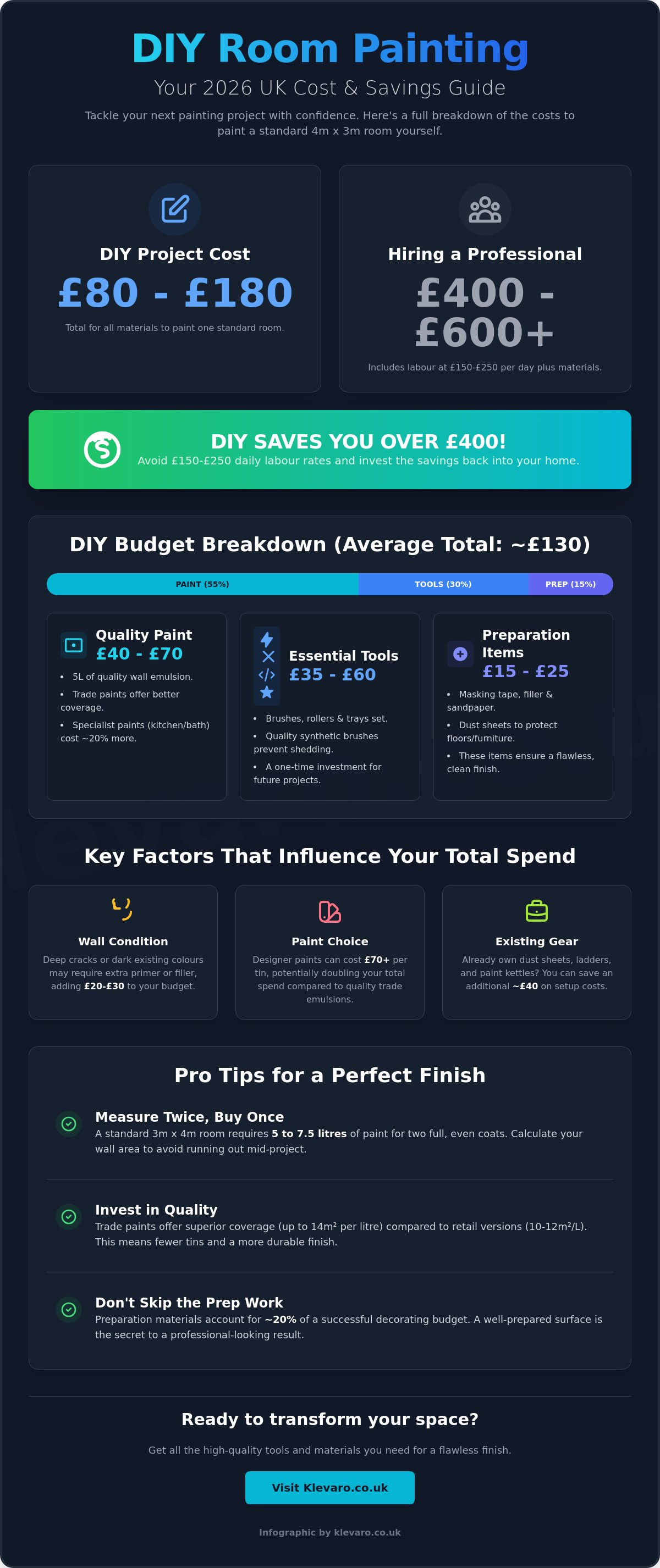
Preparation materials and hidden costs often account for 20% of the total budget.
Preparation materials and hidden costs typically account for 20% of your total budget when calculating the total cost to paint a room yourself UK. You should allocate approximately £40 to £60 for preparation essentials to ensure a professional finish on an average-sized room. These costs cover items like high-quality masking tape, surface fillers, and cleaning agents that prevent paint from peeling or bubbling. Neglecting these hidden expenses often leads to project delays or accidental damage to expensive flooring worth thousands of pounds.
Don't skip the prep work
High-quality low-tack masking tape is a non-negotiable expense for achieving crisp edges. Budget £10 for a premium roll to avoid pulling away existing paint when you remove the strip. Standard masking tape often leaves sticky residue or allows paint to bleed underneath, which ruins the clean lines you want. It's better to invest in a reliable brand than to spend hours fixing mistakes later.
Surface preparation tools like scrapers and sandpaper are frequently missing from initial DIY estimates. You'll need to include at least £5 for a tub of all-purpose filler to repair small cracks and nail holes before the first coat. Sugar soap is a chemical cleaner that removes grease and nicotine from walls to create a perfect surface for paint adhesion. A concentrated bottle costs between £3 and £5 and provides enough solution to treat an entire room.
- Masking Tape: £10 for low-tack, professional-grade rolls.
- Surface Filler: £5 for all-purpose tubs.
- Sugar Soap: £3 to £5 for deep cleaning.
- Sandpaper: £5 for a variety pack of different grits.
Protecting your home environment
Protecting your flooring and furniture is much cheaper than replacing them after a spill. Reusable cotton dust sheets require a higher upfront investment than plastic versions but offer better grip and durability. They're also more eco-friendly because they don't end up in a landfill after one use. Plastic sheets can be slippery and prone to tearing, which risks paint spills reaching your carpets or floorboards.
Ventilation is another critical factor if you're working with high-VOC (Volatile Organic Compound) paints. Ensure you have the right gear to keep the air moving while you work to stay comfortable and safe. You can check our home and garden tools for protective gear and cleaning supplies to make your project safer. Having the right equipment on hand makes the process faster and much more enjoyable.
Ready to start your next DIY project with confidence? Shop our reliable tool collection to get your prep work started today.
DIY painting saves an average of £300 compared to hiring a professional decorator.
The total cost to paint a room yourself UK averages between £80 and £150 for materials, whereas a professional decorator typically quotes between £380 and £700 for the same space. By choosing the DIY route, you eliminate the labour costs that make up the bulk of a professional quote. In 2026, UK decorators charge daily rates ranging from £150 to £350 depending on your location and their experience level. Most standard bedrooms require 1.5 to 2 days of work, including the essential preparation and drying time between coats. Choosing to do the work yourself allows you to keep that £300 to £550 in your pocket.
You essentially trade approximately 10 to 15 hours of your personal time for these significant financial savings. This trade-off is often the most sensible choice for homeowners looking to refresh their living space on a budget. Beyond the money, DIY projects offer the freedom to work at your own pace without having contractors in your home for several days. You gain a genuine sense of accomplishment and pride every time you look at your freshly painted walls.
Taking the DIY route also allows you to control the quality of materials used. You can choose to invest more in premium, durable paints while still spending less overall than a professional's total invoice. This balance of cost-effectiveness and personal satisfaction makes painting a room one of the most rewarding home improvement tasks in the UK.
When is DIY the right choice?
DIY is the most effective choice for standard rectangular rooms with walls in good condition. If your room features high vaulted ceilings, intricate Victorian coving, or requires extensive plaster repairs, a professional's expertise is safer. Focus on building your skills with one guest room before you tackle the whole house. This approach lets you refine your technique without the pressure of a high-stakes living area.
Starting your project with confidence
Success begins with a comprehensive shopping list to avoid multiple trips to the hardware store. Organise your list into categories like surface prep, paint application, and protection. Join the Klevaro community for more expert tips to help you transform your home with ease. You can visit our tools and equipment collection to get everything you need for a flawless finish. We provide the durable gear required to fix, build, and create with total confidence.
Start Your Home Transformation with Confidence
The total cost to paint a room yourself uk typically ranges from £80 to £180, offering a significant saving of £300 compared to professional services. Your budget should focus on high-quality paint as the primary expense, paired with an investment of £40 to £70 for essential tools. Remember to allocate 20% of your funds for preparation materials to ensure a seamless, long-lasting finish.
Klevaro is here to support your project every step of the way. As a trusted UK store with quality guaranteed, we provide everything you need to fix, build, and create. Our expertly curated DIY kits for beginners take the guesswork out of shopping, ensuring you have the right gear from day one. We also offer fast UK delivery on all decorating tools so you can start your project without delay.
Ready to refresh your living space? Shop our range of high-quality DIY tools and equipment to find the perfect supplies for your next project. You've got the skills and the plan; now it's time to make your home look spectacular.
Frequently Asked Questions
Is it cheaper to paint a room yourself or hire a professional?
It's significantly cheaper to paint a room yourself because you avoid professional labour fees that typically range from £150 to £250 per day in the UK. By handling the work, you only pay for materials like paint and tools, which often saves you 60% or more on the total project cost. This DIY approach allows you to invest your budget into higher quality finishes or stylish décor for your home.
How much paint do I need for a 12x12 room in the UK?
You'll typically need 5 litres of paint to cover the walls of a 12x12 foot room with two full coats. Standard UK emulsion covers approximately 10 to 12 square metres per litre, and a room of this size has roughly 35 to 40 square metres of wall space. Buying a single 5-litre tin provides enough coverage for a professional finish with a small amount left over for future touch-ups.
What is the most expensive part of painting a room yourself?
The paint itself is usually the most expensive part of the cost to paint a room yourself uk, particularly if you opt for premium or designer brands. A 5-litre tin of high-quality trade emulsion can cost between £30 and £80 depending on the specific finish and durability. While tools are a one-off investment, paint is a recurring cost that scales with the size of your space and the number of coats required.
Can I save money by using cheap paint brushes?
Using cheap paint brushes is often a false economy because they frequently shed bristles into your wet paint and create an uneven finish. High-quality synthetic brushes hold more paint and provide much smoother strokes, which reduces the time and effort needed for your project. Investing in a durable brush set ensures you can reuse them for many future projects, making them a better value choice for any DIY enthusiast.
How much does it cost to buy all the tools for painting from scratch?
Expect to spend between £50 and £100 to buy a complete set of essential painting tools from scratch. This budget covers a roller and tray set, a selection of brushes, masking tape, and protective dust sheets. Buying these items together ensures you have all the gear needed to transform your space and build with confidence.
Do I need to buy primer if I am painting over an existing colour?
You don't always need a separate primer if you're painting a similar shade over a clean, well-maintained surface. However, a primer is essential when switching from a dark colour to a light one or when painting on fresh, bare plaster. Using a dedicated primer prevents the old colour from bleeding through, which ultimately reduces the number of expensive topcoats you'll need to apply.
How can I reduce the cost of my DIY painting project?
You can reduce the cost to paint a room yourself uk by thoroughly cleaning your walls to ensure the paint adheres perfectly the first time. Buying trade-size tins instead of small retail pots offers a lower price per litre for larger areas. Additionally, cleaning your rollers and brushes immediately after use allows you to reuse them for years, cutting down on the need to buy new equipment for every room.
Leave a comment