


Animal Friendly Weed Killer: The Ultimate Guide to Pet-Safe Gardening in 2026
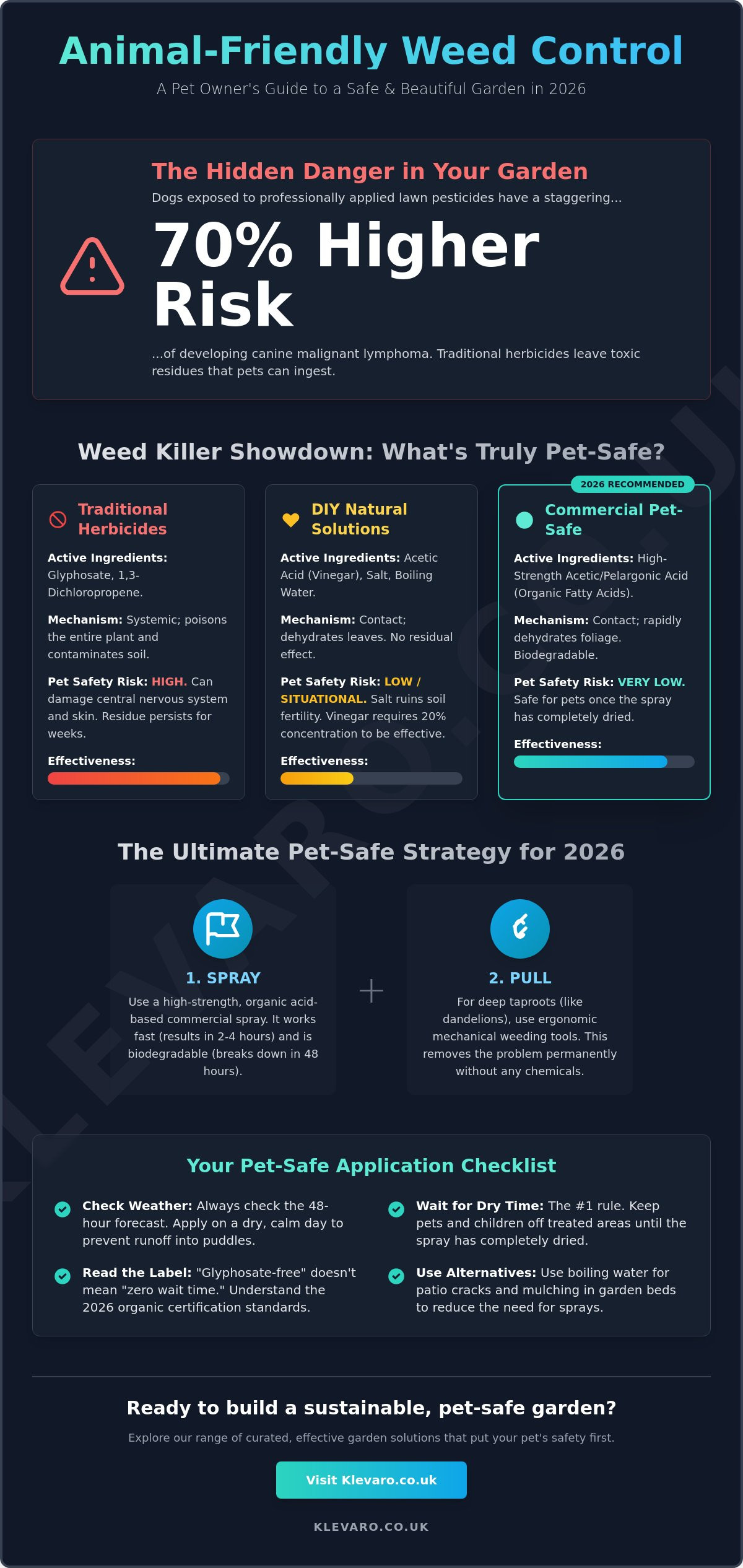
Dogs exposed to professionally applied lawn pesticides have a 70% higher risk of developing canine malignant lymphoma according to a study by Tufts University. The most effective animal friendly weed killer for your garden in 2026 is a high-strength organic acid solution, such as acetic or citric acid, paired with mechanical weeding tools. You must keep pets off treated areas until the spray has dried completely to ensure their safety. This hybrid approach eliminates the need for toxic chemicals like 1,3-Dichloropropene, which faced strict new California regulations on January 1, 2026.
You want a beautiful, weed-free garden but refuse to compromise on your pet's long-term health. We understand the fear of chemical residue on paws and the frustration of natural remedies that don't seem to work. This guide promises to show you exactly how to eliminate stubborn weeds effectively without risking local wildlife or your best friend.
We'll explore the latest 2026 labeling requirements, clarify "pet-safe" marketing myths, and provide a step-by-step plan for a pristine lawn. Get ready to transform your outdoor space into a safe haven where your dog can play with total peace of mind.
Key Takeaways
- Identify why glyphosate-free formulas are essential for protecting your pet's central nervous system and skin health.
- Compare the immediate results of commercial pelargonic acid sprays against cost-effective DIY vinegar and salt solutions.
- Implement a 48-hour weather forecast check to ensure your animal friendly weed killer stays on the target plant and out of rainwater puddles.
- Use ergonomic mechanical weeding tools to remove deep taproots and eliminate the need for chemical interventions in sensitive garden areas.
What is an animal friendly weed killer and why is it necessary?
An animal friendly weed killer is a herbicide formulated without glyphosate or synthetic chemicals that could harm a pet through contact or ingestion. These products typically use organic acids or physical barriers to dehydrate weed foliage rather than attacking the plant's internal systems. Traditional herbicides pose severe risks to the central nervous systems and skin integrity of domestic animals and local pollinators. A product is considered truly pet-safe when it uses biodegradable ingredients and has a clearly defined "dry time" for safe re-entry. These solutions are necessary because they prevent toxic residue from being picked up on paws and ingested during grooming. Using these alternatives ensures your driveway and lawn remain clear without endangering your dog or local UK wildlife.
Choosing the right product involves understanding how different herbicides interact with your environment. Traditional options often work systemically, meaning the chemical travels through the entire plant and stays in the surrounding soil. An animal friendly weed killer works differently by targeting the leaf surface specifically. This localized action reduces the risk of long-term contamination in your garden beds. It's a practical shift that allows you to maintain a tidy driveway while keeping your pet's playground safe. By prioritizing these formulas, you're investing in a more sustainable garden ecosystem that supports both your pets and local biodiversity without the need for harsh synthetic toxins.
The hidden dangers of traditional glyphosate-based herbicides
Standard weed killers leave invisible residues that persist on grass and soil for weeks. Pets pick up these chemicals on their paws and fur, eventually ingesting them during grooming. This direct contact can lead to skin irritation or long-term internal health problems. In the UK, chemical runoff also threatens wildlife like hedgehogs and frogs who drink from contaminated garden puddles. These toxins can also kill beneficial soil bacteria, which are essential for natural nutrient cycling and plant growth.
Defining "Pet-Safe" in the 2026 gardening market
The 2026 UK market separates "natural" DIY fixes from "organic-certified" commercial sprays. While vinegar is popular, professional biodegradable products must meet strict breakdown standards to ensure they don't linger. Remember that "glyphosate-free" is not a synonym for "zero wait time." You should also combine sprays with chemical-free weeding techniques like mulching to minimize chemical reliance. To keep your garden safe and stylish, you can explore our range of garden accessories.
Comparing natural DIY solutions and commercial pet-friendly products
Commercial pet-friendly sprays using pelargonic or acetic acid are more effective than standard household vinegar for long-term weed management. These products provide visible results within 2 to 4 hours and break down in the soil within 48 hours. While natural DIY solutions like salt and boiling water are cost-effective, they lack the residual control found in professional formulas. Salt creates a "scorched earth" effect that ruins soil fertility for years, so it should only be used on driveways. Boiling water is the safest zero-chemical method for patio cracks but won't prevent new seeds from germinating. For a reliable animal friendly weed killer, choose a commercial fatty acid spray to ensure your lawn stays healthy and your pets remain safe. These sprays work by dehydrating the plant rather than poisoning the soil. This approach protects your pets from ingesting toxins while keeping your garden tidy.
Choosing between a kitchen cupboard remedy and a store-bought spray depends on your specific garden needs. If you're tackling small weeds in paving gaps, boiling water is a brilliant, free resource. It instantly collapses the plant's cell structure on contact. However, for larger areas or stubborn perennial weeds, a dedicated commercial spray is much more practical. These formulas are designed to stick to the leaf, ensuring the active ingredients aren't washed away by a light drizzle. This efficiency means you'll spend less time spraying and more time enjoying your outdoor space with your furry friends.
The pros and cons of acetic acid (vinegar) and salt
Standard white vinegar from the supermarket only contains about 5% acetic acid. To kill tough UK weeds like dandelions or nettles, you'll need a concentration closer to 20%. You can create a simple surface spray by mixing one litre of high-strength vinegar with a tablespoon of eco-friendly dish soap to help it cling to leaves. Be extremely careful with salt; it dehydrates the soil so effectively that nothing will grow there for a long time. This is perfect for a gravel driveway but a disaster for a flowerbed or lawn where you want to maintain biodiversity.
How fatty acids and citrus oils work as herbicides
Many modern animal-friendly products use fatty acids or citrus oils to strip the waxy cuticle from the weed's leaf. Once this protective layer is gone, the plant loses moisture and dies from dehydration. This physical process is much safer for bees and ladybirds than systemic poisons that circulate through the plant's nectar. These ingredients are highly biodegradable, often disappearing from the environment within 24 to 48 hours. If you're looking to upgrade your gardening kit, you can explore our range of garden accessories to make application even easier.
Using a targeted approach helps you maintain a stylish home and garden without compromising on safety. By matching the right solution to the right area, you'll get professional results with total peace of mind. Whether you're using a home-made spray or a trusted commercial brand, always prioritize the health of your pets and the local ecosystem for a truly sustainable garden.
Effective chemical-free weeding tools and techniques
Mechanical weeding is the most reliable way to ensure a chemical-free environment for your pets. Hand tools provide the precision needed to extract deep taproots from borders without damaging nearby flowers. Thermal weeding tools use intense heat to destroy plant cells, which means there is zero wait time for pets to return to the area. Pressure washing removes moss and weed seeds from patios using only water. These physical techniques serve as a permanent animal friendly weed killer because they avoid the risks associated with chemical ingestion or skin contact.
Combining physical removal with the organic sprays mentioned earlier creates a powerful defense system for your lawn. While a spray might kill the foliage, a hand tool ensures the root is gone for good. This dual-action approach reduces the total amount of product you need to apply over the season. It's a practical way to keep your garden looking stylish while maintaining a safe playground for your dog.
Precision weeding with high-quality hand tools
Using the right tool for your specific soil type makes weeding much less of a chore. For narrow gaps in paving or between bricks, a weeding knife or "L" shaped scraper is the best choice. If you're working in loose border soil, a Dutch hoe or a hand trowel allows you to lift weeds without disturbing the roots of your favorite plants. Explore our comprehensive range of tools and equipment to find the right ergonomic fit for your garden.
Adopting a "little and often" approach is the secret to a low-maintenance garden. By spending ten minutes a week pulling young weeds, you prevent them from setting seeds and spreading across your lawn. This habit is far more effective than waiting for a massive breakout that requires heavy intervention. It's the foundation of building a sustainable, pet-safe garden and provides a manual animal friendly weed killer alternative that never expires.
Using heat and water as natural herbicides
Thermal weeding is a fantastic alternative to traditional sprays, especially for driveways and gravel paths. These gas or electric burners deliver a quick blast of heat that boils the water inside the weed's cells. The plant doesn't need to be turned to ash; a quick sear is enough to kill it within a few days. Always keep your dog at a safe distance during the burn to prevent accidental injuries. Once the ground has cooled, which usually takes just a few minutes, your pet can roam freely without any chemical concerns.
Pressure washing is equally effective for clearing large areas of hard landscaping. High-pressure water jets blast out moss, algae, and weed seeds from the joints between paving slabs. This method deep-cleans your patio while removing the organic matter that weeds need to grow. You can learn more by choosing the best pressure washer for your home and garden in our detailed guide. It's a chemical-free way to keep your outdoor spaces looking fresh and safe for the whole family.
How to safely apply weed killer in a pet-friendly garden
To safely use an animal friendly weed killer, you must keep all pets indoors until the treated area is completely dry. This drying process typically takes between 2 and 4 hours depending on the humidity and temperature. Always verify the 48-hour weather forecast before starting to ensure rain doesn't wash the product into puddles where animals might drink. Clear the garden of all pet toys, food dishes, and water bowls prior to application. Targeting the weed foliage specifically minimizes soil saturation and reduces the overall chemical footprint in your outdoor space. Following these steps guarantees that your weed control efforts don't compromise your pet's health.
Preparation is the most important part of the process. By creating a clear workspace, you prevent accidental contamination of items your pet frequently puts in its mouth. It's also helpful to spray on a calm day to ensure the product stays exactly where you want it. This proactive approach keeps your lawn looking its best while maintaining a secure environment for your furry family members.
Preparation and application safety checklist
- Remove all animal-related items from the treatment zone to prevent residue buildup on toys or bowls.
- Use a dedicated sprayer equipped with a nozzle shroud to keep the spray focused on individual weeds.
- Monitor the wind direction to prevent drift, which is the accidental movement of spray particles to non-target areas.
Using a shroud or a cone attachment on your sprayer is a simple way to protect your grass. It ensures the animal friendly weed killer only touches the weeds you want to eliminate. This precision is vital for maintaining the health of your lawn and the safety of your pets.
Post-application protocols for different animals
Different pets require unique safety considerations after you've treated the garden. If your dog accidentally runs onto a wet zone, wash their paws immediately with warm, soapy water to prevent them from licking off the residue. For grazing pets like rabbits or guinea pigs, you should avoid using any chemical sprays on their specific grazing patches entirely. Their digestive systems are incredibly sensitive, and even organic acids can cause distress if ingested in large quantities while they eat grass.
Safe storage is just as important as safe application. Keep all bottles and sprayers in a locked cabinet or within secure garden accessories to prevent curious pets from chewing on containers. Leaks can happen, so storing these items in a secondary plastic bin adds an extra layer of protection. To keep your outdoor space organized and safe, explore our range of garden essentials today.
Building a sustainable, pet-safe garden with Klevaro
A sustainable, pet-safe garden relies on a healthy ecosystem that naturally outcompetes weeds. You can achieve this by maintaining a thick lawn canopy through regular aeration and overseeding. Investing in high-quality mechanical tools reduces your reliance on even the best animal friendly weed killer. Healthy soil and organic mulching provide a long-term defense against invasive species. Combining these cultural practices with targeted organic treatments creates a safe haven for your pets. This holistic approach ensures your outdoor space remains stylish and functional for every family member.
Transforming your garden into a pet-safe haven is a journey that starts with the right equipment. High-quality tools allow you to manage your space with precision and ease. When you invest in durable gear, you're less likely to reach for emergency chemical interventions. A well-maintained garden isn't just about aesthetics; it's about creating a durable environment where your dog can play without restriction. Join the Klevaro community today to receive more expert tips on maintaining a beautiful, safe outdoor space for your whole family.
Essential maintenance for a weed-resistant lawn
Thick, healthy grass is the most effective natural defense against weeds. Regular aeration allows oxygen and nutrients to reach the roots, while overseeding fills in bare patches before weed seeds can take hold. This dense canopy blocks the sunlight that weeds need to germinate. You can find more advice on these basics in our guide to your essential gardening tools: a beginner's checklist. Using organic mulches like bark or woodchips in your borders also suppresses unwanted growth and keeps soil moisture consistent.
Creating a wildlife-friendly and pet-safe sanctuary
Consider practicing a bit of "benign neglect" in the quieter corners of your garden. Leaving some areas a little wilder supports essential pollinators like bees and butterflies. This balance between a tidy lawn and a natural habitat creates a vibrant, living space. You can enhance these areas with stylish home and garden decor that complements a natural look. It's about building a sanctuary that feels as good as it looks.
Gardening should be a joy for every member of the family, including those with four legs. By choosing an animal friendly weed killer and using the right tools, you're making a positive choice for your pets and the planet. We're here to help you every step of the way with quality gear and practical advice. Let's create a space you'll love to spend time in all year round.
Transform your garden into a safe haven today
Maintaining a beautiful outdoor space shouldn't come at the expense of your pet's health. By choosing an effective animal friendly weed killer and using precision mechanical tools, you can eliminate invasive plants without the risks associated with traditional chemicals. Always follow the 48-hour weather rule and the specific 4-hour dry times mentioned in this guide to ensure total safety for your furry friends. These small steps create a sustainable environment where your lawn can thrive and your pets can play freely.
Klevaro is your partner in building a sustainable and stylish home. As a trusted UK retailer, we provide expert-selected DIY and garden gear that makes maintenance simple and efficient. Our fast delivery and quality guarantee mean you can start your next project with confidence, knowing you have the right tools for a safe environment. We're committed to helping you create a space that looks professional and feels like home.
Take the first step toward a worry-free garden today. Shop our full range of garden tools and accessories for a pet-safe home to find everything you need for your outdoor transformation. You'll love the peace of mind that comes with a garden made for everyone to enjoy. Happy gardening!
Frequently Asked Questions
Is vinegar weed killer really safe for dogs?
Household vinegar is safe for dogs once it has dried completely on the plant. You should use a concentration between 5% and 20% acetic acid to be effective against tough garden weeds. While it's non-toxic, the liquid can cause temporary eye or skin irritation if your dog walks through a wet patch. Keep your pets indoors during application and for at least 2 hours afterward to ensure the area is dry.
How long after spraying weed killer can I let my cat out?
You can let your cat out once the spray is 100% dry, which usually takes between 2 and 4 hours. Cats are meticulous groomers and will lick any damp residue off their paws or fur, so this waiting period is essential. Check the treated foliage with a gloved hand to confirm there's no lingering moisture before allowing them access. On humid or overcast days, you might need to wait longer for the product to set.
What happens if my pet eats a weed that was sprayed with pet-safe weed killer?
Most pet-safe herbicides use organic acids that might cause mild stomach upset or drooling but aren't life-threatening. Monitor your pet for vomiting or lethargy and call a vet if symptoms last longer than 12 hours. It's best to discourage grazing on treated weeds until they've turned brown and withered. This physical change usually happens within 24 to 48 hours of application.
Can I use boiling water to kill weeds on my lawn?
Boiling water isn't suitable for lawns because it kills every plant it touches, including your grass. Use this method only for patio cracks, gravel driveways, or between paving slabs where you want to clear all vegetation. For a healthy lawn, use a targeted animal friendly weed killer spray or a manual weeding tool to protect the surrounding turf. This prevents large dead patches from appearing in your grass.
Are there any weed killers that are safe for rabbits and guinea pigs?
Mechanical weeding is the only 100% safe option for grazing pets like rabbits and guinea pigs. These animals consume large volumes of foliage, which significantly increases their risk of ingesting concentrated ingredients. While some commercial sprays are labeled safe, it's better to avoid any chemical contact on their specific grazing patches. Stick to hand-pulling or using a weeding knife in the areas where they exercise.
Does "glyphosate-free" always mean it is safe for all animals?
A "glyphosate-free" label doesn't guarantee a product is safe for all pets; it only means it lacks one specific chemical. Some alternatives still contain synthetic surfactants or irritants that could harm sensitive animals. Look for a dedicated animal friendly weed killer that is certified biodegradable and lists all active ingredients. Always read the full safety instructions on the back of the bottle before you start spraying.
What is the best time of day to apply pet-friendly weed killer?
The best time to apply your spray is late morning on a sunny day after the morning dew has evaporated. Sunlight helps organic acids work faster by accelerating the dehydration of the weed's leaves. Avoid spraying in the late evening, as cooler temperatures and overnight dampness can keep the product wet for much longer. This ensures the garden is dry and safe for your pets to return by the afternoon.
How can I prevent weeds from growing back without using chemicals?
Apply a 5cm to 10cm layer of organic mulch or woodchips to your garden borders to block sunlight from reaching weed seeds. You should also keep your lawn thick and healthy by overseeding bare patches in the spring and autumn. A dense lawn canopy naturally suppresses weeds by leaving no room for them to germinate. These physical methods provide a permanent solution that's completely safe for every member of the family.
Leave a comment