


Choosing the Best Pressure Washer for Your Home and Garden in 2026
The secret to a spotless patio isn't just buying the most powerful pressure washer. For most homes, the best choice balances a pressure of 110-130 bar with a water flow rate of over 380 litres per hour (L/h). This sweet spot delivers fantastic cleaning power for patios and cars without the risk of damaging delicate surfaces like aged stonework or vehicle paint.
It's easy to feel overwhelmed by the technical numbers, worrying you'll either pick a machine that can't shift stubborn grime or one so aggressive it strips your fence bare. We understand the anxiety of getting it wrong, but finding the perfect tool is simpler than you think.
This 2026 guide promises to make you an expert. You'll learn exactly how to match the right bar pressure and flow rate to every outdoor task, from gentle cleaning to tackling tough dirt. We'll break down the specs that matter and show you which accessories give you the best value for a sparkling clean home and garden.
Key Takeaways
- Understand why water flow rate (LPM) is often more important for fast, effective cleaning than maximum bar pressure alone.
- Learn how to match a machine’s power to your specific jobs, from light-duty car washing to heavy-duty patio cleaning.
- Discover how a simple maintenance checklist can extend the life of your pressure washer and prevent common breakdowns.
- Avoid overspending by identifying the right power category for your most frequent tasks before you make a purchase.
A pressure washer is a high-pressure mechanical sprayer used to remove loose paint, mould, grime, and dirt from surfaces.
A pressure washer is a high-pressure mechanical sprayer that transforms a standard garden hose into a powerful cleaning tool. It works by using an internal electric motor or petrol engine to power a pump, which dramatically increases the water pressure. This creates a focused jet of water capable of blasting away stubborn dirt, grime, and even loose paint in seconds. For property owners across the UK, this tool is an essential piece of kit for maintaining everything from block-paved driveways and wooden decking to cars and garden furniture. Crucially, modern machines are designed for efficiency, using significantly less water than a hosepipe to achieve far better results.
This powerful device makes light work of demanding outdoor cleaning jobs that would otherwise require hours of strenuous effort. Instead of harsh chemicals and endless scrubbing, a pressure washer uses the simple force of water to restore surfaces to their original condition. It’s the ultimate DIY tool for keeping your home's exterior looking its best all year round.
How jet washers save time and water
The secret to a jet washer's efficiency lies in its high-pressure nozzle. This concentrated stream of water delivers incredible cleaning power that manual scrubbing simply can't match. What might take hours of hard work with a bucket and brush can often be completed in just a few minutes, saving you effort and freeing up your weekend.
This efficiency also extends to water consumption. A typical garden hose can use over 1,000 litres of water per hour, while a pressure washer uses up to 80% less, averaging around 400-500 litres per hour. The machine's pump rapidly accelerates the water, creating a powerful blast that does the work of a much larger volume of low-pressure water. It's a smarter, more sustainable way to clean your outdoor spaces.
The difference between electric, cordless, and petrol models
Choosing the right machine depends entirely on your needs. For most UK homes, an electric model is the perfect all-rounder. They are lightweight, relatively quiet, and powerful enough for common tasks like cleaning patios, fences, and cars, provided you have easy access to an outdoor socket.
Cordless, battery-powered models offer ultimate portability. These are ideal for quick, convenient jobs where running a power cable would be a hassle. Think washing the car on the drive, cleaning a muddy bike after a trail ride, or tackling a small balcony in a flat. Their runtime is limited by battery life, making them best suited for smaller tasks.
When you need serious power for demanding jobs, a petrol pressure washer is the only choice. These robust machines are built for heavy-duty commercial use or maintaining large estates. Their powerful engines can strip old paint, clean agricultural machinery, and tackle the most ingrained dirt on vast driveways. They are heavier, louder, and require more maintenance, but their performance on tough jobs is unmatched.
Water flow rate is more important than maximum bar pressure for efficient cleaning.
The secret to fast and effective outdoor cleaning isn't the highest pressure; it's the highest flow rate. While Bar pressure provides the force to lift stubborn dirt, the water flow rate (measured in litres per hour) provides the rinsing power to wash it away. A machine with very high pressure but low water flow will take significantly longer to clean a large area like a driveway because it lacks the volume to clear debris efficiently. For most UK home and garden tasks, the ideal balance is a pressure washer with 110-150 Bar and a flow rate of at least 400 litres per hour (L/hr).
Think of it like this: a high-pressure, low-flow jet is like a sharp pencil. You can draw a very fine, clean line, but colouring in a large shape would take forever. A machine with a high flow rate is like a broad paintbrush; it covers more ground with every pass, sweeping away the dirt loosened by the pressure. This is precisely why professional-grade machines prioritise high flow rates, often over 600 L/hr, to complete jobs quickly and effectively.
Understanding Bar pressure and PSI
Bar is the metric unit used to measure pressure in the UK, and it tells you how much force the water jet exerts. A pressure of around 110 Bar is more than enough for delicate tasks like washing your car, cleaning plastic garden furniture, or clearing moss from a fence. To tackle tougher grime on stone patios, brick walls, or concrete driveways, a model with 130 Bar or more will deliver better results.
However, more pressure is not always better. Using a high-power jet on the wrong surface can cause irreversible damage. A 140 Bar jet can easily splinter a wooden deck or blast away old, fragile mortar from between bricks. Always start with a lower pressure setting or a wider fan nozzle, and remember that using the correct Proper maintenance and safety gear is essential to prevent high-pressure water from causing serious injury.
Why Flow Rate (L/hr) determines your cleaning speed
Flow rate, measured in litres per hour (L/hr), is the volume of water your machine pumps out in 60 minutes. This is your cleaning speed. If Bar pressure is the chisel that chips away at dirt, flow rate is the powerful wave that washes all the fragments away, leaving a clean surface behind. Without sufficient flow, you're just pushing dirt from one spot to another.
Let's compare a typical entry-level model at 360 L/hr with a more robust mid-range unit offering 500 L/hr. While both might have similar Bar ratings, the 500 L/hr machine will clean the same grimy patio in nearly half the time. That extra 140 litres of water flowing every hour dramatically increases its ability to rinse away filth, reducing the number of passes you need to make. This efficiency is what saves you time and effort.
The key takeaway is to look beyond the big Bar number on the box. A well-balanced machine will make your weekend cleaning projects faster and far more satisfying. Finding a model with the right combination of force and flow is the first step to transforming your outdoor spaces. If you're ready to find that perfect balance, you can explore our range of reliable pressure washers built for every DIY task.
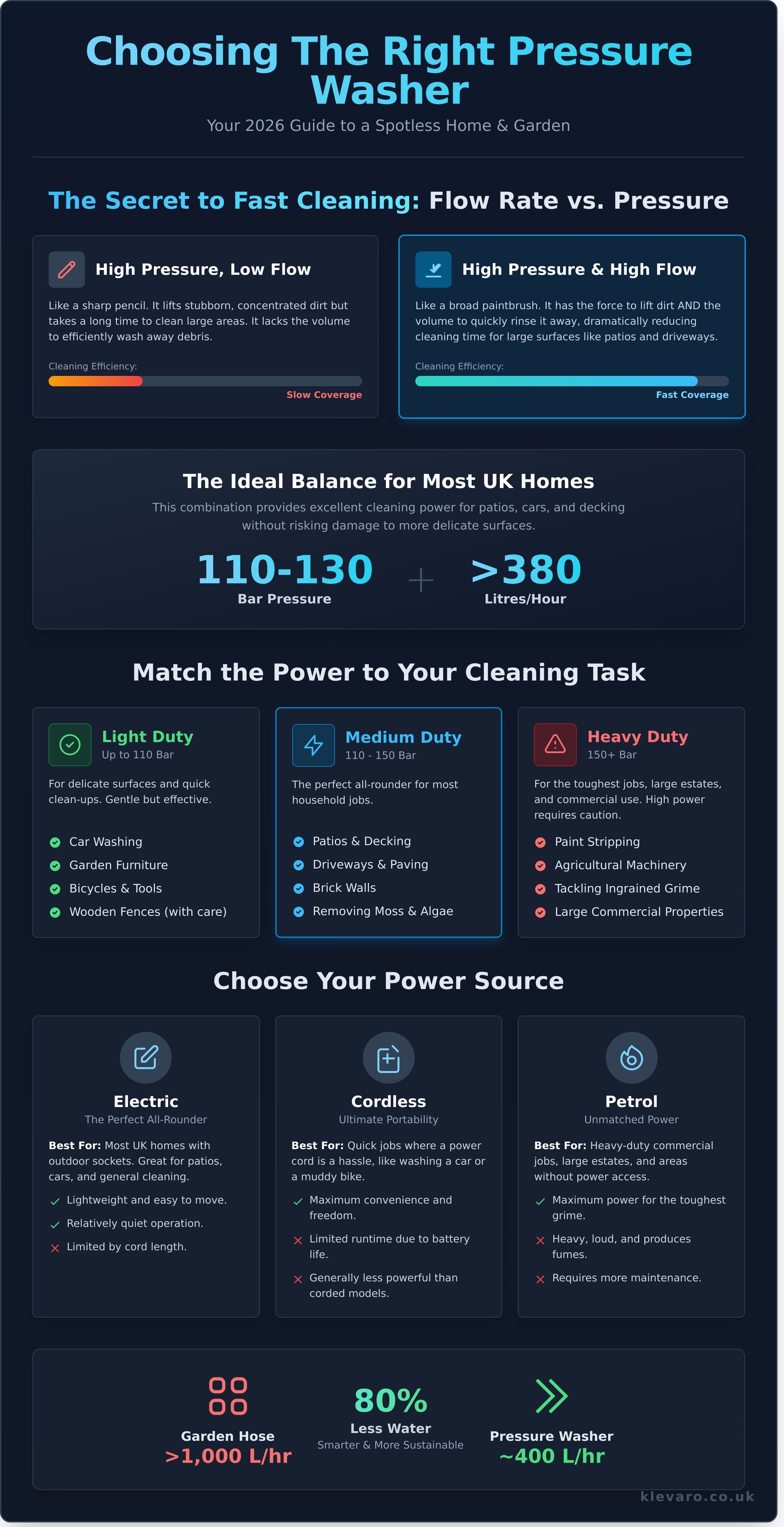
Match your pressure washer power to the specific cleaning task.
Choosing the right pressure washer comes down to what you need to clean. For light-duty tasks like washing cars or garden furniture, a machine with 100-110 Bar is ideal. Medium-duty jobs, such as cleaning decking and fences, require 110-130 Bar. For heavy-duty work like blasting stubborn grime from patios and driveways, you’ll need a powerful model delivering 130-150 Bar or more. Power is only half the story; selecting the correct nozzle is critical for achieving a great finish without causing damage. Using an overly powerful jet on a soft surface can strip paint or splinter wood, a fact highlighted in this official pressure washer safety warning.
Best specs for car detailing and bicycles
Delicate surfaces demand a gentle approach. A pressure washer set to around 100-110 Bar provides enough force to remove mud and traffic film without risking damage to your vehicle's paintwork, seals, or bearings. Always start with a lower pressure and test on an inconspicuous area first.
For the best results, pair the lower pressure with a wide-angle fan nozzle, typically 40 degrees or more. This spreads the water over a larger area, reducing its impact. A dedicated car brush attachment can also be brilliant for agitating dirt. Many models feature an integrated detergent tank, which is perfect for applying a thick layer of snow foam. This pre-wash treatment lifts grime away from the surface, making the final rinse much more effective and safer for your paint.
Tackling patios, driveways, and masonry
Hard surfaces like concrete, stone, and brick can withstand much greater force. To effectively remove years of built-up lichen, moss, and stubborn oil stains, you need a machine capable of producing 130-150 Bar. This level of power is what it takes to restore your patio or driveway to its former glory.
The right attachment makes all the difference. For deeply ingrained dirt on hard stone, a "dirt blaster" or rotary nozzle is the tool for the job. It projects a concentrated, spinning jet of water that breaks down tough grime with ease. To clean large, flat areas like a patio or driveway, a dedicated patio cleaner attachment is essential. This accessory not only speeds up the job but also contains the spray, preventing messy splashback on your walls and windows while ensuring a beautiful, even, and streak-free finish.
Your pressure washer is a powerful ally in outdoor maintenance, but its true potential is unlocked with the right accessories. From gentle brushes for your car to powerful rotary nozzles for stonework, having the correct attachment for each task ensures you get professional results safely and efficiently. Get your garden and driveway ready for the season. Explore the full range of quality gear in the Klevaro tools and equipment collection and fix, build, and create with confidence.
Proper maintenance and safety gear extend the life of your jet washer.
It's a common myth that jet washers are prone to breaking down. The truth is, a few simple habits are all it takes to ensure your machine delivers powerful, reliable performance for years to come. By following a straightforward care routine and always using the correct safety equipment, you protect both your investment and yourself. This small-time commitment pays off with a machine that's always ready for action.
Get into the habit of running through this quick checklist before and after every cleaning job. It only takes five minutes and is the single best way to prevent common faults and keep your pressure washer in top condition.
Your Pre-Use Checklist:
- Check Connections: Ensure the high-pressure hose and garden hose are securely fastened with no leaks. A tight seal prevents pressure loss.
- Inspect Hoses: Quickly look over hoses for any visible cracks, bulges, or damage that could lead to a burst.
- Clean Inlet Filter: Check the water inlet filter for any debris like grit or leaves and rinse it clean. This is vital for protecting your pump.
- Prime the Pump: Connect the water supply, turn on the tap, and squeeze the trigger gun (with the machine off) until a steady stream of water flows out. This purges air from the system.
Your Post-Use Checklist:
- Flush the System: If you used detergent, run clean water through the system for a minute to clear out any residue.
- Release Pressure: Turn the machine off, then squeeze the trigger to release any trapped pressure in the hose.
- Drain Completely: Disconnect all hoses and allow all water to drain out of the pump, gun, and lance.
- Store Safely: Coil hoses neatly and store your machine in a dry, frost-free place like a shed or garage.
Preventing pump damage and winter care
The pump is the heart of your machine, and protecting it is your top priority. Never, ever run the machine without a connected and running water supply. Running the pump "dry" for even a few seconds causes it to overheat, leading to permanent damage to internal seals and pistons. Always ensure water is flowing freely through the lance before you switch the power on.
Winter poses the biggest threat in the UK. When water freezes, it expands by about 9%, which is more than enough force to crack the pump casing or other internal components. Before the first frost hits, you must fully winterise your machine by draining every drop of water from the pump, hoses, and accessories. This simple step prevents a costly repair bill in the spring.
Essential safety gear for outdoor cleaning
A jet washer is a powerful tool that can turn tiny stones and splinters into high-velocity projectiles. Always wear safety goggles or a full-face visor to protect your eyes from flying debris. Your footwear is just as important. Never operate the machine in flip-flops or open-toed shoes; the high-pressure jet can cause serious injury to your feet. Always opt for sturdy, waterproof boots with non-slip soles.
Combining electricity and water requires extra caution. We strongly recommend plugging your jet washer into an RCD (Residual Current Device) adapter. This life-saving device will cut the power instantly if it detects an electrical fault, significantly reducing the risk of electric shock. You can find all the essential protective gear you need to tackle your outdoor tasks with confidence by exploring our range of quality garden accessories.
Find the right pressure washer and outdoor equipment at Klevaro.
Choosing the right outdoor cleaning tools transforms a difficult chore into a satisfying project. As we've explored, the key is to select a pressure washer based on its flow rate and how frequently you'll tackle jobs like cleaning patios, driveways, and fences. At Klevaro, we're your reliable partner for every UK DIY and garden project, offering the quality gear you need to achieve brilliant results every time.
We believe that having the right tool is just the beginning. That’s why we invite you to join the Klevaro community. You'll get exclusive access to more expert tips, seasonal maintenance guides, and inspiration for your next home improvement challenge. It’s the perfect way to build your skills and connect with fellow DIY enthusiasts.
Ready to make your outdoor spaces shine? Find everything you need to get started in the Klevaro home and garden collection. Your next project is just a click away.
Why shop with Klevaro for your DIY tools?
We're more than just an online store; we're a trusted UK partner committed to helping you succeed. When you choose Klevaro, you're not just buying a tool, you're investing in confidence. Here’s what sets us apart:
- Fast UK Delivery: Get the tools you need delivered directly to your door, quickly and reliably, so you can get to work without delay.
- Our "Quality Guaranteed" Promise: Every product we stock is selected for its durability and performance. We stand behind our gear because we know it’s built to last.
- Approachable, Expert Support: Have a question? Our friendly team is here to provide practical advice to help you choose the perfect equipment for your specific needs.
- Trusted by the Community: Don't just take our word for it. Check out the latest customer favourites in our tool section to see what fellow home improvers are using and loving.
Complete your garden transformation
A pristine patio or a spotless deck is the foundation of a great outdoor living space. It’s the clean canvas on which you can create your perfect garden retreat. Once your new pressure washer has worked its magic, why not complete the vision?
Imagine relaxing on a sparkling clean patio, surrounded by comfortable and elegant seating. You can elevate your entire garden by pairing your hard work with our collection of stylish garden furniture. From dining sets for family barbecues to cosy loungers for sunny afternoons, we have everything you need to turn your garden into your favourite part of your home.
Don’t wait to create the outdoor space you’ve been dreaming of. Get yours today and start your home transformation.
Get Your Garden Ready with the Right Pressure Washer
You're now equipped with the expert knowledge to choose the perfect cleaning partner for your home. Remember that focusing on water flow rate over just the maximum bar pressure leads to more efficient cleaning. Matching your machine's power to the task at hand, from washing the car to deep-cleaning the patio, is the key to getting brilliant results without causing damage.
Ready to make your outdoor spaces sparkle? Klevaro has the ideal pressure washer and all the essential gear you need to tackle any project with enthusiasm. As a trusted UK store, we're here to help you fix, build, and create with complete confidence.
Shop our full range of durable DIY tools and equipment today. With our Quality Guaranteed promise, Fast UK Delivery, and easy returns, you have everything you need to get started. Your pristine driveway and gleaming garden furniture are waiting!
Frequently Asked Questions
What is the best bar pressure for cleaning a patio?
The ideal pressure for cleaning most patios is between 130 and 150 bar. This range delivers enough force to effectively remove stubborn dirt, algae, and moss from robust surfaces like stone and concrete. For more delicate block paving with sand-filled joints, reduce the pressure to around 110 bar and use a dedicated patio cleaning attachment to prevent dislodging the sand. Always test on a small, hidden area first.
Can I use a pressure washer to clean my car without damaging the paint?
Yes, you can safely use a pressure washer on your car by using the correct settings and technique. Keep the pressure below 130 bar and use a wide-angle fan nozzle, typically 25 or 40 degrees, to soften the spray's impact. Maintain a distance of at least 30-50 cm from the paintwork and avoid concentrating the jet on window seals, lights, or areas with chipped paint to prevent damage.
Do I need a special tap to use a pressure washer in the UK?
No, you do not need a special tap. Most pressure washers in the UK are designed to connect directly to a standard outdoor garden tap, which usually has a 3/4 inch BSP thread. All you'll need is a universal hose connector to create a secure, leak-free seal. Just ensure your tap can provide a minimum water flow rate of around 8 litres per minute to keep the machine running smoothly.
What is the difference between a universal motor and an induction motor in a jet washer?
The primary difference lies in their durability and performance. Induction motors are brushless, making them quieter, more efficient, and longer-lasting, often by 3 to 5 times, which is perfect for frequent, tough jobs. Universal motors use carbon brushes, which makes them lighter and more affordable. They are a great choice for occasional use and easy storage, but they are louder and will wear out more quickly.
How much water does a pressure washer actually use per hour?
A typical domestic pressure washer uses between 300 and 600 litres of water per hour. While this may sound high, it's up to 70% more efficient than a standard garden hose, which can easily use over 1,000 litres in the same period. The high-pressure jet cleans much faster, meaning you get the job done in less time and ultimately use less water overall.
Can I use a pressure washer with a water butt or standing water?
Yes, but only if you have a self-priming pressure washer model specifically designed for this purpose. These machines can draw water from an unpressurised source like a water butt or even a pond. To do this, you will need a special suction hose kit that includes a filter on the end to stop debris from being sucked into the pump and causing damage.
Is it safe to use a pressure washer on wooden decking?
It is safe to clean wooden decking with a pressure washer, but you must use a low-pressure setting to avoid damaging the wood. Select a pressure no higher than 80 bar and use a wide fan nozzle (at least 25 degrees) to distribute the force. Always keep the nozzle moving in long, sweeping motions with the grain of the wood and maintain a distance of at least 30 cm from the surface.
Leave a comment