


Tableware Buying Guide: How to Choose Practical and Stylish Sets in 2026
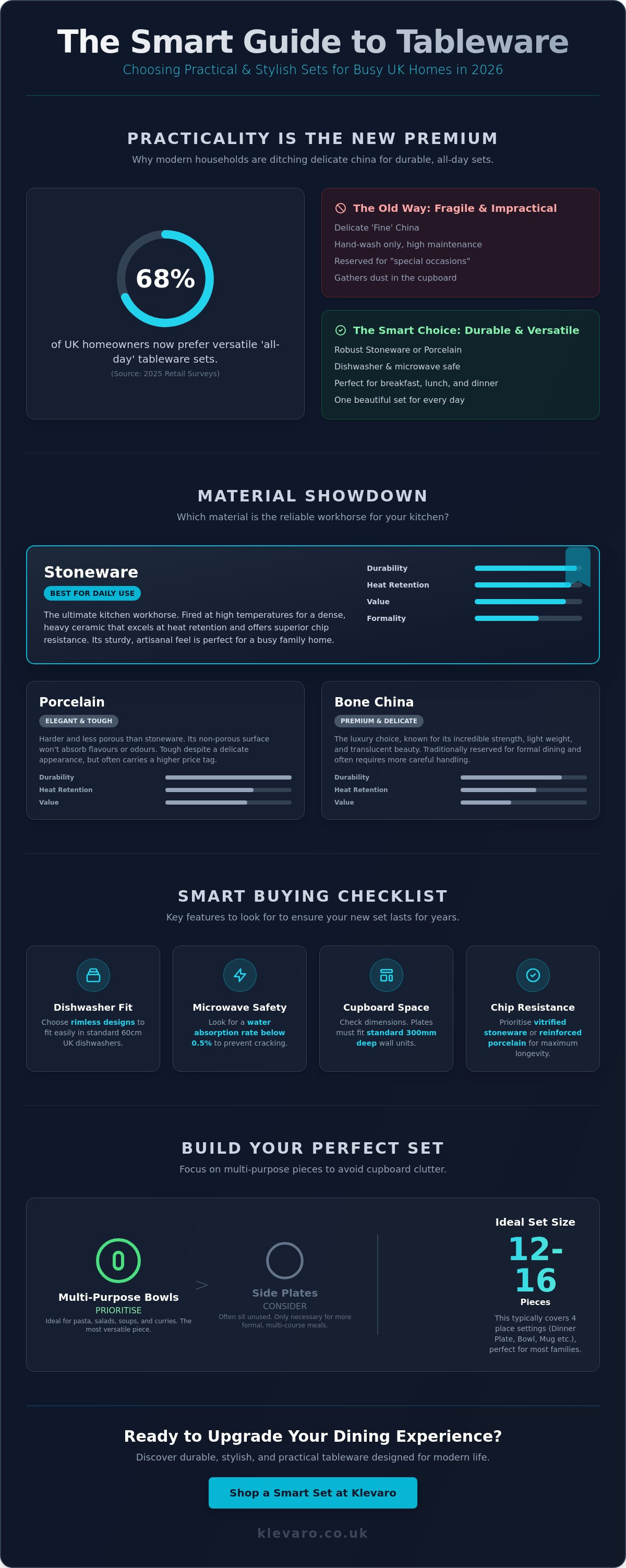
The most expensive fine bone china is often the wrong choice for a busy UK household. To choose practical and stylish tableware in 2026, prioritise vitrified stoneware or reinforced porcelain with a rimless design to ensure pieces fit easily into standard 60cm dishwashers. A versatile set should typically include 12 to 16 pieces, focusing on multi-purpose pasta bowls rather than traditional side plates that often sit unused in cupboards. Selecting items with a water absorption rate below 0.5% will prevent the common issue of plates cracking in the microwave or chipping during a heavy wash cycle.
It's easy to fall in love with a beautiful pattern only to find it doesn't survive the reality of daily family meals. You likely want a dining setup that looks stunning during a Sunday roast but handles the Tuesday night rush without a scratch. This guide teaches you how to select durable, versatile tableware that balances aesthetic appeal with daily practicality for any UK home. We'll compare material strengths, explain how to avoid cupboard clutter, and help you find a complete set for a fair price.
Key Takeaways
- Learn how to balance durability and style by choosing the right materials based on your daily routine and storage capacity.
- Discover why stoneware is the ultimate kitchen workhorse and how to compare different tableware materials for long-lasting use.
- Identify the essential four pieces every UK household needs and how to calculate the perfect set size for your family.
- Avoid common buying errors, such as overlooking dishwasher safety or choosing materials that are prone to chipping in standard UK sinks.
- Find out how to build a versatile collection with practical, high-value pieces designed to handle the demands of a busy home.
What is tableware and how do you choose the right set for your home?
Tableware refers to the dishes, plates, and bowls used for setting a table and serving meals. Selecting the right set for your home depends on three primary factors: material durability, frequency of use, and storage capacity. Modern tableware must be versatile enough to handle everything from quick casual snacks to formal multi-course dinners. A smart purchase in 2026 relies on the metric of 'steady value', which prioritises items that maintain their aesthetic appeal and structural integrity over years of daily use. You should look for pieces that balance weight, heat resistance, and style to ensure they remain a staple in your kitchen.
Choosing a set requires a realistic look at your lifestyle. If you host large Sunday roasts, you need high-capacity serving platters and matching sets for at least eight to twelve people. For smaller UK flats, stackability and multi-functional bowls often take precedence. Always check the physical dimensions of your cupboards before buying, as oversized contemporary plates may not fit in standard 300mm deep wall units. Focusing on these practicalities ensures your investment provides a high return on utility.
The difference between dinnerware and tableware
Dinnerware describes the specific plates, bowls, and mugs used by individual diners during a meal. It's the core component of any set and usually includes dinner plates, side plates, and cereal bowls. Tableware functions as a much broader category that encompasses dinnerware along with glassware, cutlery, and accessories. Serveware acts as the bridge between the kitchen and the dining table. This includes larger items like salad bowls, gravy boats, and tiered stands that facilitate communal eating. Understanding these layers helps you build a collection that covers both individual needs and group hosting requirements.
Why daily practicality beats 'fine' china for most UK homes
Most modern UK households have shifted away from delicate 'special occasion' sets that require hand-washing. Practicality is now the leading trend, with a focus on dishwasher-safe and microwave-safe materials like vitrified porcelain or stoneware. Sets that cannot go in the microwave represent poor value for money because they limit your ability to reheat leftovers or prep meals quickly. Investing in one high-quality, durable set is more efficient than storing fragile china that only sees use once a year.
Simple, neutral designs are the best choice for longevity. Minimalist aesthetics integrate seamlessly with various home decor styles, allowing you to change your room's colour palette without needing new dishes. According to 2025 retail surveys, 68% of UK homeowners now prefer 'all-day' sets that look as good at breakfast as they do at a dinner party. By choosing robust materials and timeless shapes, you create a dining environment that feels both curated and effortless.
Which tableware material is best for daily use?
Stoneware is the best material for daily use because it provides superior chip resistance and durability at an accessible price point. It is fired at high temperatures to create a dense, heavy ceramic that withstands frequent dishwashing and microwave use. While porcelain is technically harder and less porous, its thinner profile can feel more formal and often carries a higher price tag. Earthenware serves as a budget-friendly, rustic alternative, but its porous nature makes it more susceptible to cracks. Bone China remains the premium choice for those who want maximum strength and a delicate, translucent look. For the average UK home, stoneware is the reliable workhorse that handles everything from cereal to Sunday roasts.
Stoneware is often the go-to for busy households because of its sturdy construction. It is opaque and thicker than porcelain, which gives it a comforting, artisanal feel. Porcelain is made from a finer clay and fired at even higher temperatures, resulting in a glass-like finish that is incredibly tough despite its delicate appearance. If you are looking for a budget option, earthenware is widely available and offers a charming, hand-crafted aesthetic. However, you must handle earthenware with more care, as it is fired at lower temperatures and remains porous if the glaze chips.
Stoneware vs. Porcelain: The durability showdown
Stoneware excels at heat retention, keeping your tea or pasta warm for longer periods due to its thick walls. Porcelain is naturally non-porous, meaning it will not absorb flavours or odours even after years of use. For families with young children, stoneware is often the preferred choice because its weight makes it harder to knock over. Porcelain is technically more durable in terms of raw hardness, but its thin edges can sometimes feel more fragile during a hectic dinner service.
Understanding glaze and finish
Glossy finishes are typically more resistant to "metal marking," which are those grey scuffs caused by stainless steel cutlery. Matte finishes offer a modern, sophisticated look, but they can be more prone to surface scratches over time. Reactive glazes have become a major trend for 2026 because they produce unique, variegated colours that make every plate feel like a piece of art. When shopping for patterned sets, look for "underglaze" designs where the decoration is sealed beneath a protective layer to prevent fading.
Safety is just as important as style when picking out your next set. Always ensure your ceramics meet modern tableware safety standards to confirm that glazes are free from lead or cadmium. Once you have found the right material for your lifestyle, you can explore our range of kitchen and dining essentials to find a set that matches your home decor.
Earthenware remains a popular choice for those who love a Mediterranean or farmhouse look. Because it is less dense, it stays cooler to the touch, which is why it is often used for large serving platters or decorative bowls. If you choose earthenware, avoid soaking it in water for long periods, as moisture can seep into the clay body if the glaze has any tiny imperfections. For a set that lasts a decade or more, investing slightly more in high-fired stoneware or porcelain is usually the most cost-effective path for a UK household.
How many place settings and pieces do you actually need?
A household of four typically requires a minimum of 12 pieces for daily use, though a 16-piece set is the standard recommendation to ensure full coverage for every meal. Most modern sets include four dinner plates, four side plates, four cereal bowls, and four pasta bowls. You should aim to own enough place settings to cover your maximum daily occupancy plus two to four additional sets for guests. For a family of four that hosts occasionally, owning 8 to 10 full place settings prevents the need for constant dishwashing between meals. This volume of tableware ensures you always have clean items available for breakfast, lunch, and dinner without running the dishwasher twice a day.
The "essential four" pieces form the foundation of any practical collection. Dinner plates are for main courses, side plates handle bread or appetizers, cereal bowls work for breakfast, and pasta bowls provide a versatile option for saucy dishes. While boxed sets offer great value, buying "open stock" individual pieces is often a smarter long-term strategy for growing families. This approach allows you to replace a single broken plate or expand your collection as needed without being forced to buy items you don't use.
Storage space is a critical factor that many homeowners overlook. Before purchasing, measure your kitchen cupboards and dishwasher clearance carefully. Large rimmed plates often exceed the 28cm depth of standard UK kitchen cabinets, which prevents doors from closing properly. Choosing stackable designs helps maximize vertical space and keeps your kitchen looking organised.
The rise of the 'everything bowl'
Wide, shallow "everything bowls" are quickly replacing traditional flat dinner plates in many modern homes. These pieces are more versatile than standard plates because they comfortably hold grain-based meals, large salads, and saucy pasta dishes without spills. Their raised edges support "tidy dining," making it easier to eat while relaxing or dining at a smaller breakfast bar. This single piece often does the work of both a plate and a bowl, which simplifies your tableware requirements and reduces cupboard clutter.
Calculating your hosting requirements
Plan for your largest annual gathering by keeping two to four extra settings beyond your daily needs. You don't have to buy identical sets for guests; mixing and matching different textures or colours within the same palette creates a stylish, curated look. This prevents your table from looking cluttered while allowing for individual personality. If you need to fill gaps in your current set or replace worn items, you can explore our kitchen and dining collection for individual pieces and versatile sets. This flexibility ensures you're always prepared for visitors without overfilling your storage spaces.
What are the most common tableware buying mistakes to avoid?
Common tableware buying mistakes include choosing non-dishwasher safe metallic trims, purchasing heavy earthenware that chips in standard UK stainless steel sinks, and selecting trendy colours that clash with future decor. Many shoppers also mistakenly equate heavy weight with high quality. Avoid these errors by checking for dishwasher compatibility, testing for internal cracks via the ring test, and ensuring the foot of each piece is fully glazed. Prioritising stackability and neutral tones ensures your set remains practical as your home evolves.
Decorative sets with gold or platinum rims often require hand washing. High-heat cycles and abrasive detergents in modern dishwashers strip these metallic layers within 10 to 15 washes. If you value convenience, always verify the "dishwasher safe" stamp on the base before purchasing. It's a simple step that prevents your investment from looking dull after just a few months.
Heavy earthenware feels substantial, but it's often porous and prone to chipping. Standard UK kitchen sinks are usually made of rigid stainless steel or ceramic, which provides no give during washing. A slight knock against the basin edge can cause a large fragment to break off earthenware plates. Bone china or vitrified porcelain offers much higher impact resistance for busy households.
Bold, on-trend colours like deep teal or mustard might look great today but often clash with future home improvement projects. If you plan to redecorate your dining room within the next 24 months, stick to neutral tones. You can add personality through colourful linens or glassware instead, as these are much cheaper to replace than a full 24-piece set.
Don't assume a heavy plate is a durable one. High-quality fine bone china is incredibly strong despite being lightweight and translucent. Conversely, cheap stoneware is often thick and heavy to mask poor material density. Lifting a stack of twelve heavy plates can also put unnecessary strain on your kitchen shelving or wrists over time.
Checking for quality before you buy
Perform the ring test by holding a plate on your fingertips and tapping the rim with a fingernail. A clear, bell-like ring indicates a solid structure, while a dull thud suggests hidden internal cracks. Inspect the foot, which is the unglazed ring on the bottom. It should be polished smooth to prevent it from scratching your wooden table. Finally, stack four plates on a flat surface to check for wobble. Poorly manufactured sets often warp during firing, making them unstable in your cupboard.
Maintenance tips for longevity
Grey scuff marks on plates aren't scratches in the glaze; they're deposits of metal from stainless steel cutlery. You can usually remove these using a mild abrasive cleaner or a specialized ceramic polishing paste. Avoid temperature shock by never moving a cold plate directly from the fridge into a 200°C oven. This sudden expansion causes the ceramic to shatter instantly. When stacking, place felt protectors or paper napkins between plates. This prevents the rough foot of the top plate from grinding against the delicate glaze of the one beneath it.
Ready to upgrade your dining experience? Explore our durable and stylish tableware collection today.
Why Klevaro tableware is the best choice for busy UK households
Klevaro provides a versatile range of 66 tableware products designed to meet the rigorous demands of modern British homes. Our collection prioritises simple plates and bowls that offer steady value and long-lasting durability for everyday use. We build every piece around a "tidy dining" philosophy, ensuring items are easy to clean and stack efficiently in standard UK kitchen cupboards. This focus on practicality means you can maintain an organised kitchen without sacrificing style or quality. Whether you are hosting a weekend brunch or a quick Tuesday night dinner, these reliable essentials provide the perfect foundation for any meal.
Our commitment to quality ensures that each item in the 66-product range serves a specific purpose in a high-traffic kitchen. We avoid over-complicated designs in favour of clean lines and functional shapes that stay relevant as trends change. Busy families benefit from pieces that transition seamlessly from food preparation to table service. By choosing these reliable essentials, you invest in a kitchen setup that handles frequent washing and heavy use while looking consistently fresh.
Standout products for your kitchen
Classic stoneware sets remain a cornerstone of our collection because they suit any home decor from traditional to contemporary. These sets feature a heavy-duty glaze that resists cutlery marks and maintains its finish even after hundreds of dishwasher cycles. Our versatile bowl collections are specifically designed for modern meal prep, offering the ideal capacity for ramen, salads, or pasta. We manufacture our everyday plates with reinforced, chip-resistant edges to withstand the occasional knocks of a busy household. These products combine the aesthetic appeal of premium ceramics with the resilience required for three meals a day.
The Klevaro advantage: Fast UK delivery and trusted quality
We back every purchase with a "quality guaranteed" promise, ensuring your home essentials meet our high standards for craftsmanship. Our logistics network is optimised for fast UK delivery, so your new dining set arrives quickly and ready for immediate use. If you find that a set doesn't fit your specific cupboard space or shelf height, our easy returns process ensures a hassle-free exchange. We pride ourselves on being a dependable partner for your home improvement journey, offering products that make daily life more enjoyable. Our goal is to provide the tools you need to create a stylish, functional, and welcoming dining environment.
Finding the right balance between elegance and utility shouldn't be a challenge for UK homeowners. Our curated selection simplifies the decision-making process by offering tried-and-tested designs that work in real-world conditions. You can trust our gear to perform reliably while enhancing the look of your dining room. Explore our full tableware collection to find your perfect set.
Upgrade Your Home with Practical and Stylish Dining Essentials
Choosing the right tableware means balancing long-term durability with your personal style. You've learned that stoneware and porcelain are the most reliable choices for daily UK life because they're built to handle the dishwasher and microwave. Most busy households find that 8 to 12 place settings provide the perfect balance for family meals and occasional guests. By avoiding the trap of "display only" sets, you'll ensure your investment brings value to every single meal you serve.
Klevaro is here to help you find the perfect match for your kitchen decor. Our curated collection features 66+ items that blend modern aesthetics with everyday functionality. We're a trusted UK store that prioritises quality; we also provide fast UK delivery on all orders to get your home ready for its next dinner party. It's time to create a dining space that feels both welcoming and effortlessly stylish for your family.
Shop our range of durable, practical tableware for your home
Frequently Asked Questions
What is the most durable material for everyday tableware?
Bone china is the most durable material for everyday tableware because it's exceptionally resistant to chipping and breaking. It contains bone ash which creates a tough, non-porous surface that withstands daily use better than standard ceramic. You can trust this material to stay looking new even after hundreds of cycles in a busy UK kitchen.
Is stoneware or porcelain better for the microwave?
Porcelain is generally better for the microwave because it's less porous and won't heat up as much as other materials. While most modern stoneware is labelled as safe, it can absorb moisture over time and become dangerously hot to the touch. Always look for the microwave-safe symbol on the base of your plates to keep your kitchen routine safe and efficient.
How many dinner plates should a family of four have?
A family of four should own at least 12 dinner plates to ensure there's always a clean set available for every meal. This quantity allows you to host a dinner party for four guests while still having enough pieces for your own family's breakfast the next morning. Having a dozen plates also means you won't have to run the dishwasher twice a day just to have clean gear for dinner.
What does 'open stock' mean in tableware?
Open stock means you can buy individual pieces of tableware rather than being restricted to a pre-packaged box. This is a practical way to replace a single broken bowl or to build a custom collection that fits your specific storage space. It gives you the creative freedom to mix different colours and styles to transform your dining area into a unique, stylish space.
Can I put all tableware in the dishwasher?
You cannot put all tableware in the dishwasher, especially pieces with gold or silver rims and hand-painted patterns. Harsh detergents and high heat can cause metallic details to flake off and vibrant colours to fade after just a few washes. Check the manufacturer's care instructions for every new set to ensure your investment stays in perfect condition for years.
How do I stop my plates from getting scratched by knives?
Choose plates with a high-fired vitreous glaze to prevent grey metal marks caused by stainless steel cutlery. If you notice scratches, they're often just metal deposits that you can remove with a gentle ceramic cleaning cream. Avoid matte finishes if you want to keep your plates looking flawless, as glossy surfaces are much more resistant to everyday knife wear.
What is the difference between a dinner plate and a coupe plate?
A traditional dinner plate features a flat rim around the edge, while a coupe plate is a flat, rimless design with a slight curve. Coupe plates offer a more modern, minimalist look that's ideal for casual dining and smaller tables where space is at a premium. The rimmed version is a classic choice for formal Sunday roasts because it frames the food beautifully and provides a place to rest cutlery.
Should I buy a complete set or individual pieces?
Buy a 16-piece complete set if you want the best value for money and a perfectly coordinated look for your home. Individual pieces are a better choice if you have limited cupboard space or want to create a bespoke, eclectic table setting. Most UK shoppers find that starting with a core set and adding open stock items as needed is the most reliable way to build a functional kitchen.
Leave a comment