


Stress Relieving DIY Hobbies at Home: 7 Best Ways to Unwind in 2026
By 2026, the average UK adult spends over six hours a day staring at screens, which makes physical distraction a medical necessity rather than just a pastime. You likely feel the weight of constant notifications and the eye strain that comes with a digital-first lifestyle. It's frustrating to finish a long work day only to feel like you've produced nothing tangible with your hands during your downtime.
The most effective stress relieving diy hobbies at home are tactile activities like container gardening, furniture upcycling, and basic woodworking. These projects can lower cortisol levels by up to 27% because they require focused, rhythmic movements that pull your brain away from digital noise. By choosing a hobby that produces a physical result, you transform your evening into a productive session that improves your home environment and provides a sense of achievement.
We've gathered the best ways to help you lower your anxiety, gain a rewarding new skill, and create a beautiful home sanctuary. This guide explores seven proven DIY activities that deliver both mental peace and high-quality results for your living space.
Key Takeaways
- Discover how tactile activities like macramé and woodworking trigger a "flow state" to naturally lower cortisol and sharpen your mental focus.
- Learn to combine sensory relaxation with simple chemistry by creating bespoke home fragrances that turn your living space into a restorative sanctuary.
- Master small-scale woodworking and mindful gardening projects to gain a sense of control and boost your well-being through "Vitamin N."
- Explore the best stress relieving diy hobbies at home and find out why an organised workspace is essential for inviting creativity and reducing daily anxiety.
- Transform your home with practical upcycling and restorative maintenance tasks that build DIY confidence while providing rhythmic, meditative relaxation.
The Best Stress Relieving DIY Hobbies at Home
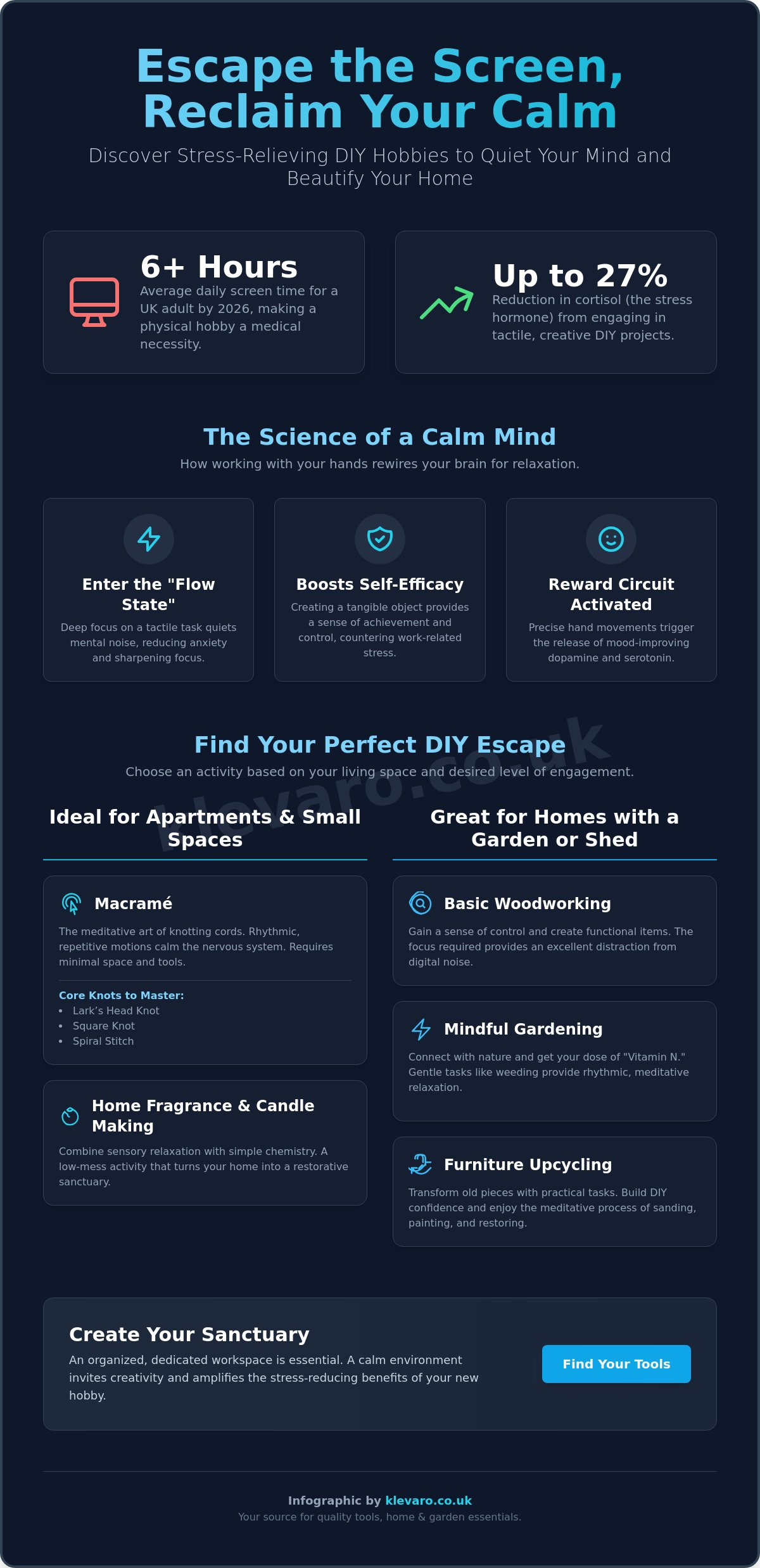
The most effective stress relieving diy hobbies at home are macramé, woodworking, mindful gardening, upcycling, and home fragrance making. These activities induce a "flow state," a psychological condition where deep focus reduces cortisol and anxiety levels. Tactile hobbies provide a necessary sensory break from digital screens and repetitive mental tasks. Starting a DIY hobby requires minimal initial investment, often under £30 for a basic starter kit, but offers long-term mental health benefits. By engaging your hands in a creative project, you shift your brain's attention away from daily stressors and toward a tangible, rewarding goal.
Focusing on a physical task allows your mind to rest while your body remains active. This balance is essential for maintaining emotional stability and preventing burnout. Whether you are knotting rope or potting plants, the act of creation provides a sense of control and purpose. These hobbies are not just about the final product; they are about the calming process of making.
Why Working with Your Hands Reduces Stress
Scientific research highlights a clear link between fine motor skills and brain relaxation. When you perform precise manual tasks, your brain activates the "effort-driven reward circuit." This biological pathway releases neurochemicals like dopamine and serotonin, which improve your mood. This natural response is a key component of the therapeutic benefits of art and manual crafting.
Tangible results from DIY projects build self-efficacy and personal confidence. Seeing a finished piece of furniture or a hand-poured candle provides immediate evidence of your capabilities. This builds a sense of agency that counters the helplessness often felt during stressful periods at work. Physical crafting also forces you to slow down, encouraging a rhythm that mimics meditative breathing.
Choosing a Hobby Based on Your Living Space
Your environment dictates which stress relieving diy hobbies at home are most practical for your lifestyle. If you live in a city apartment or a small flat, choose low-mess hobbies like macramé or home fragrance making. These activities require very little storage space and don't produce dust or loud noise. You can easily set up a small workstation on a dining table or a desk to get started.
For those with access to a garden or a shed, outdoor DIY projects offer the added benefit of fresh air. You can explore more intensive tasks like woodworking or restoring old furniture using quality tools and equipment. It's also important to match your hobby to your current energy levels. If you feel exhausted after a long day, spend time in your garden space for gentle weeding rather than starting a complex construction project.
Creative Crafting for Mental Clarity and Focus
Creative crafting provides an immediate outlet for stress by engaging the hands and quietening the mind. Engaging in these stress relieving diy hobbies at home lowers cortisol levels and improves cognitive focus through repetitive, tactile movements. Macramé, candle making, and furniture upcycling are three effective ways to achieve this mental state. These activities require specific tools and steady focus, which helps disconnect from digital distractions. By finishing a physical project, you gain a sense of accomplishment that digital tasks often lack.
The Meditative Art of Macramé
Macramé relies on the rhythmic repetition of square knots and half-hitch knots to create intricate wall hangings. This repetitive motion mimics the effects of traditional meditation, allowing the nervous system to settle. According to research on creative activities from the University of Arizona, these artistic pursuits significantly reduce anxiety by focusing the brain on a single, tangible task. Beginners should master three core knots to get started:
- Lark’s Head Knot: The foundation for attaching cord to a dowel or ring.
- Square Knot: The most versatile knot for creating mesh patterns.
- Spiral Stitch: Created by repeating half-square knots to add texture.
You can explore our home decor collection for inspiration on how these textile pieces enhance a room’s atmosphere and provide a sense of calm.
DIY Home Fragrance and Candle Making
Creating home fragrances combines the precision of chemistry with the sensory benefits of aromatherapy. You can blend essential oils like lavender or chamomile to promote better sleep, or use citrus and peppermint for a natural energy boost. Safety is paramount in this hobby; always use a digital probe thermometer to monitor wax temperatures and ensure they don't exceed 85°C. Using dedicated pouring jugs and wick centering tools ensures a professional finish every time. View our home fragrance range to find the essential components for your next project.
Upcycling small furniture pieces gives a second life to items that might otherwise end up in a landfill. This process involves sanding, priming, and painting, which requires high-quality hand tools for a clean result. Precision tools like fine-grit sandpaper and ergonomic brushes are necessary to avoid visible brush strokes and uneven surfaces. Taking a tired piece of wood and transforming it into a stylish home feature provides a long-lasting boost to your mental wellbeing. If you're ready to start your next project, you can explore our range of tools to ensure you have the right gear for the job.
Restorative Home Improvement and Woodworking Provide Immediate Stress Relief
Restorative home improvement and basic woodworking are effective stress relieving diy hobbies at home because they provide a tangible sense of control and achievement. These activities lower cortisol levels by grounding the mind in tactile, repetitive tasks that offer immediate visual feedback. Engaging in the mental health benefits of hobbies through DIY projects helps shift focus away from digital distractions and abstract worries. By completing small-scale wood projects or fixing minor household issues, you build a "fixer" mindset that transforms your environment into a source of pride rather than stress.
Small-scale woodworking projects like building birdhouses or spice racks offer structured relaxation. These tasks have a clear beginning, middle, and end, which helps quiet a busy mind. A simple birdhouse project typically requires only two hours of focused work but provides a lasting sense of achievement. Focusing on the physical properties of wood allows you to disconnect from daily pressures and engage with a natural material.
Introduction to Mindful Woodworking
Woodworking offers a sensory experience that is both calming and productive. You don't need a massive workshop to start; a few essential tools like a hammer, measuring tape, and hand saw are enough for most beginner projects. Creating small items provides a rhythmic workflow that encourages deep focus and patience. The process of sanding wood is especially restorative, as the repetitive motion and the changing texture of the grain provide a soothing sensory output.
Check out Your First DIY Toolkit for a list of basics to get you started safely. Using quality hand tools ensures a smoother experience, preventing the frustration that often comes with flimsy equipment. Finishing your project with natural oils or waxes adds another layer of sensory satisfaction. This final step protects the wood and highlights the beauty of your handiwork, reinforcing the value of your time spent creating.
The Joy of Restorative Home Maintenance
Small-scale maintenance tasks can be surprisingly therapeutic when approached with the right mindset. Fixing a squeaky door hinge or tightening a loose shelf bracket provides immediate mental relief by removing small, persistent annoyances from your living space. You can create a "repair cafe" atmosphere in your own kitchen by dedicating time to oiling wooden surfaces or polishing metal fixtures. This proactive approach to home care fosters a sense of agency and pride.
Browse our tools and equipment for high-quality essentials that make every repair feel effortless. Having the right screwdriver or spanner for the job reduces stress and ensures a professional finish. These small wins accumulate over time, helping you feel more capable and relaxed within your home. Transforming a chore into a restorative project allows you to appreciate your surroundings while improving your DIY skills.
Mindful Gardening and Outdoor DIY Projects
Gardening and outdoor DIY projects serve as powerful stress relieving diy hobbies at home by lowering cortisol and increasing serotonin through physical contact with nature. A 2021 study by the Royal Horticultural Society found that people who garden every day have wellbeing scores 6.7% higher than those who do not. This practice provides "Vitamin N", a term used by researchers to describe the essential psychological benefits of nature exposure. By focusing on the growth of living things, you shift your perspective away from daily stressors and toward a slower, natural pace of life. Engaging in these activities outdoors ensures fresh air and sunlight, which are vital for maintaining a healthy circadian rhythm.
Building garden structures like raised beds or timber trellises combines "hard" DIY construction with the "soft" focus of planting. This hybrid approach keeps you physically active while allowing for creative expression in your layout. Pruning and weeding are repetitive tasks that allow for mental wandering and problem-solving. These rhythmic actions help you enter a flow state, which can significantly reduce anxiety levels during a busy week. Seasonal projects, such as preparing soil in March or mulching in October, help you stay connected to the natural rhythm of the year and provide a sense of continuity.
Therapeutic Gardening for Beginners
Getting your hands dirty is scientifically proven to improve your mood. Soil contains a natural bacterium called Mycobacterium vaccae, which triggers the release of serotonin in the brain when inhaled or absorbed through the skin. You don't need a massive allotment to start; a few containers or a small flower bed are enough to reap the rewards. To get started, you should explore our range of hand tools to ensure you have the right equipment for digging, weeding, and maintaining a healthy UK garden.
DIY Garden Decor and Functional Projects
Building your own garden features is one of the best stress relieving diy hobbies at home for those with outdoor space. Constructing a simple bird feeder or an insect hotel encourages biodiversity and connects you with local wildlife. These projects require focus and precision, providing a healthy distraction from digital noise and work pressure. You can easily browse garden accessories to find decorative elements that complement your handmade structures and complete your peaceful retreat.
Ready to start your outdoor project? Shop our full garden collection to find everything you need for a peaceful and productive outdoor space.
Organizing Your DIY Workspace for Maximum Relaxation
An organised workspace lowers cortisol levels and directly supports stress relieving diy hobbies at home by removing the mental friction caused by clutter. Research from the Princeton University Neuroscience Institute shows that physical clutter competes for your attention, which spikes stress and limits your brain's processing power. A dedicated hobby station acts as a mental "on-switch" for relaxation, allowing you to pause projects without the anxiety of a messy living room. By using vertical storage and shadow boards, you keep your work surface clear for focused creativity. Adding elements of "hygge," such as soft lighting and calming scents, turns a DIY project into a genuine wellness ritual. This structured environment ensures you spend your time creating rather than searching for tools.
Having a permanent space for your crafts or repairs prevents the "setup fatigue" that often stops people from starting a project. When every tool has a specific home, the transition from a busy workday to a relaxing hobby happens in minutes. This consistency is vital for long-term stress management. It transforms your hobby from a chore into a reliable escape.
Step-by-Step Tool Organisation
Efficient tool organisation starts with categorising your gear by how often you touch it. Place your primary pliers, screwdrivers, or brushes on a wall-mounted shadow board to save desk space and keep them within arm's reach. Grouping items by project type also helps; keep all your sanding or finishing supplies in one portable bin. Store sharp blades and heavy power tools in lockable chests to ensure safety and peace of mind. Browse our furniture collection to find sturdy workbenches and shelving units designed for home workshops. Proper ergonomics prevent back pain and keep your hobby enjoyable for longer sessions.
Creating a Sensory-Friendly Environment
A sensory-friendly environment prevents the physical fatigue that often mimics mental stress. Use adjustable task lighting with a colour temperature between 2,700K and 3,000K to reduce eye strain and maintain a cosy atmosphere. Integrating spiritual wellbeing products like incense or crystals helps ground your energy while you work. Consider the auditory environment by playing soft music or using noise-cancelling headphones to block out household distractions. Ending your session with a five-minute clean-up ritual provides a clear mental boundary between "hobby time" and "rest time." This habit ensures you always return to an inviting, ready-to-use space the next day.
Transform Your Home Into a Stress-Free Creative Sanctuary
Mastering stress relieving diy hobbies at home allows you to trade digital fatigue for tangible results. Focus on projects like restorative woodworking or mindful gardening to improve mental clarity and reduce daily anxiety. An organized workspace is the foundation of this process, as it removes the physical clutter that often blocks your creative flow.
Klevaro supports your wellness goals by providing high-performance gear that makes every project smoother. We're a trusted UK store offering quality guaranteed on all DIY gear, ensuring your tools are as reliable as your vision. Our fast UK delivery means you won't have to wait to start your journey toward a calmer, more productive lifestyle.
Start your stress-relief journey with Klevaro’s range of quality DIY tools and home essentials.
It's your turn to pick up a project that brings you peace. You've got the skills and the inspiration, so let's get started on creating a home life you truly enjoy.
Frequently Asked Questions
Which DIY hobby is best for someone with zero experience?
Candle making or wax melt crafting is the best choice for beginners with zero experience. You can start with a pre-made kit that includes wax, wicks, and fragrances, requiring no specialised technical skills. It's one of the most accessible stress relieving diy hobbies at home because the process is repetitive and calming. You'll see a finished product in under two hours, providing a quick sense of accomplishment.
How much does it cost to start a DIY hobby at home?
You can start most DIY hobbies at home for an initial investment of £15 to £50. A basic watercolour set or a beginner's knitting kit typically falls within this price range at UK retailers. While advanced tools cost more, 80% of hobbyists begin with entry-level supplies to test their interest. Investing in quality essentials early on prevents frustration and ensures your projects last longer.
Can DIY hobbies really help with clinical anxiety?
DIY hobbies serve as effective complementary tools for managing clinical anxiety by lowering cortisol levels. A 2016 study published in the Journal of the American Art Therapy Association found that 45 minutes of creative activity reduced stress hormones in 75% of participants. While these activities provide a healthy distraction and sensory engagement, you should use them alongside professional medical advice. They offer a practical way to ground yourself during high-stress periods.
What are the best low-noise DIY hobbies for flat dwellers?
Embroidery, macramé, and indoor gardening are the best low-noise DIY hobbies for those living in flats. These activities require no power tools or heavy hammering; this makes them ideal for maintaining good relationships with neighbours. You can easily set up a small station on a dining table or balcony. They produce zero decibel spikes, allowing you to unwind at any hour without causing a disturbance.
How much time should I spend on a hobby to see stress-relief benefits?
You only need to spend 20 to 45 minutes on a hobby to experience noticeable stress-relief benefits. This timeframe allows your brain to enter a "flow state," where you become fully immersed in the task and move away from daily worries. Engaging in stress relieving diy hobbies at home just three times a week can improve your overall mood. Consistency matters more than the total hours spent in a single sitting.
Do I need a workshop to start woodworking or upcycling?
You don't need a dedicated workshop to start woodworking or upcycling projects at home. Many UK enthusiasts use a sturdy kitchen table with a protective cover or a small folding workbench in a garden shed. For upcycling furniture, a well-ventilated room or a patio space works perfectly for sanding and painting. Starting small with hand tools allows you to create beautiful items without requiring a large industrial space.
Leave a comment