


Storage Buying Guide: How to Choose the Best Solutions for Your UK Home
What if your home isn't actually too small, but your storage choices are simply working against you? Effective storage relies on matching container materials to the specific weight and environment of each room. Heavy duty plastic containers support loads up to 25kg for tools, while breathable fabric ottomans protect linens in bedrooms. Stackable modular systems can recover 40% of wasted floor space by utilising vertical height in typical UK box rooms. You should choose wicker or wooden baskets for high-visibility areas to ensure your organisation matches your existing decor.
You likely feel that mismatched containers often create more visual mess than they solve. This guide teaches you how to select the right boxes, baskets, and ottomans to declutter every room in your home effectively. We'll look at durability, style, and how to make the most of every hidden corner to transform your living space into a tidy, organised sanctuary.
Key Takeaways
- Select storage materials based on room conditions to prevent moisture damage and support heavy weights. Plastic works best for workshops, while fabric suits bedrooms.
- Maximise floor space in small rooms by choosing multi-functional furniture like storage benches and ottomans. These items hide clutter while adding stylish seating to your decor.
- Organise items by frequency of use to ensure daily essentials remain accessible. Use high-density systems for tools and stackable bins for seasonal items.
- Adopt a "One In, One Out" rule and clear labelling so you don't overwhelm your new systems. Consistent labels help every family member find items quickly.
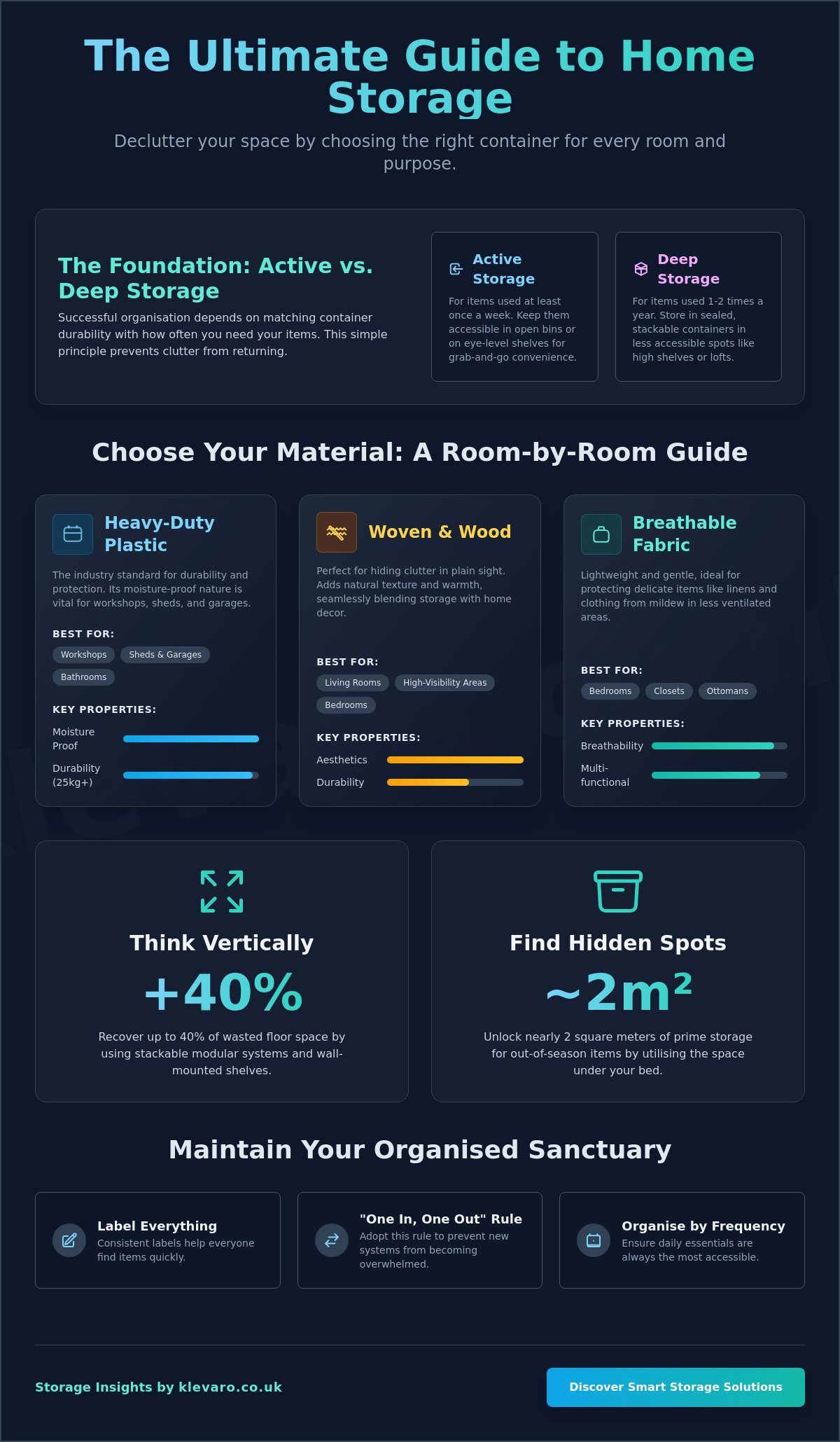
Effective home storage relies on matching container durability with the frequency of use.
Home storage is the use of specialized containers and furniture to protect and organize household items. The primary goal is to maximize available space while keeping items accessible and protected from dust or damage. Successful systems rely on matching container durability with how often you need to reach the items inside. You must use "active storage" for daily essentials and "deep storage" for seasonal goods. Accessibility remains the most important factor in preventing clutter from returning to your living spaces. Always consider the weight of your items before selecting a container to prevent structural failure. Choosing the correct material for home storage spaces ensures your belongings remain in peak condition over time.
The difference between active and deep storage
Active storage includes items you reach for at least once a week. These belong in easy-access baskets or open bins where you can grab them without moving other containers. Kitchen gadgets, daily toys, and frequently used DIY gear are prime candidates for this category. If an item is hard to reach, it usually ends up left on a counter or floor, which creates visual mess. You'll find that keeping these items at eye level or within arm's reach is the secret to a system that actually works for a busy family.
Deep storage is reserved for goods used once or twice a year. Think of holiday decorations, heavy winter coats, or specific gardening tools. These items should be kept in sealed plastic boxes or sturdy trunks to keep out moisture and pests. Because you don't need these daily, you can place them in less accessible spots like high cupboard shelves or the back of a shed. Just ensure the containers are stackable and clearly labelled to avoid frustration when you eventually need to retrieve them.
Assessing your space for vertical and hidden opportunities
UK homes often feature limited floor plans, making vertical storage essential for a tidy environment. You can recover significant floor space by installing wall-mounted shelves in high-traffic areas like hallways or kitchens. Stackable modular systems are particularly effective in utility rooms and cupboards to utilize the full height of the room. Always check the weight capacity of your furniture and shelving to ensure it can support your specific items without bowing.
Hidden opportunities exist in every room, especially under the bed. Slimline storage bags or drawers can turn this 2-square-meter area into a primary zone for out-of-season linens. In workshops or garages, high-density systems are needed to manage tools and equipment safely and efficiently. Using the right container for the weight and location prevents the common problem of broken lids or collapsed stacks. By looking up instead of just across the floor, you'll discover plenty of room you didn't know you had.
Selecting the right storage material depends on the room moisture levels and visual style.
The best material for storage depends entirely on the environment and the weight of the items being stored. Plastic is the most reliable choice for high-moisture areas like sheds or bathrooms because it prevents rot and rust. Woven and fabric options are better suited for living rooms and bedrooms where aesthetic warmth is a priority. Metal wire shelving provides the highest visibility and strength for heavy DIY tools or pantry stock. You should always ensure fabric containers are breathable when storing natural linens to prevent mildew. Choosing the wrong material in a damp UK loft can lead to mould growth in as little as 60 days.
Plastic vs. Woven vs. Fabric containers
Plastic remains the industry standard for stacking and heavy-duty use in workshops. It offers total moisture protection, which is vital for protecting sensitive electronics or paperwork in variable climates. These containers are easy to wipe clean and can handle the weight of dense metal tools without cracking. You'll find that clear plastic also saves time by allowing you to see contents without opening every lid.
Woven baskets are ideal for home decor because they hide clutter while adding texture to a room. They work perfectly for "active storage" items like living room blankets or dog toys that you need to grab quickly. Fabric solutions are lightweight and often collapsible, making them perfect for underbed clothes protection where rigid boxes might not fit. They allow air to circulate around natural fibres, which helps keep your spare bedding smelling fresh.
Environmental considerations for UK homes
UK homes frequently face challenges with dampness in non-insulated spaces like lofts or cellars. In these environments, plastic is non-negotiable because organic materials like wicker or fabric will absorb moisture and develop mould. If your storage is positioned in a conservatory or near a window, choose opaque boxes to provide UV protection. This prevents sunlight from fading your clothes or damaging plastic components over time.
Be cautious with any storage placed near radiators or in hot conservatories. Excessive heat can warp thin plastics or dry out natural wood fibres, leading to cracks and structural failure. Metal and wire systems are excellent in kitchens because they don't hold onto heat or cooking odours. Explore our range of home and garden essentials to find the perfect material for your next organising project.
Room-specific organisation requires a balance of hidden and accessible storage units.
Room-specific organisation is most effective when you combine hidden storage for visual clutter with accessible containers for high-use items. Living rooms benefit from multi-functional furniture like ottomans that keep floor space clear. Workshops and garages require high-density, labelled systems to manage tools and equipment safely and efficiently. Kitchens should use clear, modular containers to track food inventory, while hallways require slimline shoe racks to maintain clear entryways. Balancing these two types of storage ensures your home remains tidy without sacrificing daily convenience.
Effective kitchen and pantry management relies on visibility. Use clear, stackable containers to see exactly how much pasta or flour you have left. This simple step can reduce food waste by up to 15% in the average household by preventing duplicate purchases. In hallways, focus on vertical space. Use wall-mounted hooks for coats and slimline racks that hold at least 6 pairs of shoes to keep the entrance to your home welcoming and safe.
Workshop and Garage: Managing your DIY gear
Your workshop needs a system that prioritises safety and speed. Organise your first DIY toolkit within a larger storage system so you can grab the basics for quick repairs. Use clear, multi-compartment bins for small items like screws and nails. These prevent the "junk drawer" effect where small parts get lost at the bottom of a box.
Heavy-duty shelving is best for stationary items like paint cans or power tools. If you frequently move between the garage and the garden, consider a portable tool chest. These mobile units allow you to bring your gear directly to the project site. Labelling every shelf and bin ensures that tools are returned to their correct spot, maintaining order even after a long day of DIY.
Living spaces: Combining style with functionality
Living rooms are high-traffic areas where clutter accumulates quickly. Use decorative woven baskets to manage "daily clutter" like remote controls, magazines, and chargers. These baskets act as "active storage" zones that keep surfaces clear while keeping items within reach. They add a touch of texture to your room without looking like clinical storage boxes.
Storage trunks are versatile pieces that can serve as coffee tables or blanket boxes at the foot of a sofa. They provide deep storage for bulky items while offering a flat surface for decor or drinks. By choosing furniture with built-in compartments, you create a "clutter-free" zone. This approach ensures your family room remains a relaxing environment, even in homes with limited square footage.
Standout storage products from Klevaro that solve common UK home clutter issues.
Klevaro storage solutions provide specific answers to the spatial constraints of the average UK home. Ottomans and entryway benches are the best choices for hallways to hide shoes and bulky linens. Heavy-duty plastic bins are essential for protecting gear from rust in garages and sheds. Woven baskets add texture to living spaces while holding daily items like toys or laundry. Underbed storage bags can recover up to 2 square meters of floor space in small apartments. These products are designed to be durable and stylish so they last for years. You can transform a cluttered bedroom into a calm sanctuary by moving seasonal wardrobes into slimline bags that slide out of sight.
Multi-functional furniture for small spaces
The Faux Linen Ottoman is a customer favourite because it provides comfortable seating and hidden capacity in guest rooms. You can use these items to hide extra bedding while keeping it accessible for visitors. Entryway benches work exceptionally well in narrow hallways where floor space is at a premium. They provide a tidy spot for shoe organisation and a convenient seat for putting them on. Foldable cubes offer a versatile way to keep shelf units looking uniform and organised. These containers are lightweight and can be tucked away when not in use, making them perfect for growing families.
Explore our range of versatile furniture to find pieces that work twice as hard for your home. These multi-purpose items are the secret to maintaining a tidy living area without needing a larger floor plan.
Durable containers for the serious DIYer
Stackable plastic crates are the most efficient way to organise a workshop or garden shed. These containers can support weights up to 25kg, making them perfect for heavy hand tools and hardware. Clear lids are a significant time-saver, providing 100% visibility so you can identify tool sets without opening every box. This prevents the frustration of searching through multiple bins during a time-sensitive project. Durable plastic also acts as a barrier against dust and moisture, which helps prevent metal tools from corroding. Using a consistent system of crates allows you to stack items safely up to 2 metres high, clearing valuable floor space for your workbench.
Check out our collection of tools and equipment to find high-quality bins that protect your investment. Choosing the right container ensures your gear stays in peak condition for your next DIY task. Browse our full range of durable home and workshop storage to start your transformation today.
Maintaining an organised home is easier with a consistent labelling and sorting system.
Sustainable organisation depends on a repeatable maintenance loop rather than a single cleaning day. The "One In, One Out" rule is the most effective way to prevent your storage systems from becoming overwhelmed over time. Labelling every container ensures that every family member knows exactly where items belong. You should conduct a declutter audit every 90 days to remove items that are no longer useful. Grouping belongings by project or season makes retrieval much faster than sorting by size alone. These habits ensure your home remains a calm, functional space year-round.
The 4-step sorting process: Keep, Donate, Fix, Bin
You must ruthlessly audit your belongings before purchasing new containers. Research suggests that households can reduce their total volume of items by 20% simply by categorising them before they start packing. Never buy a box before you know exactly what is going inside it. This prevents you from owning empty containers that eventually collect more random clutter.
Use the 4-step method: Keep what you use, Donate what is good but unneeded, Fix what is broken, and Bin the rest. Dealing with sentimental items requires a dedicated "memory box" to prevent these pieces from taking over active living areas. Once you've narrowed down your collection, you can find the perfect home decor solutions to display what you love.
Labeling strategies for long-term success
Clear bins are excellent for high-visibility areas like pantries or workshops. For opaque boxes in the loft or under the bed, detailed labels are non-negotiable. You can even use a digital inventory by photographing the contents of a box before sealing it. This allows you to check what is in your deep storage using your phone without climbing into the attic.
Picture labels are a game-changer for keeping children's play areas tidy. Using an image of a block or a car on a basket helps kids under 5 years old participate in the clean-up process. For your own projects, check out our tools and equipment range to see how professional-grade organisation can speed up your DIY tasks. Start your journey today and enjoy the peace of mind that comes with a truly organised home.
Transform your living space with smart organisation today.
Reclaiming up to 40% of your floor space is possible when you prioritise vertical systems and multi-functional furniture. You ensure long-term protection for your belongings by matching container materials to the specific humidity and weight requirements of each room. Using heavy-duty plastic for tools and breathable fabrics for linens prevents mould and structural failure. A simple labelling system and 90-day declutter audits will keep your storage functional as your household needs change. These practical steps turn a cluttered house into an organised sanctuary.
We're ready to help you find the right fit for every corner of your home or workshop. Klevaro offers 60+ storage solutions in stock, all manufactured from durable materials built to last. You can rely on our Fast UK Delivery to get your project started without delay. Take the first step toward a tidier life and enjoy the confidence that comes with a professional organisation system.
Browse our full range of durable home and workshop storage
Frequently Asked Questions
How do I choose the right size storage box for my space?
Measure the depth and height of your shelf or cupboard first to ensure the box fits without protruding. You should leave at least 2cm of clearance on all sides so you can slide the container out easily. Modular boxes with uniform dimensions are the most efficient choice because they allow you to stack multiple units without wasting vertical gaps. This method ensures you use every available centimetre of your furniture.
What is the best material for storage in a damp garage or shed?
High-density plastic is the only reliable material for damp environments like garages or sheds. It provides a non-porous shield that prevents moisture from reaching your belongings. Cardboard and wicker will absorb humidity in as little as 48 hours, leading to mould growth. Ensure your plastic bins have secure, overlapping lids to keep out pests and dust during the winter months.
Are plastic storage boxes better than fabric ones?
Plastic boxes are better for heavy items and moisture protection, while fabric boxes are superior for breathability and style. Use plastic for lofts or workshops where protection is the priority. Choose fabric containers for bedroom wardrobes because they allow air to circulate around natural fibres. This helps prevent stale odours from developing during long-term storage in enclosed cupboards.
How can I maximize storage in a small bedroom?
Utilise the vertical space above wardrobes and the hidden area beneath your bed frame. Installing floating shelves 30cm below the ceiling creates a high-level zone for items you don't need daily. Slimline underbed drawers can hold up to 30 jumpers in a space that is usually wasted. This approach keeps your floor clear and makes a small UK bedroom feel much larger.
What is the most durable type of storage for heavy DIY tools?
Reinforced plastic crates with ribbed side walls or metal tool chests are the most durable options for heavy gear. These structural features prevent the base from bowing or cracking when carrying dense metal tools. Look for containers with heavy-duty latches and integrated handles for better grip. A quality tool box can support significant weight while remaining easy to transport between project sites.
How do I stop my stored clothes from smelling musty?
Wash and completely dry every garment before packing them into breathable fabric bags. Musty smells are usually caused by tiny amounts of trapped moisture that turn into mildew over time. You can add cedar blocks or silica gel packets to your containers to absorb excess humidity. Avoid using airtight plastic bags for natural wool or silk as these fibres need air circulation to stay fresh.
Can I use ottomans as primary seating in my living room?
You can use ottomans as primary seating if they feature a reinforced timber frame and high-density foam padding. Many modern designs are tested to support weights over 100kg, making them as sturdy as a standard armchair. They are an excellent way to add extra guest seating while providing a hidden spot for blankets and cushions. Just check the specific weight rating before using them as a daily seat.
Leave a comment