


Multi-Tools Explained: Choosing the Right Versatile Tool for Your DIY Projects in 2026
The most powerful multi-tool on the market might actually be the wrong choice for your weekend projects. It's easy to assume more power is always better, but this often leads to overspending on a tool that's too complex for the job. You're right to worry about buying a tool that’s too weak or getting stuck with accessories that don’t even fit.
For most common UK home repairs, from trimming skirting boards to sanding furniture in tight corners, a versatile oscillating multi tool is your best choice. Rotary tools, on the other hand, excel at detailed engraving, polishing, and grinding tasks. The key is matching the tool type and the right accessories to your specific project, not just buying the highest voltage model.
This guide will demystify the options. We'll show you exactly which blades you need for specific jobs and help you confidently choose a reliable tool that fits your budget and project list. Get ready to fix, build, and create with a tool that truly works for you.
Key Takeaways
- Understand the core difference between oscillating tools for heavy-duty cutting and rotary tools designed for precision detail and finishing work.
- Learn how to match a multi-tool's power source and features to the materials and scale of your most common home improvement tasks.
- The right accessory determines your success; discover which blades are essential for cutting metal, sanding wood, or scraping grout without causing damage.
- Adding a versatile multi tool to your kit can replace several bulky, single-purpose power tools, saving you valuable space and money.
A multi-tool is a versatile power tool that uses interchangeable attachments to perform cutting, sanding, and scraping tasks.
A multi-tool is a compact, handheld power device designed to tackle dozens of different DIY jobs. It functions by using a high-speed motor to either oscillate an attachment side-to-side or spin it in a rotary motion. By simply swapping the head or blade, you can cut, sand, grind, scrape, and polish a huge range of materials. This incredible versatility makes it the 'Swiss Army Knife' of the modern workshop. It's the perfect solution for precision work in tight spaces where larger saws or sanders simply cannot reach.
For any home improvement enthusiast, this single device effectively replaces several dedicated tools. It saves you from buying a separate detail sander, a grout rake, a scraper, and various small saws. This not only saves money but also precious storage space in your shed or garage. The key to its power lies in its two distinct forms: oscillating and rotary, each excelling at different types of tasks.
The primary function of an oscillating multi-tool
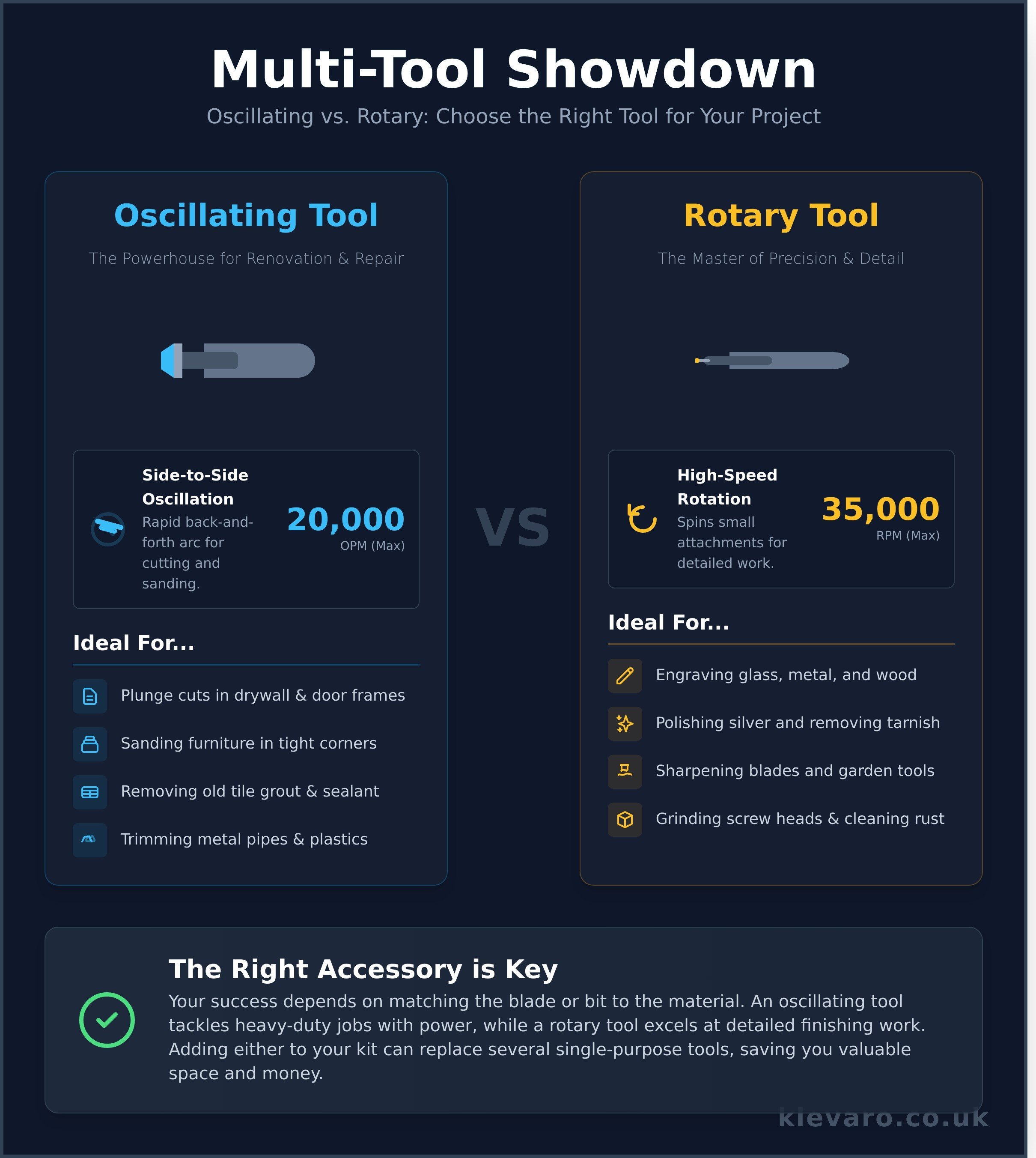
An oscillating tool works by moving its attachment back and forth in a tiny, rapid arc. This movement happens at incredibly high speeds, often reaching up to 20,000 Oscillations Per Minute (OPM). This unique action allows you to perform clean 'plunge cuts' directly into flat surfaces without needing a pilot hole. Imagine cutting a neat rectangle in plasterboard for a new electrical socket or trimming the bottom of a door frame to fit new flooring; this is where an Oscillating multi-tool truly shines.
This tool is an absolute game-changer for renovation and repair jobs. With the right blade, you can slice through old tile grout, trim copper pipes in awkward cupboards, or cleanly remove old sealant. Its precision and control make it the go-to choice for tasks that demand accuracy over raw power.
The primary function of a rotary multi-tool
Unlike its oscillating cousin, a rotary tool spins its attachment at extremely high speeds, with some models reaching over 35,000 Revolutions Per Minute (RPM). These tools are generally smaller, lighter, and often referred to as hobby or craft tools. Their design is focused on fine, handheld precision for detailed work rather than heavy construction tasks.
Think of a rotary tool as a motorised sculptor's chisel or artist's brush. It's perfect for intricate jobs like engraving glass, polishing tarnished silver, or sharpening the blades on your garden shears. For DIYers, it’s invaluable for cleaning rusted metal components or grinding down a stubborn screw head. Its strength lies in detail, not demolition.
Ultimately, choosing the right multi tool depends entirely on the projects you have in mind. Whether you're tackling a full-scale renovation or perfecting a detailed craft project, there’s a model designed to help you fix, build, and create with complete confidence. Get ready to transform your home with one of the most practical tools you'll ever own.
Oscillating multi-tools and rotary hobby tools serve different DIY purposes.
An oscillating multi-tool is your partner for renovation, while a rotary tool is for precision crafting. Choosing between them depends entirely on the job at hand. Oscillating tools use a rapid back-and-forth motion for aggressive cutting and sanding on a larger scale. Rotary tools spin a small bit at high speed for detailed engraving, polishing, and grinding.
Their unique movements mean their accessory sets are completely different and not interchangeable. The blade on an oscillating tool swings from side to side, while a rotary tool's accessory spins in a full circle. Understanding this core difference in motion is the key to buying the right device and getting the results you want for your project.
Renovation vs Crafting: Which do you need?
An oscillating tool is built for the tough jobs that come with home improvement. Think of it as your go-to for cutting new laminate flooring to size, trimming copper pipes under the sink, or sanding down an old wooden chair for restoration. Its power and side-to-side action, often vibrating up to 20,000 times per minute, allows it to make precise plunge cuts into drywall or remove old grout with serious efficiency.
This kind of power is why it's vital to follow established power tool safety guidelines to prevent accidents during these more demanding tasks. A quality multi tool can transform your DIY capabilities, but safety always comes first.
Rotary tools, on the other hand, are masters of the miniature. They excel at tasks requiring delicate control, like engraving a pattern onto glass, polishing a piece of handmade jewellery, or carefully carving details into a scale model. Their high-speed rotation gives you the finesse needed for intricate work that a larger, more powerful tool would simply destroy.
The Oscillation Angle, measured in degrees (typically from 1.5 to 3.2), is the key metric that determines how far the blade moves side-to-side, directly impacting its cutting speed and aggression.
Power sources: Corded vs Cordless options
Cordless multi-tools give you complete freedom and unmatched portability. They are perfect for jobs where a power socket is out of reach, whether you're fixing a fence panel at the bottom of the garden or working on rafters in a dusty loft. The lack of a cord means no tangles and maximum manoeuvrability in tight spaces, letting you focus entirely on the task.
Corded models deliver unwavering power for extended use. If you're planning a long sanding session on a large tabletop, a corded tool ensures you won't have to stop and wait for batteries to recharge. This consistent energy supply is ideal for workshop tasks that demand constant, high-level performance without interruption.
The power gap is closing fast. Modern 18V lithium-ion batteries now provide performance that rivals corded tools for most home DIY tasks, offering a fantastic blend of power and go-anywhere convenience. Deciding between them often comes down to your most common projects, so it's helpful to explore a range of multi-tools to see which features best suit your needs.
Choosing the right multi-tool depends on your power requirements and project scale.
The best multi-tool for your projects is one that matches the materials you work with and the demands of the job. For frequent cutting of dense materials like hardwood or metal, a corded model with a motor of 3.0 amps or more provides consistent, high-level power. For portability and convenience on lighter jobs like cutting plasterboard or sanding, an 18V or 20V cordless tool is ideal. Key features like a tool-less blade change system and good ergonomics are not luxuries; they are essential for efficiency and comfort during long tasks.
Your choice of materials directly impacts the power you need. A corded multi-tool ensures you won't run out of battery during tough, continuous jobs like removing old flooring adhesive or cutting through rusted bolts. In contrast, a quality cordless multi tool offers unmatched freedom for tasks in awkward spaces or outdoors, where a power source isn't readily available. Consider if your jobs are typically short bursts of activity or prolonged, power-intensive sessions.
Pay close attention to the tool's ergonomics, especially its weight and vibration levels. A model weighing over 1.5kg can cause significant arm fatigue when you're working overhead for more than a few minutes. Look for tools with slim, rubberised grips and built-in vibration dampening technology. These features make a massive difference to your comfort and control over a full day of work.
Modern blade change systems are a game-changer. A 'tool-less' clamp or lever mechanism allows you to swap accessories in under 10 seconds. This is a huge upgrade from older models that require a separate Allen key, which is easily lost and slows down your workflow. If you plan to switch between cutting, scraping, and sanding on a single project, this feature will save you considerable time and frustration.
For cordless options, check if the tool belongs to a battery 'family' you already use. If you own other 18V tools from a brand like DeWalt or Makita, buying a 'bare tool' (without a battery or charger) can reduce your initial cost by £40 to £60. This makes expanding your toolkit far more affordable and means you'll always have a charged battery ready to go.
Essential features for the home DIYer
For maximum control, a variable speed trigger or dial is non-negotiable. It allows you to adjust the oscillations per minute (OPM), typically from 8,000 to 20,000, letting you use a slow speed for delicate sanding and a high speed for aggressive cutting. An integrated LED work light is also incredibly useful for illuminating dark work areas like the back of a kitchen cupboard or under a sink. Explore our comprehensive range of tools and equipment to find a model with the features you need.
Common UK renovation tasks and the tools required
A versatile multi-tool can tackle dozens of jobs around the house. Here are a few common tasks and the specific accessories that make them easy:
- Undercutting door jambs: When fitting new laminate or wood flooring, you need to trim the bottom of the door frame for a seamless fit. An oscillating tool fitted with a wood/metal flush-cut blade lets you make this precise cut perfectly parallel to the floor.
- Removing old bathroom grout: Refreshing tired tile is a popular DIY job. Use a carbide-grit segment blade to quickly and cleanly grind out old, discoloured grout without damaging the surrounding tiles.
- Polishing rusted garden gates: For detailed restoration work, a rotary tool is the perfect companion. Attach a wire brush from our garden accessories collection to strip rust and old paint from intricate metalwork before repainting.
Multi-tool accessories and proper maintenance determine the quality of your finish.
Your multi tool is only as good as the attachment on its head. While the motor provides the high-frequency oscillation, it's the blade or accessory that does the actual work. The difference between a clean, professional cut and a frustrating, messy job lies in choosing the right blade for the material and keeping your equipment in top condition. This simple discipline saves you time, money, and materials.
Using the wrong accessory can have immediate consequences. Attempting to cut a metal screw with a standard wood blade will destroy the blade's teeth in seconds, costing you a replacement and halting your project. It’s crucial to match the accessory to the task at hand. Thankfully, many modern tools feature universal fitment systems, like Starlock, allowing you to use blades from various trusted brands on a single tool. This gives you the freedom to pick the perfect accessory for any job without being tied to one manufacturer.
A guide to essential oscillating blades
Building a small, versatile collection of blades ensures you’re ready for any task. While there are dozens of specialist attachments, three types form the foundation of any good multi tool kit and will handle over 90% of common DIY jobs.
- Bi-metal (BIM) blades: These are the ultimate all-rounders. Combining a flexible high-carbon steel body with durable high-speed steel teeth, BIM blades can slice through wood, plastic, and drywall, but they won't be destroyed if they hit an embedded nail or screw. They are essential for any demolition or remodelling work.
- Scraper blades: Perfect for removal tasks that would take hours by hand. A rigid scraper blade makes short work of lifting old tile adhesive, stubborn linoleum, or layers of old paint. Flexible scrapers are better for delicate jobs like removing silicone sealant without scratching a bathtub or window frame.
- Sanding pads: The triangular sanding pad is a multi-tool's secret weapon for finishing. Its shape allows it to get into tight 90-degree corners where orbital sanders can't reach. The hook-and-loop backing lets you switch between different grit levels in seconds, taking a surface from rough to perfectly smooth with one tool.
Maintenance tips for long-lasting performance
A few simple habits will protect your investment and ensure your tool performs reliably for years. Proper care prevents motor burnout and keeps your accessories sharp and effective, giving you better results every time you pick it up.
- Let the tool do the work. It's tempting to apply heavy pressure to speed up a cut, but this is counterproductive. Pushing hard creates excess friction and heat, which dulls the blade and puts immense strain on the motor. Use a light touch and let the tool's high-speed oscillation do the cutting for a faster, cleaner result.
- Keep accessories dry. Most blades are made from high-carbon steel, which is prone to rust if stored in a damp shed or van. A small, airtight case is a wise investment to protect your blades from moisture and keep them organised. Check our range of hand and general tools for durable storage solutions and supplementary gear.
- Clean the vents regularly. Sawdust and debris are the main causes of motor failure. After each significant use, use a brush or compressed air to clear the motor vents. This ensures proper airflow, prevents the tool from overheating, and can easily double its operational lifespan.
Investing in a quality multi-tool from Klevaro streamlines your home improvement projects.
Choosing the right tool transforms a difficult job into a satisfying project. A high-quality multi tool from Klevaro is your key to unlocking efficiency and professional-level results. We provide a carefully curated selection of reliable tools that perfectly balance robust performance with the practical value every DIY enthusiast needs. Forget a cluttered shed filled with bulky, single-use equipment; a single oscillating tool can sand, cut, scrape, and grind, saving you valuable space and money. With our fast UK delivery, you get the right gear exactly when inspiration strikes, ensuring your project momentum never stalls. Beyond the purchase, you become part of a community dedicated to getting the most from your equipment.
Our commitment is simple: to equip you with dependable tools that make your home improvement goals achievable. We believe that with the right partner, you can fix, build, and create with complete confidence. An investment in a Klevaro multi-tool isn't just about adding to your toolkit; it's about upgrading your entire DIY experience from start to finish.
Why Klevaro is the trusted choice for UK DIYers
We built our reputation by focusing on durable, quality-guaranteed products that homeowners can rely on for years. Every tool in our collection is selected to withstand the demands of regular use, from weekend fixes to major renovations. You get the power and precision you need without the excessive cost of industrial-grade equipment. It's the smart choice for dedicated DIYers.
Upgrading your toolkit should be exciting, not risky. Our straightforward 'Easy Returns' policy gives you complete peace of mind. If the tool isn't the perfect fit for your needs, the process is simple and hassle-free. Whether you're buying a thoughtful Father's Day gift or finally treating yourself to that long-awaited upgrade, we have the stock ready to ship from our UK base.
Ready to start your next project?
Your next successful project is just a click away. Browse our best-selling oscillating multi-tools and discover why they are a customer favourite for tackling everything from trimming skirting boards to removing old grout. A great tool is only as good as its accessories, so don't forget to stock up on the specific blades and sanding pads required for your upcoming tasks. Shop with confidence, knowing you are backed by a trusted UK store committed to your DIY success.
Your Next Project Starts with the Right Multi-Tool
Armed with the right knowledge, you're now ready to choose the perfect power tool for your 2026 DIY goals. You've learned that oscillating tools excel at cutting and sanding, while rotary tools are champions of detail work. The secret to success always lies in matching the tool to your specific tasks and having the correct attachments for a flawless, professional finish.
Investing in a quality multi tool from Klevaro isn't just about buying another gadget to sit in the shed. It’s about empowering yourself to tackle that long-awaited project, fix that wobbly chair, and create something you're proud of with total confidence.
Don't let the wrong equipment hold you back. Upgrade your toolkit with our versatile range of multi-tools and discover what you can accomplish. As a trusted UK store, we back every purchase with our Quality Guaranteed promise on all DIY tools. With Fast UK Delivery and Easy Returns, getting the right gear has never been simpler. Your next great project is just a click away.
Frequently Asked Questions
Can an oscillating multi-tool cut through metal pipes?
Yes, an oscillating multi-tool can effectively cut through soft metal pipes when fitted with the correct blade. You'll need a bi-metal (BiM) blade designed specifically for cutting metal. This setup is ideal for cutting non-ferrous pipes like copper or aluminium, especially in tight spaces where a larger saw won't fit. For thicker steel pipes, however, a more powerful tool like an angle grinder is a better choice.
Is a cordless multi-tool as powerful as a corded one?
Corded multi-tools consistently deliver more power and are better suited for continuous, heavy-duty work without worrying about battery life. However, premium cordless models using 18V or higher battery platforms now offer performance that is nearly identical for most common DIY tasks. The best choice depends on your needs: choose corded for workshop reliability and cordless for ultimate portability and convenience on the job.
What is the difference between an OIS and a Starlock fitting?
OIS and Starlock are two different, non-compatible blade mounting systems. OIS (Oscillating Interface System) is an older, 12-pin "open-back" design used by many brands. Starlock is a newer, patented 3D interface co-developed by Bosch and Fein for a faster, more secure connection that improves power transfer. Starlock tools require Starlock blades, so it's vital to check which system your tool uses before buying new accessories.
How do I stop my multi-tool blades from burning the wood?
To stop your blades from burning wood, reduce the tool's speed setting and avoid applying too much force. Burning occurs from excess friction, often caused by a dull blade or moving too slowly. Ensure your blade is sharp and appropriate for the wood type. Let the tool's rapid oscillations do the work, using a steady, light pressure to guide it through the cut. This prevents heat buildup and scorch marks.
Can I use a multi-tool to remove floor tiles?
Yes, a multi-tool is an excellent choice for removing floor tiles, especially for detailed work and repairs. Using a carbide or diamond-grit blade, you can precisely cut out old grout without damaging the surrounding tiles. You can then switch to a rigid scraper blade attachment to get underneath the tile and pry it up, as well as scrape away any leftover thin-set adhesive from the subfloor.
Are multi-tool blades universal across all brands?
No, multi-tool blades are not universally compatible across every brand, primarily due to the Starlock mounting system. While many tools use a universal OIS-compatible "open-back" fitting, Starlock tools require specific Starlock blades. Some "universal fit" blades may work with many non-Starlock models, but you should always check the packaging to confirm it's compatible with your specific tool brand and model.
Is it worth buying a multi-tool if I already have a circular saw?
Yes, it's definitely worth it because a multi-tool and a circular saw perform completely different functions. A circular saw is designed for making long, straight cuts in large sheets of material. A multi-tool excels at jobs requiring precision and access to awkward spaces, like plunge cuts for electrical boxes, flush-cutting door trim, or sanding in tight corners. They are complementary tools, not replacements for each other.
What safety equipment should I wear when using a multi-tool?
You must always wear safety glasses or goggles to protect your eyes from flying debris. Because these tools can operate at over 95 decibels, hearing protection like earplugs or defenders is also essential. When sanding or cutting materials that produce fine dust, such as MDF or plasterboard, a P2-rated dust mask is crucial for protecting your lungs. Snug-fitting gloves can also improve your grip and offer minor protection.
Leave a comment