


How to Fix a Patchy Lawn UK: A Step-by-Step Repair Guide (2026)
A patchy lawn isn't a sign of a bad gardener; it's usually just the result of the UK's unpredictable weather and heavy clay soil. To fix a patchy lawn uk, you must clear the dead grass, aerate the compacted soil, and apply a high-quality seed mix that matches your existing turf. Most British gardens sit on heavy clay, so adding a layer of sharp sand or topdressing is essential to prevent waterlogging during a typical downpour. The best time to start your repair is between March and May or during the early autumn months of September and October. You can achieve a uniform green finish by following these steps and keeping the new growth moist for 14 to 21 days.
You probably feel frustrated when stubborn brown spots from dog urine or heavy foot traffic refuse to grow back despite your best efforts. It's common to feel confused about which seed to buy or how to handle soil that feels like concrete in the summer. This guide will show you exactly how to repair those bare spots and manage difficult clay using the right tools. We'll walk you through the entire process from preparation to long-term maintenance so you can enjoy a lush, healthy garden all year round.
Key Takeaways
- Identify the root causes of bare spots, such as heavy clay soil or nutrient deficiencies, to ensure your repairs stand the test of time.
- Follow a proven 5-step guide on how to fix a patchy lawn uk by effectively clearing debris and improving soil airflow.
- Select the right professional tools, from garden forks to aerators, to achieve a lush and durable finish in any size garden.
- Tackle specific British garden issues like acidic soil and drainage-killing "puddling" with expert local advice.
- Master the critical 14-day aftercare period to guarantee seed germination and long-term lawn health.
Identifying Why Your UK Lawn Is Patchy
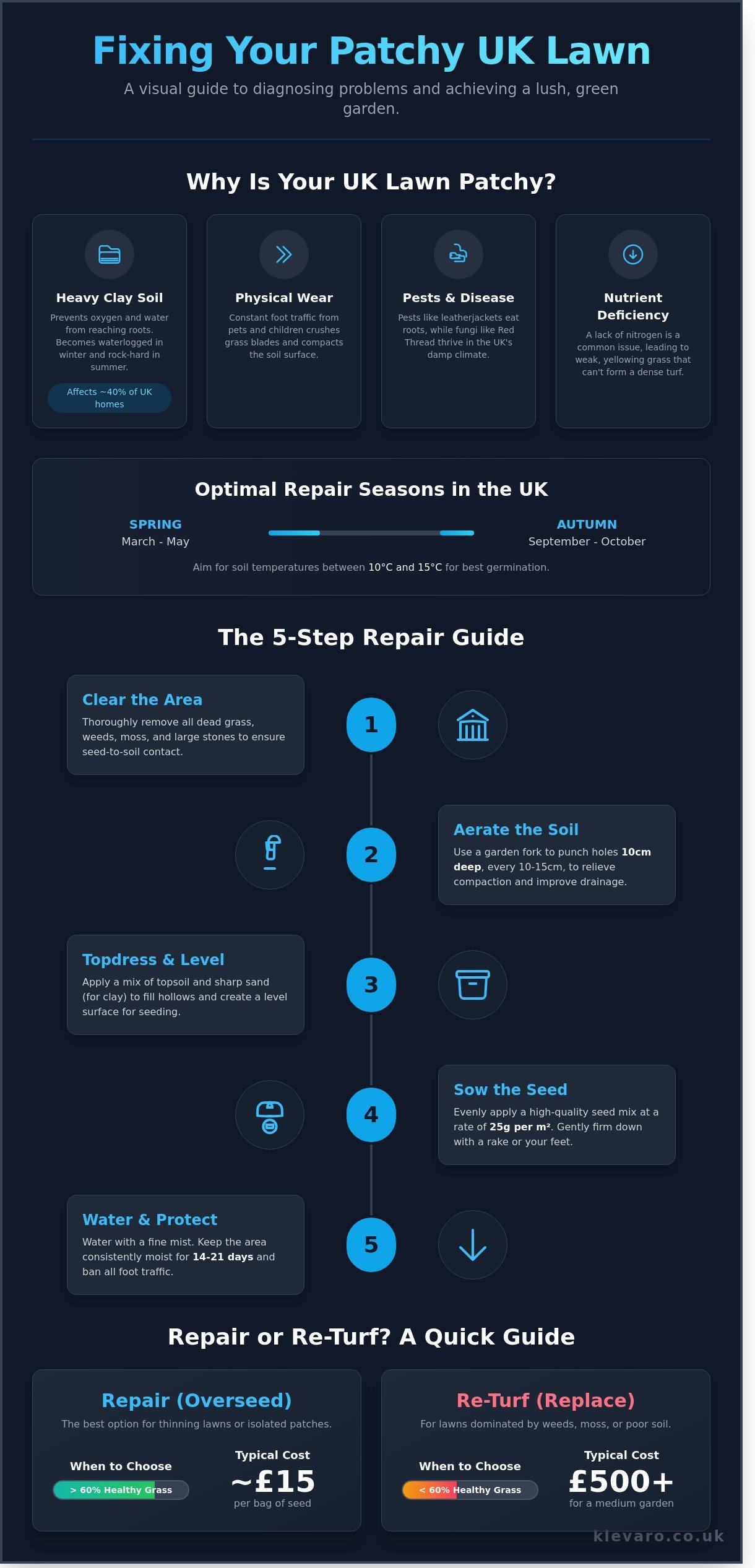
Identifying why your UK lawn is patchy is the only way to stop the problem from returning next season. Most bare spots are caused by heavy clay soil compaction, nitrogen deficiency, or pest damage from leatherjackets and chafer grubs. UK gardens frequently suffer from poor drainage that drowns roots, while physical wear from pets and children creates structural damage to the soil surface. To master how to fix a patchy lawn uk, you must first diagnose whether the issue is biological or environmental. Only then can you decide if a simple overseeding project or a full re-turf is required to restore your garden's health.
A patchy lawn is usually the result of soil compaction, nutrient deficiency, or fungal disease. In the UK, our damp climate creates the perfect breeding ground for moss and fungi like Red Thread, which can leave your grass looking scorched and thin. If your grass has turned a yellow or pale green colour, it is likely crying out for nitrogen. A lack of essential nutrients prevents the grass from knitting together, leaving open spaces where weeds can easily take hold. understanding lawn health requires looking beneath the surface to see what is happening at the root level.
UK gardens often suffer from heavy clay soil that prevents oxygen from reaching grass roots. Approximately 40% of British households deal with clay-heavy earth that becomes waterlogged in winter and baked hard in the summer sun. When soil particles are pressed too tightly together, the roots cannot expand or breathe. This lead to stunted growth and thinning patches that eventually die off entirely. If you notice water sitting on the surface after a light rain shower, compaction is almost certainly your primary culprit.
Physical wear from pets and children creates bare spots that require structural repair. High-traffic areas, such as the path to a shed or the area under a swing set, endure constant pressure that destroys the grass blades and crushes the soil. Dogs running the same route every day will create "tracks" where the grass cannot recover naturally. These areas need more than just seed; they require soil aeration and perhaps a more durable seed mix to withstand future activity.
Diagnosing Common UK Lawn Culprits
Check for leatherjackets or chafer grubs by looking for birds pecking at the turf. If starlings are frequent visitors to your brown patches, they're likely hunting for larvae that eat grass roots. You can also evaluate shade levels from fences and trees that may be starving grass of light. Most standard UK rye-grass needs at least 4 to 6 hours of direct sunlight to thrive. Test for compaction by trying to push a screwdriver into the soil easily. If you can't push it in 10cm deep, your lawn is too compacted for healthy growth.
When to Repair vs When to Re-turf
Repair patches if more than 60% of the total lawn is still healthy grass. Overseeding is a fantastic, low-cost way to thicken up a thinning lawn without starting from scratch. Consider re-turfing only if the lawn is primarily weeds or moss, or if the soil quality is beyond simple aeration. Assess the cost-benefit of small-scale overseeding against the labour of laying new turf. While a bag of seed might cost £15, a full re-turf for a medium garden can quickly exceed £500 when you factor in topsoil and delivery.
A 5-Step Guide to Repairing Bare Patches
Repairing bare patches requires a systematic approach to ensure long-term results. You can fix a patchy lawn by clearing the area, improving soil structure through aeration, and sowing fresh seed at a rate of 25g per square metre. For the best results in the UK climate, perform these repairs in spring or early autumn when soil temperatures stay between 10°C and 15°C. Consistent watering and a 14-day ban on foot traffic allow the new grass to establish strong roots. Following these steps prevents the return of weeds and creates a uniform, lush green surface.
The first step is to clear the area thoroughly. Remove dead grass, stubborn weeds, and any large stones that might obstruct root growth. If you leave debris behind, the new seed won't make direct contact with the soil, which leads to poor germination. Use a garden fork to aerate the soil by punching holes roughly 10cm deep every 10-15cm. This simple action relieves compaction, allowing oxygen and nutrients to reach the root zone while preventing water from pooling on the surface.
Once the ground is open, apply a high-quality lawn repair mix or sterilized topsoil. Use this to fill in any dips or hollows until the patch is level with the rest of your garden. Level surfaces are easier to mow and look more professional. After levelling, sow your grass seed evenly across the patch. Firm the seed down with the back of a rake or by treading lightly with your boots. Good soil-to-seed contact is the secret to a fast-growing lawn. Finally, water the area with a fine mist and keep it moist for at least two weeks while the seeds sprout.
Preparing the Ground for New Growth
Preparation determines the success of your repair. Use a sharp rake to scarify the patch and pull up the thick layer of organic matter known as thatch. This allows the new roots to reach the soil rather than getting tangled in dead organic material. Break up the top 2-3 inches of soil until it has a fine, crumbly texture. This expert lawn repair guide suggests that proper tilth is essential for seedling survival. Add a granular starter fertiliser to the area to give the new seeds the nitrogen boost they need to thrive in the first month.
The Art of Overseeding and Top Dressing
Understanding how to fix a patchy lawn uk gardeners often struggle with involves choosing the right seed. Pick a mix that matches your existing lawn's colour and leaf texture; a blend of perennial ryegrass and fescues usually works best for hard-wearing family gardens. Scatter the seed at the recommended rate of 20-30g per square metre. If you spread it too thinly, the patch will look sparse; too thickly, and the seedlings will compete for resources. Lightly rake the seed into the top 5mm of soil. This protects the grains from hungry birds and prevents them from drying out in the wind. To get the job done right, explore our range of durable garden tools designed for precision lawn care.
- Clearance: Remove all moss and weeds to give seeds a clean slate.
- Drainage: Aerate the patch to stop waterlogging and encourage deep roots.
- Nutrients: Use a pre-seed fertiliser to accelerate early growth.
- Protection: Use netting or bird-scaring tape if local wildlife is a problem.
- Patience: Avoid mowing the new grass until it reaches at least 5cm in height.
Keeping the area protected is the final hurdle. Even a single footprint can crush delicate new shoots before they have a chance to harden off. Use small stakes and string to mark out the repaired areas, especially if you have pets or children. Check the soil moisture daily. In the UK, a sudden dry spell can kill off new growth in less than 24 hours. A light sprinkling of water every evening is much better than one heavy drenching once a week.
Solving Specific UK Lawn Problems
To fix a patchy lawn in the UK, you must address the underlying soil quality and the specific environmental stressors of our maritime climate. Most British gardens suffer from heavy clay compaction or high soil acidity which prevents healthy seed germination. Successful repair involves clearing dead thatch, performing hollow-tine aeration, and applying a UK-specific seed mix during the mild, damp windows of April or September. You should also neutralise high-nitrogen spots caused by pets before attempting to reseed. Following these targeted steps ensures your lawn recovers quickly and stays resilient against the UK's high annual rainfall levels.
British gardens deal with unique challenges, including an average of 1,200mm of rainfall in western regions and often acidic soil conditions. If your soil pH drops below 6.0, standard grass species struggle to absorb nutrients, leading to thinning and moss encroachment. Understanding how to fix a patchy lawn uk gardeners face requires looking beneath the surface at the soil structure itself. By improving the growing medium, you create a professional-grade foundation that supports long-term growth rather than a temporary green fix.
Managing Heavy Clay Soil and Compaction
Approximately 40% of households in England and Wales sit on heavy clay soil. This material compacts easily under foot traffic, leading to "puddling" where water sits on the surface and suffocates the grass roots. You can identify this issue if water remains visible on your lawn for more than 2 hours after a heavy downpour. To solve this, perform hollow-tine aeration rather than simple spiking with a garden fork. A hollow-tine tool removes 10cm cores of soil, creating physical voids that allow oxygen and water to reach the root zone.
Once you have aerated the area, you should top-dress the lawn with a 50/50 mix of sharp sand and organic compost. This combination works into the holes and permanently alters the soil structure to improve drainage by up to 30% over two growing seasons. It is vital that you don't walk on clay-based lawns when they are waterlogged. Doing so compresses the soil particles even further, squeezing out the air pockets essential for survival and creating new bare patches that are difficult to repair.
Neutralising Dog Urine and Pet Damage
Dog urine contains high concentrations of nitrogen and salts that effectively "burn" the grass through a process called osmotic stress. If you don't act quickly, these spots turn straw-yellow and die within 48 hours. You can mitigate this damage by flushing the area with at least 5 to 10 litres of water immediately after your pet has used the lawn. This dilutes the nitrogen to a level where it acts as a mild fertiliser rather than a chemical herbicide.
For established damage, apply a gypsum-based soil conditioner to the patch. Gypsum is highly effective at breaking down the salts left behind by pet urine, allowing the soil to recover its natural balance. It is best to repair these pet patches in early spring, around March or April. This timing gives the new grass 8 to 12 weeks to establish a deep root system before the heat and heavy use of the summer months. You might also consider training pets to use a designated 1m x 1m area filled with bark mulch to protect your main lawn entirely.
Selecting the Right Grass Species
Choosing a seed mix designed for the British climate is essential for a lasting repair. Most UK lawns benefit from a blend of Perennial Ryegrass for its durability and Red Fescue for its ability to tolerate shade and closer mowing. According to the RHS guide to repairing lawns, the choice between using seed or turf depends largely on the size of the patch and your budget. Seed is more cost-effective for multiple small patches, while turf provides an instant solution for larger bare areas. Using a high-quality, certified UK seed mix ensures your lawn remains lush and green even during the dampest months of the year.
Selecting the Right Tools for Professional Results
Achieving a professional finish when learning how to fix a patchy lawn uk requires a specific set of high-quality tools. You'll need a sturdy garden fork for manual aeration to relieve soil compaction and a spring-tined rake for thatch removal. A mechanical spreader is essential for even seed distribution, while sharp cutting tools prevent grass disease. Using the right equipment ensures your repairs are permanent rather than a temporary fix. Quality gear makes the job easier and provides the precision needed for healthy, uniform growth.
A garden fork is your best friend for small to medium UK gardens. It allows you to penetrate the soil to a depth of 10cm, which is the sweet spot for oxygenating roots. This process is vital for improving drainage during the heavy rainfall often seen in October and March. If you skip this step, new seeds may struggle to establish in "tight" soil.
Moss and thatch are the common enemies of a lush lawn. A spring-tined rake is designed with flexible wires that gently lift debris without damaging the existing grass. This tool is far superior to a standard garden rake for this task. It clears the way for new seed to touch the soil, which is a non-negotiable step for success.
Precision is key when applying seed and fertiliser. Most UK lawn seed brands recommend a coverage of roughly 35g per square metre. A calibrated spreader prevents "clumping" and ensures you don't waste expensive seed. It also stops "fertiliser burn," which happens when too much product lands in one spot.
Manual Tools for Small Patch Repairs
Bare spots often hide stubborn tap-rooted weeds like dandelions or plantains. A hand trowel with a serrated edge allows you to dig deep and remove the entire root system before you reseed. This prevents the weed from growing back and competing with your new grass for nutrients.
Once the area is clear, use a high-quality rake to break up the top 2cm of soil into a fine tilth. This creates the perfect bed for new seeds to make contact with the earth. You can browse our range of garden hand tools to find the perfect match for your project.
Essential Equipment for Larger Renovations
When you're dealing with larger sections of dead grass, efficiency becomes your top priority. A garden roller helps press new seed or turf into the soil for better contact, but you should use it sparingly. Heavy rolling on wet soil can actually cause more compaction, so only use it when the ground is slightly damp.
For these bigger jobs, explore our tools and equipment collection for heavy-duty gear that stands up to hard work. Always check that your lawnmower or edging shears are sharp. Dull blades tear the grass, leaving it vulnerable to diseases like red thread, which is common in humid UK weather. Sharp tools are a secret weapon when figuring out how to fix a patchy lawn uk for the long term.
Maintaining Your Lawn After the Repair
The success of learning how to fix a patchy lawn uk depends entirely on the first 14 days of aftercare. You must water the new seed daily, ideally in the early morning, to keep the top 2cm of soil consistently moist. Avoid walking on the area or mowing the grass until the new blades reach a height of 7.5cm. Establish a feeding schedule with slow-release fertiliser every 10 to 12 weeks to build a dense sward that naturally resists moss and weeds. Regular maintenance ensures your repair lasts for years rather than just one season. Following these steps prevents the new grass from wilting and allows the root system to anchor firmly into the soil.
The First Fortnight: Watering and Protection
The initial 14-day window is when your grass seed is most vulnerable to drying out or being eaten by local wildlife. Water the patches every morning before 8:00 AM or in the evening after 6:00 PM to minimise evaporation and leaf scorch. You can check moisture levels by gently pressing a finger 2cm into the soil; it should feel like a wrung-out sponge. If the surface feels hard or dusty, the seeds won't germinate effectively.
Birds are often the biggest threat to a successful repair in UK gardens. If you notice pigeons or sparrows targeting your newly sown areas, install bird netting or hang reflective tape 30cm above the ground to deter them. This simple protection can increase your germination rate by 95% compared to unprotected patches. Keep pets and children off the area during this time to prevent soil compaction, which can suffocate the emerging shoots.
Long-Term Lawn Care Strategy
Once your new grass hits the 7.5cm mark, you can perform the first cut. Set your mower to its highest setting for the first two sessions to ensure you don't scalp the young plants. Removing more than one-third of the grass blade at once can shock the plant and cause it to thin out again. During UK dry spells or heatwaves exceeding 25°C, keep your mower blades at 5cm or higher to shade the soil and reduce moisture loss. You can find all the tools you need to keep your garden looking its best with accessories from our garden collection.
A thick, healthy lawn is your best defence against weeds and moss. When grass is dense, sunlight cannot reach the soil surface, which prevents weed seeds from germinating. Apply a granular, slow-release fertiliser in March and again in September to provide sustained nutrients. Regular feeding keeps the grass resilient enough to recover from heavy foot traffic and changing weather conditions.
To keep the lawn in peak condition, follow this seasonal checklist:
- Spring: Apply a high-nitrogen feed and overseed any minor thinning areas.
- Summer: Increase mowing height to 5cm and water deeply during droughts.
- Autumn: Use a potassium-rich fertiliser to strengthen roots before the first frost.
- Winter: Avoid walking on the lawn when it's frozen to prevent crown damage.
Consistency is the secret to a professional-looking garden. By spending 15 minutes a week on basic maintenance, you'll avoid the need for major repairs next year. If you spot a weed, pull it out by the root immediately to stop it from spreading. This proactive approach ensures your hard work pays off with a lush, green carpet that lasts all year round.
Start Your Garden Transformation Today
Reviving a tired lawn doesn't have to be a daunting task. By identifying the root cause of bare spots and following a consistent 5-step repair routine, you can achieve a professional finish at home. Remember that timing is everything; aim to complete your repairs when the soil is warm and moist. You now have the expert knowledge on how to fix a patchy lawn uk to keep your grass looking thick and healthy throughout 2026.
Success in the garden is much easier when you use the right gear. Whether you're scarifying, seeding, or levelling, high-quality tools prevent unnecessary strain and deliver better results. We're a Trusted UK Store dedicated to helping you create an outdoor space you're proud of. Every item in our collection comes with Quality Guaranteed, so you can shop with complete peace of mind.
Shop our complete range of garden tools and accessories today and take advantage of our Fast UK Delivery. It's time to turn those bare patches into a lush green carpet you'll enjoy all season long.
Frequently Asked Questions
When is the best time to fix a patchy lawn in the UK?
The best time to fix a patchy lawn in the UK is during the spring (March to May) or early autumn (September to October). These windows provide the consistent 10°C to 15°C soil temperatures required for successful germination. Avoid sowing in mid-summer, as heatwaves can scorch young shoots before they establish.
Can I just throw grass seed on top of a patchy lawn?
You shouldn't simply throw grass seed on top of a lawn because the seeds require direct contact with the soil to sprout. When you're learning how to fix a patchy lawn uk, the first step is always raking away dead thatch and loosening the top 2cm of soil. This preparation ensures at least 85% of your seeds have the physical contact needed to take root.
How long does it take for grass seed to grow in the UK?
Grass seed in the UK typically takes between 7 and 21 days to germinate. Fast-growing ryegrass blends often show green shoots within 10 days, while fine fescue varieties can take up to 3 weeks to appear. Growth speed depends heavily on maintaining soil moisture and a steady temperature above 10°C.
Why does my lawn keep getting patches every year?
Recurring patches are usually caused by soil compaction, lawn pests like leatherjackets, or pet urine. Compaction prevents oxygen from reaching roots, while the high nitrogen in dog urine can "burn" grass in under 48 hours. If patches reappear every 12 months, consider aerating your soil to improve drainage and long-term health.
Will rain wash away my new grass seed?
Heavy UK rain can wash away new grass seed or cause it to clump together in puddles, leading to uneven growth. While light drizzle is beneficial for moisture, a significant downpour of 10mm or more can easily displace seed from bare patches. Check the 5-day forecast and avoid sowing immediately before a predicted storm.
Do I need to cover my grass seed to stop birds eating it?
You should cover your grass seed with a thin 5mm layer of topsoil or use bird-deterrent netting to protect your garden. Birds can consume up to 25% of exposed seed within the first 48 hours of sowing. Using a dedicated bird-repellent seed mix is another effective way to ensure your new lawn stays thick and even.
Can I fix a patchy lawn in the winter?
You cannot effectively fix a patchy lawn in the winter because grass seed remains dormant when soil temperatures are below 10°C. Sowing in December or January usually leads to seed rot or fungal issues rather than growth. It's best to wait until the first consistent warmth of March to ensure your DIY efforts aren't wasted.
How much does it cost to fix a patchy lawn DIY?
Fixing a patchy lawn DIY typically costs between £1.50 and £3.00 per square metre. This estimate includes the price of high-quality seed, a bag of nutrient-rich topsoil, and basic lawn feed. For a standard 50 square metre UK garden, you can expect a total project spend of roughly £75 to £150.
Leave a comment