


Garden Hand Tools: The Ultimate Guide to Essential Gardening Equipment in 2026
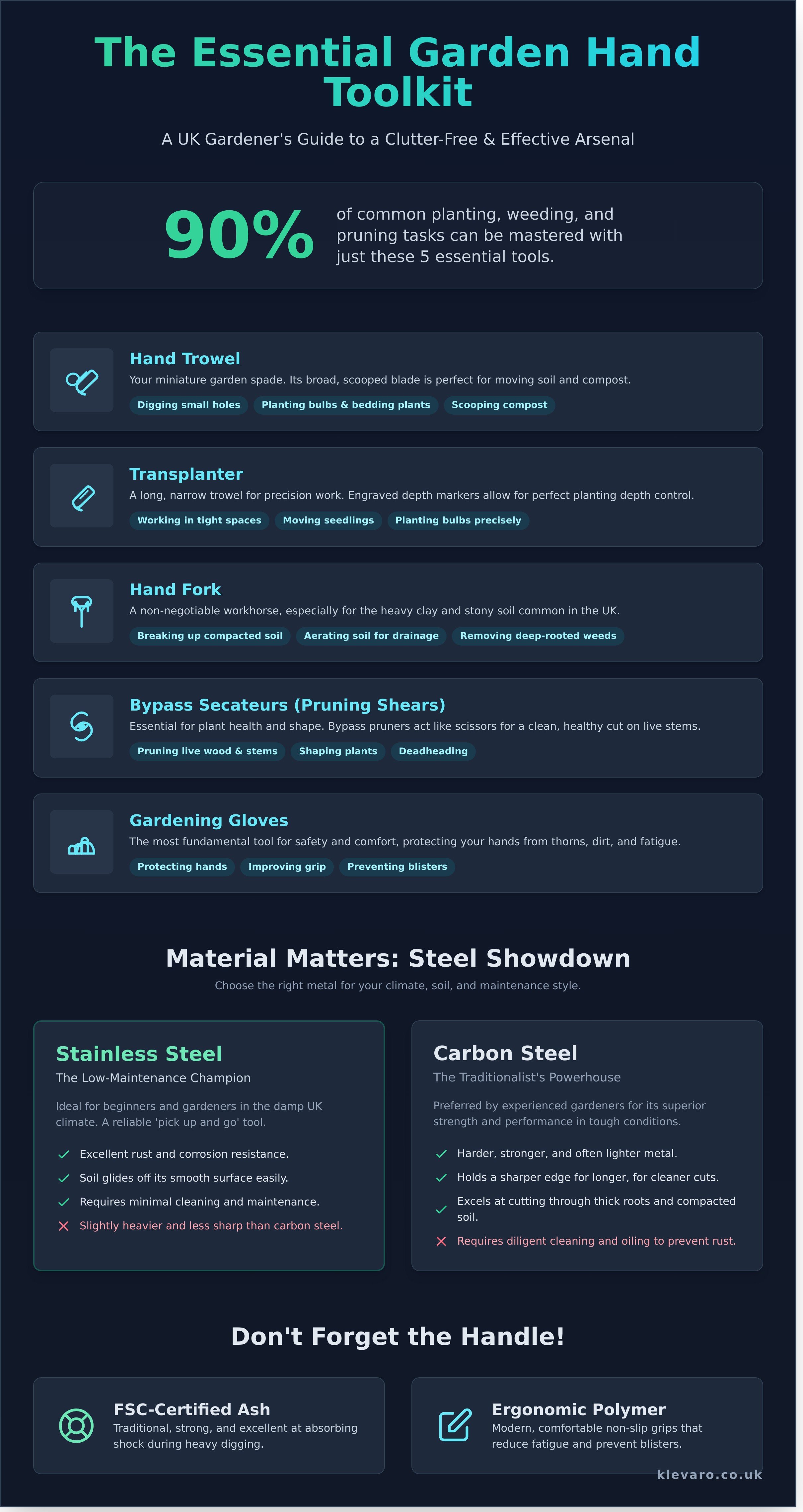
Your overflowing garden shed might be holding you back. The five essential garden hand tools every UK gardener needs for a thriving space are a durable hand trowel, a sturdy hand fork, sharp secateurs, a versatile weeding knife, and comfortable gardening gloves. These core items handle over 90% of common planting, weeding, and pruning tasks, making most other gadgets unnecessary. Stop struggling with tools that rust after one wet spring or cause hand fatigue after just ten minutes of work.
We know how frustrating it is when your equipment doesn't perform. This guide promises to cut through the clutter, helping you build a reliable, long-lasting toolkit. We'll show you exactly what to look for in materials and design to ensure your tools work as hard as you do. Get ready to transform your garden projects from chores into pure enjoyment with gear you can trust.
Key Takeaways
- Start your core gardening kit with four essential tools: a hand trowel, hand fork, secateurs, and a transplanter.
- Learn the difference between rust-resistant stainless steel and sharper carbon steel to choose the best material for your needs.
- Match your tools to specific tasks and soil types to work more efficiently and protect your plants from damage.
- Follow a simple 5-step maintenance process to protect your garden hand tools from rust and keep them sharp for every season.
The Essential Garden Hand Tools for Every UK Gardener
To start your gardening journey in the UK, you only need four essential hand tools. A complete beginner's kit must include a hand trowel, a hand fork, a pair of secateurs, and a transplanter. These core four form the foundation of your gardening arsenal. Using the correct garden tool for each task is crucial; it prevents unnecessary soil compaction and protects delicate plant roots from damage, setting your garden up for success from day one.
Each of these tools plays a specific, vital role in daily garden maintenance. The trowel and transplanter handle all your digging and planting needs, while the fork is perfect for soil aeration and weeding. Secateurs manage pruning and shaping. Together, they equip you to handle the most common jobs you'll face in a typical British garden, from planting spring bulbs to tidying up roses in the autumn.
While a multipurpose DIY tool might seem like a cost-effective shortcut, investing in high-quality, dedicated garden hand tools is always the better choice. Purpose-built tools are designed with ergonomics and durability in mind, often featuring rust-resistant stainless steel heads and comfortable, non-slip grips. They provide superior leverage and precision, reducing strain on your hands and ensuring cleaner work that promotes healthier plants. A cheap alternative will often bend, rust, or break after just one season's use.
Must-Have Digging and Planting Tools
The Hand Trowel: Think of the hand trowel as your primary gardening spade, but in miniature. Its broad, scooped blade is expertly designed for digging small holes, making it the perfect tool for planting bedding plants, perennials, and bulbs. It’s also brilliant for scooping compost from the bag and refilling pots without making a mess.
The Transplanter: A transplanter looks like a longer, narrower version of a trowel. This slim profile is its superpower, allowing you to dig into tight spaces without disturbing the roots of nearby plants. Most feature handy depth markers engraved on the blade, giving you precision control when moving seedlings or planting bulbs to the correct depth.
The Hand Fork: A sturdy hand fork is non-negotiable, especially for those working with the heavy clay or stony soil common across much of the UK. Its strong tines are perfect for breaking up compacted earth, aerating soil to improve drainage, and removing stubborn, deep-rooted weeds. It’s a real workhorse for soil preparation in beds and containers.
Pruning and Cutting Essentials
Secateurs (Pruning Shears): Your secateurs are essential for keeping plants healthy and well-shaped. It's vital to choose the right type for the job. Bypass secateurs have two sharp blades that slice past each other like scissors, making them ideal for clean cuts on live wood. Anvil secateurs have one sharp blade that closes onto a flat surface, which can crush stems and is best reserved for cutting dead or woody material.
Garden Snips: While secateurs handle the tough stuff, garden snips (or florist's scissors) are for more delicate work. Their fine, pointed tips are perfect for deadheading spent flowers, harvesting herbs, and snipping twine. Their precision allows you to make careful cuts without damaging the fragile stems of surrounding plants. Bypass secateurs are the industry standard for making clean, healthy cuts on live stems and branches.
Choosing Between Stainless Steel and Carbon Steel Garden Tools
The best material for your garden hand tools depends on your priorities. Stainless steel is the ideal choice for beginners and gardeners in the damp UK climate due to its excellent rust resistance and low maintenance. In contrast, carbon steel is stronger, holds a sharper edge for longer, and is often lighter, making it the preferred option for heavy-duty tasks and experienced gardeners who prioritise performance. Your decision ultimately balances convenience against raw cutting power.
Beyond the tool head, the handle is crucial for comfort and durability. A quality handle reduces fatigue and provides better control. Traditional handles made from FSC-certified ash are known for their strength and ability to absorb shock, while modern ergonomic polymer grips offer superior comfort and prevent blisters during long gardening sessions.
The Pros and Cons of Stainless Steel
Stainless steel's primary advantage is its built-in resistance to rust and corrosion. Containing a high percentage of chromium, it forms a protective layer that stands up brilliantly to the wet soil and damp sheds common across the UK. This makes it the perfect 'low-effort' tool for busy homeowners who might not always have time for meticulous post-gardening cleanup.
The metal's smooth, polished finish also means that soil, especially heavy clay, is less likely to stick to the blade. This allows the tool to glide through the earth more easily, reducing the physical effort required for digging and weeding. For a reliable tool that’s ready to go when you are, stainless steel is an unbeatable choice.
Why Traditionalists Prefer Carbon Steel
Gardeners who tackle tough, compacted soil or sever thick roots often swear by carbon steel. It's a harder metal, which means it can be sharpened to a much finer edge and will retain that sharpness through significantly more use. This superior edge retention means cleaner cuts and less effort when slicing through turf or stubborn weeds.
This material is also incredibly strong and less likely to bend or deform when used for leverage, like prying out a stubborn rock with a trowel. However, this strength comes with a key responsibility. Properly cleaning and maintaining garden tools is vital, as carbon steel requires a light coat of oil after cleaning to prevent oxidation and rust from forming in storage. Feeling confident about your choice? Explore our full range of durable garden hand tools to find the perfect fit for your plot.
Matching Hand Tools to Specific Gardening Tasks
Choosing the right garden hand tools is not about owning the most equipment; it’s about having the correct tool for your specific garden. The ideal tool depends entirely on your soil type, from heavy clay to light loam, and the plants you're tending. A common mistake for beginners is assuming one trowel can handle every job, but using task-specific tools makes gardening more efficient and enjoyable.
A simple way to build your toolkit is with the 'Dig, Weed, Prune' framework. This approach helps you categorise tasks and select tools designed for each job. Digging tools prepare the ground, weeding tools maintain it, and pruning tools shape your plants for healthy growth. Thinking this way ensures you cover all your bases without buying unnecessary gear. You can find a durable and reliable tool for every job in our complete hand and general tools collection.
Tools for Weeding and Soil Aeration
Effective weeding is crucial for a healthy garden, and specialised tools make the job much easier. For stubborn, deep-rooted weeds like dandelions, a Daisy Grubber is invaluable. Its long, forked metal shaft allows you to get deep into the soil and lever out the entire taproot without disturbing the surrounding plants. This prevents the weed from growing back, a common problem when you only pull off the top.
For general soil maintenance, a hand cultivator is a must-have. This three-pronged tool is perfect for breaking up compacted topsoil, improving aeration, and allowing water and nutrients to reach plant roots. Unlike a large fork, its compact size gives you precise control to work around delicate stems and established plants. Equip yourself with other weeding essentials, like quality gloves and kneelers, from our home and garden accessories range to make the task more comfortable.
Precision Tools for Greenhouse and Potted Plants
Gardening in smaller spaces like greenhouses, containers, or raised beds requires a different set of tools. Standard trowels and forks can be too large and clumsy, risking damage to tightly packed seedlings and delicate root balls. Precision is key, and smaller, specialised tools are designed for this exact purpose.
A potting scoop, for instance, is far more effective than a trowel for filling containers. Its wide, deep head is designed to hold and transfer compost with minimal spillage, keeping your workspace clean and saving valuable potting mix. For planting, a dibber is a simple yet brilliant tool. It creates perfectly uniform holes for seeds and seedlings, ensuring consistent planting depth and spacing. This precision leads to better germination rates and healthier, more organised plant growth. To find a wide variety of seeds for your project, you can visit Helza Hobbyzaden. Investing in these specialised tools pays off in plant health, and to ensure they last, proper care is essential. This RHS guide to cleaning and maintaining hand tools provides expert advice on keeping your gear in top condition.
Cleaning and Maintaining Garden Hand Tools for Longevity
Your garden hand tools are a vital investment in your gardening success. Proper care doesn't just keep them looking good; it ensures they perform safely and effectively for years to come. By following a simple 5-step maintenance routine, you protect your tools from rust, keep them sharp, and guarantee they are ready for any task. This small-time commitment pays huge dividends in tool lifespan and garden health.
Leaving soil and plant sap on your tools is the fastest way to ruin them. Soil traps moisture against the metal, while acidic sap actively corrodes steel, leading to pitting and rust. A quick clean-up after each use is the best defence against this rapid decay.
Follow this five-step process to keep your gear in top condition:
- 1. Clean: Use a stiff brush to remove all caked-on mud and debris. For stubborn sap on secateurs or shears, a cloth with a bit of white spirit will dissolve it instantly. Finish with warm, soapy water.
- 2. Dry: This step is non-negotiable. Thoroughly dry every part of the tool with an old towel or rag. Even a small amount of lingering moisture will invite rust to form overnight.
- 3. Sharpen: A sharp blade is a safe blade. Blunt tools require excessive force, increasing the risk of slips and injury. More importantly, they crush plant stems instead of cutting them cleanly, which damages the plant and creates an entry point for diseases.
- 4. Oil: Apply a thin coat of a suitable oil to all metal surfaces. This creates a protective barrier that repels water and prevents corrosion, especially in a damp shed.
- 5. Store: Proper storage is key. Never leave your tools lying on the lawn or on a damp concrete floor. Hang them on a wall rack or pegboard to keep them dry, organised, and safe.
How to Sharpen and Oil Your Tools
Sharpening your tools is easier than you think. For most jobs, a diamond file offers a quick, effective edge. Whetstones, which require soaking in water or oil, can produce a finer, longer-lasting edge but take more practice. For oiling, boiled linseed oil or mineral oil are the best choices. They protect the metal without turning sticky or rancid like cooking oils can. A 10-minute maintenance routine once a month can double a tool's lifespan.
Winter Storage Best Practices
The end of the growing season is the perfect time for a deep-clean and proper storage. A brilliant trick is the 'sand and oil bucket'. Fill a bucket with builder's sand and pour in about 500ml of mineral oil, mixing it through. Plunging your trowels, forks, and spades into the bucket a few times will scour them clean and apply a light, protective oil coating all at once.
Don't forget the handles. Wooden handles can dry out and splinter over winter. Give them a light sanding with 120-grit sandpaper to smooth them down, then wipe on a coat of boiled linseed oil to nourish the wood. Finally, check all your garden hand tools for loose rivets or wobbly bolts and tighten them before the spring rush begins. If a favourite tool has seen better days, you can explore our range of durable garden tools to find a reliable replacement.
Building a Reliable Gardening Tool Collection with Klevaro
You've learned about the essential tools, and now it's time to assemble your kit with gear that will last. At Klevaro, we see ourselves as the curated source for both dedicated DIY enthusiasts and passionate gardeners, providing reliable tools that turn effort into enjoyment. We believe your ambition shouldn't be limited by your equipment. It's time to stop 'making do' with that old, bent trowel from the back of the shed and start creating with confidence.
Investing in a quality set of garden hand tools is a commitment to your craft. Imagine the difference between a flimsy tool that struggles with compacted soil and a solid, carbon-steel trowel with an FSC-certified ash wood handle. One causes frustration; the other feels like a natural extension of your hand. This is the Klevaro standard: durable, effective tools that become trusted companions for every season.
Why Quality Tools Make the Best Gifts
A thoughtfully chosen tool set is a gift that truly keeps on giving. While flowers fade and garden ornaments might only last a season, a durable tool set offers years of practical value and happy memories in the garden. It’s a meaningful way to support a loved one's passion, making it an ideal present for Father's Day or a special treat on Mother's Day.
Choosing the perfect gift is all about matching the tools to the gardener. Think about their specific needs:
- For the Indoor Plant Parent: A smaller, precision set for repotting succulents and tending to houseplants is perfect. Look for mini trowels, soil scoops, and delicate snips.
- For the Balcony Gardener: A versatile, multi-tool set that saves space without sacrificing function is a brilliant choice for container gardening.
- For the Allotment Pro: They will appreciate robust, long-handled tools that reduce bending and a heavy-duty fork for breaking up tough soil.
Gifting quality tools shows you care about their comfort and success. You can find the perfect present for every type of green-fingered enthusiast when you browse our full range of tools and equipment.
Transforming Your Outdoor Space
Often, the biggest barrier to starting a garden project isn't a lack of vision; it's the physical effort required. The right equipment can completely change this dynamic. A sharp, ergonomic weeder makes a dreaded task 30% quicker and significantly less strenuous on your back and wrists. Suddenly, that overgrown patch doesn't look so intimidating, and you're motivated to get started.
This newfound ease transforms how you see your garden. Projects like planting 50 spring bulbs, dividing established perennials, or precisely pruning roses become enjoyable activities instead of daunting chores. This shift is central to great home and garden improvement. A well-tended garden becomes a beautiful outdoor living area, boosting your property's appeal and your personal well-being.
Your outdoor space is an extension of your home. With the right garden hand tools, you have the power to shape it exactly how you envision, creating a sanctuary for relaxation and a source of pride.
Just as quality tools can elevate your garden, premium textiles can transform your indoor sanctuary. For those who appreciate fine materials in every part of their home, King of Cotton is a renowned specialist in high-quality linens.
Your garden holds incredible potential, and you now have the knowledge to unlock it. A solid foundation of essential, reliable tools is the final piece of the puzzle. Don't wait for inspiration to strike; equip yourself to create it, one perfectly planted seed at a time.
Ready to get started? Join the Klevaro community for exclusive access to expert tips, seasonal checklists, and inspiration for your next project. It’s more than just a newsletter; it’s your partner in creating. Begin your 2026 garden journey with Klevaro today.
Cultivate Your Dream Garden with Confidence
Armed with the right knowledge, you're ready to build a toolkit that works as hard as you do. Remember that matching the correct tool to the task saves you effort, while choosing durable materials like stainless or carbon steel means your investment will last for years. A little maintenance goes a long way in keeping your favourite tools in top condition season after season.
Building your collection doesn't have to be overwhelming. At Klevaro, we've done the hard work for you. As a trusted UK store, we offer quality-guaranteed garden hand tools from expertly selected brands known for their durability. With fast UK delivery on all orders, you can get started on your next project this weekend.
Ready to transform your outdoor space? Shop our curated range of garden hand tools and find the perfect equipment to bring your vision to life. It's time to get out there and create the garden you've always wanted.
Frequently Asked Questions
What are the most important garden hand tools for beginners?
The most important tools for a beginner are a hand trowel, a hand fork, a quality pair of secateurs, and durable gardening gloves. This core set allows you to handle over 90% of essential tasks like digging, planting, weeding, and pruning small plants. With these four items, you can confidently start your gardening journey without being overwhelmed by too much gear.
Is stainless steel better than carbon steel for garden tools?
Stainless steel is generally better for most gardeners because it's highly rust-resistant and easy to clean. While carbon steel is stronger and holds a sharper edge for longer, it rusts very quickly if not meticulously cleaned and oiled after every use. For a practical, low-maintenance option that still offers excellent durability, stainless steel is the ideal choice.
How do I stop my garden hand tools from rusting?
You can stop your garden hand tools from rusting by cleaning and drying them completely after every single use. Use a stiff brush to remove all soil, then wipe them down with a dry cloth. For long-term protection, apply a thin coat of a general-purpose oil like 3-in-1 or linseed oil before storing them in a dry place. This simple 5-minute routine will keep them in top condition for years.
What is the difference between a trowel and a transplanter?
A trowel has a broad, scoop-shaped blade designed for moving soil, digging planting holes, and mixing in compost. A transplanter, on the other hand, features a long, narrow blade, often with measurement marks. This specific shape is perfect for transplanting seedlings and working in tight spaces without disturbing the roots of surrounding plants.
Can I use indoor DIY tools for gardening tasks?
No, you shouldn't use your indoor DIY tools for gardening. Garden tools are built from materials designed to withstand moisture, abrasive soil, and constant exposure to the elements. Using household tools outdoors will likely lead to rust, broken handles, and ineffective results. It's always best to invest in purpose-built tools designed for the job.
How often should I sharpen my secateurs?
You should aim to sharpen your secateurs at least once per gardening season. However, if you're an active gardener doing a lot of pruning, sharpening them after every 10-12 hours of use is a good practice. A sharp blade makes cleaner cuts, which helps plants heal faster and reduces the physical effort required from you. You'll know it's time when the blades begin to crush stems instead of slicing them.
Are ergonomic garden tools worth the extra cost?
Yes, ergonomic tools are absolutely worth the extra cost, especially for anyone who gardens regularly or experiences hand or wrist strain. They are designed with features like padded grips and angled heads to reduce fatigue and minimise the risk of repetitive strain injuries. This makes gardening more comfortable and sustainable, turning a potential chore into a genuine pleasure.
What is the best way to store garden hand tools in a small shed?
The best way to store tools in a small shed is by using vertical wall space. Install a pegboard with hooks for hanging individual items or mount a magnetic tool holder for your metal tools like trowels and forks. This keeps them off the damp floor, prevents damage to sharp edges, and makes everything easy to find. It's an efficient solution that maximises your available storage area.
Leave a comment