


Easy Gardening for Beginners in Pots: The Complete 2026 Guide
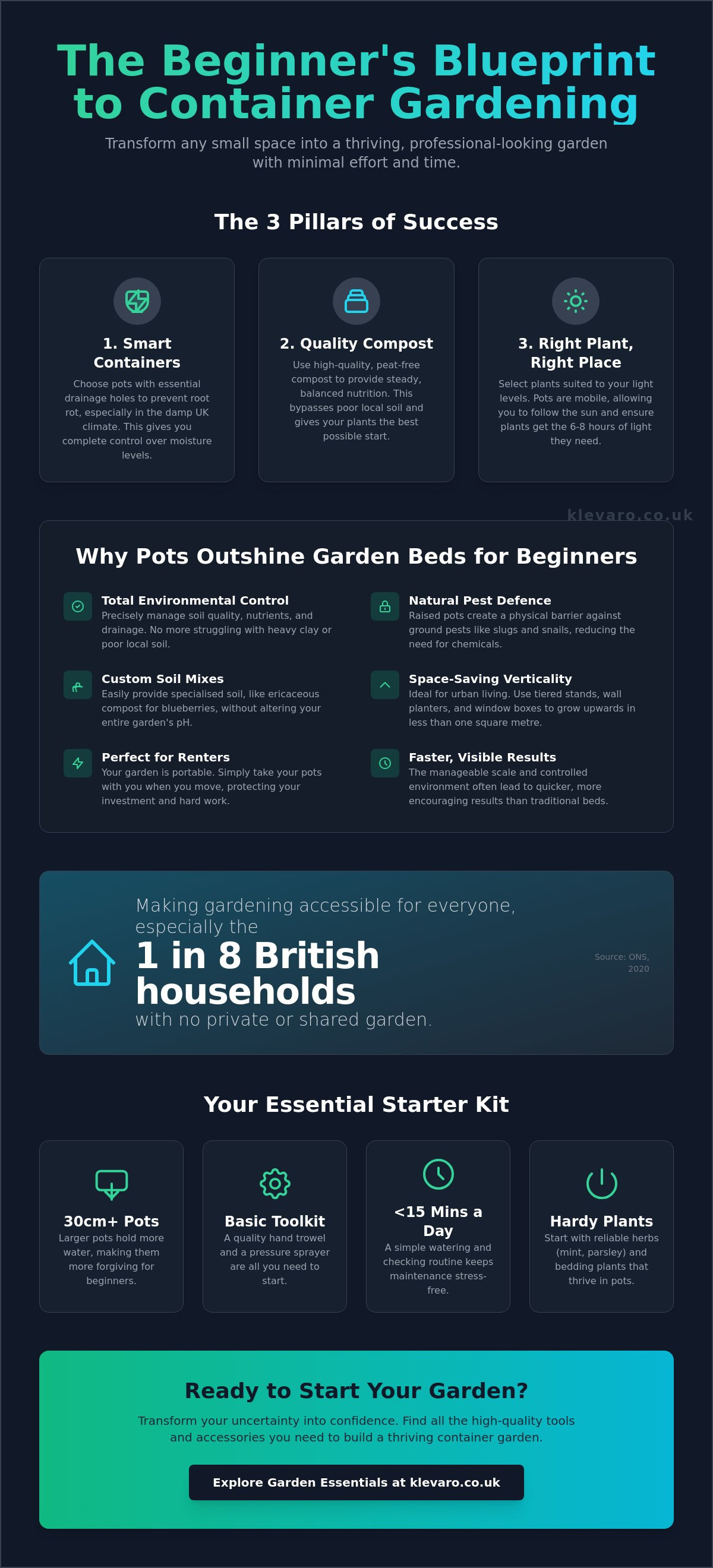
You don't need a sprawling backyard or decades of experience to grow a vibrant, professional-looking garden in 2026. Successful easy gardening for beginners in pots relies on three main pillars: choosing containers with drainage holes, using high-quality peat-free compost, and selecting plants suited to your specific light levels. Start with durable 30cm pots and a basic toolkit including a hand trowel and a pressure sprayer to keep maintenance under 15 minutes a day. This approach eliminates the stress of traditional digging while providing full control over soil quality and moisture.
It's natural to feel a bit overwhelmed by confusing compost types or the fear of accidentally drowning your new plants. We've all been there, wondering if we have enough storage space for bulky gear or which trowel is actually worth the investment.
This guide promises to transform that uncertainty into confidence by showing you exactly how to build a thriving container garden with the right tools and a manageable routine. You'll learn which essentials are truly necessary, how to pick the perfect pots for your space, and the best ways to keep your plants lush all year round.
Key Takeaways
- Master easy gardening for beginners in pots by selecting containers that offer total control over soil quality and sunlight exposure.
- Choose durable, stainless steel hand tools designed for compact spaces to make maintenance easier and more efficient.
- Learn how to select the correct pot materials and drainage features to protect your plant roots in the damp UK climate.
- Establish a consistent watering and feeding routine that ensures your container garden remains lush and healthy.
- Identify the hardiest herbs and bedding plants that thrive in pots with minimal maintenance and effort.
Container gardening is the best way for beginners to start growing plants in small spaces.
Easy gardening for beginners in pots is the most reliable method for new growers because it provides complete control over the growing environment. By using containers, you eliminate the need for heavy digging and can bypass poor quality local soil entirely. This approach is particularly effective for UK residents living in urban areas where outdoor space is limited to a balcony or small patio. It allows you to create a thriving green space regardless of your property's size or ground conditions. According to 2020 data from the ONS, one in eight British households has no access to a private or shared garden, making pots the primary solution for millions of aspiring gardeners.
Container gardening or pot gardening involves growing plants in individual vessels like troughs, hanging baskets, or ceramic pots instead of the open ground. This setup means you can move your plants to follow the sun as the seasons change; this ensures they always receive the 6 to 8 hours of light most vegetables require. You also manage drainage and nutrients precisely, which prevents the waterlogging often seen in heavy clay soils common across many UK regions. Beginners find this method less intimidating because the scale is manageable and the results are often faster than traditional beds.
If you're ready to start your journey, you can browse our high-quality range of garden accessories to find the right equipment for your first project. Starting small with just two or three pots ensures you don't feel overwhelmed while learning the basics of plant care. You'll quickly see how simple it is to transform a dull corner into a vibrant, productive space.
Why pots are easier than traditional flower beds
Pots create a physical barrier that helps protect your plants from ground-dwelling pests. Slugs and snails find it much harder to reach foliage in a raised pot than they do in a flat garden bed. You can even add copper tape to the rim of your pots for an extra layer of protection against these common UK garden visitors. This reduces the need for chemical pesticides and keeps your plants looking healthy with less effort.
Customising your soil is another major advantage. Some plants, like blueberries or azaleas, require acidic soil to survive. In a traditional garden, changing the pH of the ground is difficult and time-consuming. With pots, you simply fill the container with specific ericaceous compost to meet the plant's needs instantly. Maintenance is also more comfortable; you can place pots on tables or stands to work at waist height, which reduces strain on your back and knees during pruning or deadheading.
Space-saving benefits for urban gardeners
Urban gardening relies on clever use of vertical space. Tiered pot stands and wall-mounted planters allow you to grow a variety of herbs and flowers in a footprint of less than one square metre. This is a game-changer for those with small balconies in cities like London or Manchester where every centimetre counts. You can grow upwards rather than outwards to maximise your harvest.
Window boxes are another brilliant solution for homes without a garden. They provide enough space to grow kitchen essentials like basil, mint, and parsley right outside your kitchen window. Because these gardens are portable, they are the perfect choice for renters. You can simply pack up your plants and take them with you when you move; this ensures your hard work and investment aren't left behind at a previous property.
Selecting the correct pot and compost is the foundation of plant health.
Success with easy gardening for beginners in pots depends on choosing containers with drainage holes and using high-quality peat-free compost. These two elements prevent root rot and ensure your plants receive steady nutrition. Larger pots, typically 30cm or wider, are better for beginners because they hold more water and nutrients than small containers. In the UK's unpredictable climate, a well-draining pot prevents waterlogging during rainy spells while providing a stable home for root systems. This foundation allows your garden to thrive with minimal daily intervention.
Drainage is the most critical feature of any container. Without clear exit points for water, roots sit in stagnant liquid, which leads to decay. If you've bought a decorative pot without holes, simply place a plastic nursery pot inside it. This method keeps your garden looking stylish while maintaining plant health. You can find practical additions for your setup by browsing our range of garden accessories designed for modern outdoor spaces.
Comparing pot materials: Terracotta vs Plastic vs Metal
The material of your pot dictates how often you need to water. Terracotta is a porous clay that allows air and moisture to pass through the walls. This breathability makes it perfect for Mediterranean herbs like rosemary, but it dries out very quickly in summer. Research into container gardening basics shows that porous materials require more frequent monitoring than non-porous alternatives.
Plastic and resin pots are excellent for beginners because they are lightweight and retain moisture effectively. These materials are ideal for thirsty bedding plants like petunias or lobelia. Metal containers offer a modern aesthetic but require careful placement. Metal conducts heat rapidly, which can scorch sensitive roots if left in direct midday sun. Use metal pots in shaded areas or line them with bubble wrap to provide a thermal barrier.
Choosing the right compost for your containers
Standard garden soil is too heavy for pots and often contains weed seeds or pests. Peat-free multi-purpose compost is the best choice for most annual flowers and vegetables. It's lightweight and contains enough fertiliser to feed your plants for about six weeks. After this period, you'll need to add liquid feed to keep them healthy.
For long-term plants like shrubs or small trees, choose John Innes No. 2 or No. 3. These are soil-based composts that provide more weight and stability, preventing your pots from blowing over in high winds. If you want to grow acid-loving plants like blueberries or camellias, you must use ericaceous compost. Regular compost has a pH level that is too high for these specific varieties, which causes their leaves to turn yellow and growth to stall.
High-quality garden hand tools make container maintenance significantly easier.
Compact hand tools provide the precision needed for container gardening while reducing physical effort. Stainless steel implements are the best choice for UK gardeners because they resist rust and are simple to sterilise between uses. Ergonomic handles prevent wrist strain during repetitive tasks like repotting or weeding. Maintaining sharp edges on your equipment ensures clean cuts that help prevent plant diseases. Using the right kit makes easy gardening for beginners in pots much more efficient and enjoyable.
Investing in a dedicated set of small tools is more practical than using full-sized garden spades. Large shovels are often too wide for the diameter of standard patio pots, leading to spilled compost and damaged roots. Hand-sized versions allow you to work closely with your plants without disturbing the surrounding soil structure. This level of control is vital when you are working in limited spaces like balconies or small courtyards.
Stainless steel is the industry standard for durability in the garden. These tools don't require constant oiling to stay in good condition, which saves time for busy beginners. The smooth surface of the metal also makes it easier to wipe away sticky clay or wet compost after a session. Keeping your tools clean is a simple way to stop the spread of soil-borne pests between different containers.
Ergonomics play a major role in how long you can comfortably spend in your garden. Handles with contoured grips or soft-touch coatings help distribute pressure across your palm. This design reduces the risk of blisters and joint fatigue, especially when working with heavy peat-free compost. Choosing tools that feel balanced in your hand will make your daily maintenance tasks feel like a relaxing hobby rather than a chore.
The essential toolkit for pot gardening
A hand trowel is the primary tool for digging holes and transferring compost into your containers. It's designed to handle the volume of soil required for 30cm or 40cm pots without making a mess. Hand transplanters are narrower than trowels and feature measurement markings on the blade. These markings ensure you plant bulbs or seedlings at the correct depth for optimal growth. Explore our range of garden hand tools to find durable options for your first project.
Pruning and watering equipment
Sharp secateurs are necessary for cutting back dead stems and harvesting fresh herbs cleanly. A clean snip allows the plant to seal the wound quickly, which reduces the risk of fungal infections. For hydration, a small watering can with a fine rose attachment is superior to a high-pressure hose. The rose breaks the water into a gentle spray that prevents soil erosion and protects delicate seedlings. Check out the full gardening equipment collection for all-in-one beginner kits. These kits provide the basic gear needed to keep your patio display looking vibrant throughout the 2026 season.
Successful container gardening requires a consistent watering and feeding routine.
Easy gardening for beginners in pots relies on a consistent maintenance schedule to keep plants healthy in confined spaces. You should check the moisture levels daily by inserting your finger 2cm into the compost to ensure it isn't dry. Apply a liquid fertiliser every 14 days during the summer growing season to replace nutrients that leach out during watering. Water your containers early in the morning or late in the evening to prevent rapid evaporation in the sun. Regular deadheading of faded flowers is also essential to trigger the plant to produce more blooms throughout the season. These simple habits prevent common pitfalls and ensure your display stays vibrant until autumn.
Consistency is the secret to a thriving container garden. Because pots hold a limited amount of soil, they lose moisture and nutrients much faster than garden beds. Monitoring your plants daily helps you spot signs of stress before they become permanent problems. A quick check each morning ensures your plants have the resources they need to withstand the midday heat.
How to water your pots correctly
Always apply water directly to the soil surface rather than splashing the leaves. Wet foliage increases the risk of fungal infections like powdery mildew, especially in the humid UK climate. Pour water steadily until you see it draining from the bottom of the pot. This ensures the entire root ball is saturated rather than just the top layer. You can group your pots together to create a humid microclimate. This collective shade reduces water loss from the sides of the containers and keeps the roots cooler.
Feeding and nutrient management
Plants in pots quickly exhaust the nutrients found in standard compost. Mixing slow-release fertiliser granules into the soil at the start of the season provides a steady base of nutrition for up to six months. For flowering plants, using a high-potash tomato feed every two weeks encourages prolific blooming. This boost is vital for species like petunias or geraniums that work hard to produce colour all summer. You can read our guide on essential gardening tools for more advice on the maintenance gear you'll need to keep your pots in top shape.
Deadheading is the final step in your routine. Removing spent flowers prevents the plant from wasting energy on seed production. Simply pinch off the faded heads with your thumb and forefinger to keep the plant looking tidy and productive. This small task takes only a few minutes but significantly extends the flowering window of your container display.
Ready to upgrade your outdoor space? Explore our range of garden accessories to find everything you need for a successful season.
Hardy herbs and bedding plants are the most reliable options for new gardeners.
Mint, chives, and rosemary are the most reliable plants for easy gardening for beginners in pots because they are nearly indestructible in the UK climate. For consistent summer colour, geraniums and petunias provide the best results with minimal deadheading effort. Beginners looking for year-round structure should choose evergreen Buxus, while strawberries are the most successful fruit for small containers. These specific plants are chosen for their resilience, low maintenance requirements, and ability to thrive in restricted soil volumes.
Mint and chives are practically indestructible and grow well in almost any light condition. Mint grows so vigorously that a pot is actually the best place for it, as the container stops the roots from invading the rest of your garden. Rosemary is equally tough and thrives in the UK's varied weather, requiring very little attention once its root system is established. These three herbs ensure your first attempt at growing food is a guaranteed success.
For vibrant summer displays, geraniums and petunias are the best choices for beginners. They bloom continuously from June until the first frosts in October, provided they receive regular water. Evergreen shrubs like Buxus (box) keep your patio looking lived-in during the cold winter months. These slow-growing plants hold their shape well in decorative containers and require pruning only once or twice a year to stay neat.
Strawberries are the easiest fruit for beginners to grow in hanging baskets or troughs. They stay clear of soil-based pests when elevated and produce sweet fruit from June through August. A standard 60cm trough can comfortably house three strawberry plants. This setup makes easy gardening for beginners in pots both rewarding and delicious without the need for a large vegetable patch.
The best herbs for a kitchen windowsill or patio
Basil and parsley are excellent for sunny windowsills inside or sheltered spots on a patio. You can grow these from seed in under six weeks to enjoy fresh additions to your cooking. Thyme is a brilliant choice for smaller terracotta pots because it is highly drought-tolerant. It survives even if you forget to water it for a few days during a heatwave. Browse our home and garden accessories for stylish planters that fit perfectly on narrow ledges.
Seasonal flowers for year-round colour
Pansies and violas are the heroes of the colder months. They are hardy enough to survive ground frost and will keep flowering when most other plants go dormant. To prepare for spring, plant bulbs like daffodils and tulips in autumn. These provide a burst of yellow and red as early as March. Finish your garden setup with decorative home items to complement your new plants and create a cohesive look between your indoor and outdoor spaces.
Grow Your 2026 Container Garden with Confidence
Mastering easy gardening for beginners in pots starts with choosing the right foundation. Select high-quality peat-free compost and a pot with adequate drainage to ensure your hardy herbs and bedding plants thrive throughout the 2026 season. Maintaining your new green space is much simpler when you have the right equipment on hand. Using the correct hand tools makes daily maintenance tasks significantly more efficient than using improper gear.
Klevaro is a trusted UK store dedicated to helping you transform your outdoor spaces. We provide expertly curated DIY and garden tool kits that include the essential items every new gardener needs. Every order comes with fast UK delivery, ensuring your supplies arrive in time for your next project. Our quality guarantee means you're investing in durable tools that will support your hobby for years to come.
Shop our complete range of beginner-friendly garden tools and accessories
It's time to grab your trowel and start creating your own personal oasis. You've got the knowledge and the right partner to make your garden a success this year.
Frequently Asked Questions
How often should I water my plants in pots?
You should water your potted plants when the top 2cm of soil feels dry to the touch. During a typical UK summer, this usually means watering once a day, or twice during heatwaves when temperatures exceed 25 degrees. In cooler months, you might only need to water once a week. Always pour water until it starts to trickle out of the drainage holes at the bottom to ensure the roots are reached.
Do I need to put stones at the bottom of my pots for drainage?
You don't need to put stones or "crocks" at the bottom of your pots to improve drainage. Research shows this actually raises the water table within the container, which can lead to root rot. Instead, ensure your pot has at least one large drainage hole and use a high quality potting mix. This keeps the soil aerated and lets water flow through naturally without creating stagnant pools at the base.
Can I reuse compost from last year for new plants?
You can reuse old compost if the previous plants were healthy and free from pests. Old compost loses its structure and essential nutrients over 6 to 12 months of use. To revive it, mix in 50 percent new compost and add a slow release fertiliser to replenish the soil. This is a great way to practice easy gardening for beginners in pots while reducing waste and saving money on garden supplies.
What are the best low-maintenance plants for a shady balcony?
Ferns, Hostas, and Begonias are the most reliable choices for balconies that receive less than 4 hours of direct sunlight. These plants naturally thrive in damp, shaded environments and require very little intervention. Fuchsias also perform well in UK shade and provide bright colours throughout the summer. They require minimal effort beyond regular watering and a liquid feed every 14 days to keep them looking their best.
How do I know if my pot is too small for my plant?
Your pot is too small if you see roots poking through the drainage holes or circling the surface of the soil. Another sign is when the plant needs watering more than twice a day during moderate 20 degree weather. If the plant looks top-heavy or stops growing despite being fed, it's time to move it. Choose a new container that is roughly 5cm wider to give the roots space to expand.
Is it better to grow plants from seeds or buy young plants?
Buying young "plug" plants is better for beginners because they have established root systems and a much higher survival rate. Growing from seed is cheaper but requires more equipment like seed trays and specific indoor temperatures to germinate. For easy gardening for beginners in pots, starting with 3 or 4 healthy nursery plants ensures your garden looks vibrant and established from the very first day.
What should I do with my pots during the winter?
Move frost-sensitive plants into a shed, greenhouse, or conservatory when temperatures drop below 5 degrees. For hardy plants staying outside, use pot feet or bricks to lift containers off the cold, damp ground. This prevents waterlogging and stops the pot from cracking during a hard freeze. Wrapping pots in bubble wrap or hessian provides extra insulation for delicate root systems during the coldest UK months.
How can I stop my pots from drying out so quickly in the summer?
Add a 3cm layer of bark or decorative stones to the soil surface to trap moisture and reduce evaporation. Larger pots hold more soil and stay damp longer than small containers under 20cm in diameter. You can also mix water-retaining granules into the compost before you start planting. These granules can hold up to 400 times their weight in water, releasing it slowly to the roots as the soil dries out.
Leave a comment