


Choosing the Best Storage & Handling Equipment for Home and DIY in 2026
Professional-grade storage and handling isn't just for warehouses; it's the essential foundation for safe and efficient home DIY. The most effective storage & handling solutions for a home workshop include modular steel cabinets, vertical pegboard systems, and heavy-duty rolling trolleys. These options keep your tools protected from moisture and ensure every item is accessible in seconds. You should prioritise powder-coated finishes for durability and choose transport equipment with a load capacity of at least 150kg. Organising your space this way prevents tool damage and creates a professional environment for any project.
We all know the frustration of searching for a specific wrench while a project sits half-finished on the bench. It's easy to let clutter take over your garage, but a disorganised space leads to damaged gear and wasted time. This guide shows you how to select space-saving solutions that protect your investment and make DIY projects more efficient. You'll discover the best equipment to organise your workspace and move heavy materials with ease.
Key Takeaways
- Distinguish between stationary storage and mobile handling to design a workshop layout that matches your specific project needs.
- Calculate tool weight and measure available floor space to ensure your new equipment provides maximum support and accessibility.
- Evaluate the trade-offs between portable toolboxes for hand tools and fixed shelving for heavy materials like paint and timber.
- Avoid safety risks and tool damage by following strict weight limits and proper loading techniques for all storage & handling gear.
- Transform your garage or garden shed into an efficient, professional environment with durable solutions that protect your DIY investment.
Storage and handling equipment includes the tools used to organise, transport, and protect your DIY gear.
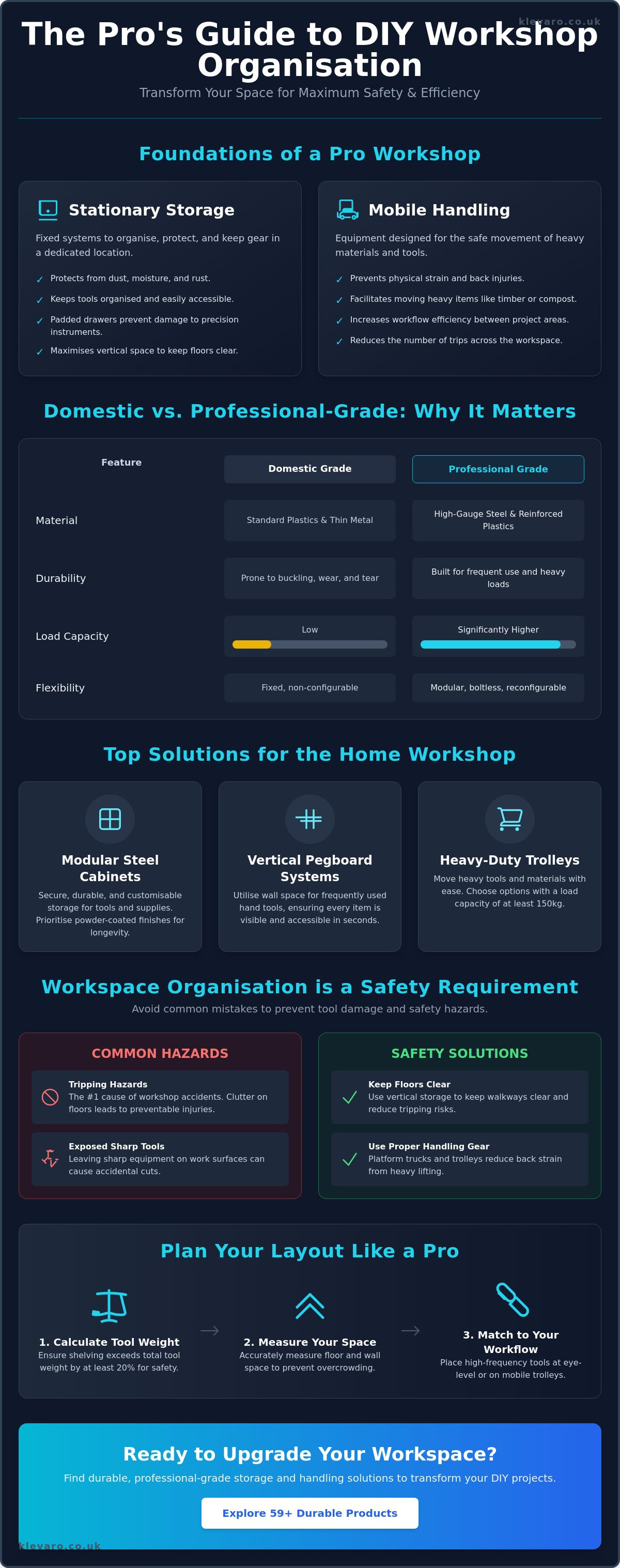
Storage and handling equipment consists of the stationary systems and mobile tools required to manage a home workshop. Storage solutions like shelving, bins, and tool chests keep gear organised in a fixed location. Handling equipment, such as trolleys and platform trucks, facilitates the safe movement of heavy materials and tools. Using the correct storage & handling gear prevents physical strain and protects expensive equipment from environmental damage like rust or impact. Klevaro offers 59 durable products specifically designed to help you maintain a professional and efficient workspace for home and garden projects.
Stationary storage protects your tools from dust and moisture which can lead to corrosion over time. High-quality tool chests often feature padded drawers that prevent precision instruments from shifting and losing calibration. Handling gear ensures that heavy bags of compost or timber planks don't cause unnecessary muscle fatigue. By investing in the right equipment, you create a workflow that's both faster and more enjoyable.
The difference between domestic and professional-grade solutions
Professional-grade equipment typically features higher-gauge steel and reinforced plastics to withstand frequent use. Industrial-style handling tools offer significantly higher weight capacities compared to standard household items. Load capacity is defined as the maximum weight equipment can safely support without structural failure. Choosing heavy-duty options ensures your setup grows with your tool collection without needing frequent replacements. You can explore our range of tools and equipment to find solutions built for longevity.
Standard domestic shelves often buckle under the weight of multiple power tools or heavy paint tins. Professional-grade alternatives use boltless assembly and thicker beams to maintain stability under pressure. These solutions are often modular, allowing you to reconfigure your layout as your project needs change. This flexibility is essential for DIY enthusiasts who tackle a wide variety of home improvement tasks throughout the year.
Why workspace organisation is a safety requirement
Tripping hazards represent the primary cause of workshop accidents in the UK, accounting for a large portion of preventable injuries. Handling tools like platform trucks effectively reduce the risk of back injuries by taking the strain of heavy lifting off the user. Proper storage also ensures that sharp tools aren't left exposed on work surfaces where they can cause accidental cuts. Maintaining a tidy floor space allows for clear movement and better focus on the task at hand. Dedicated bins and racks keep your essential gear within reach while keeping the main work area clear of clutter.
Utilising vertical wall space for storage keeps the floor clear and reduces the chance of stumbling over loose items. Heavy-duty trolleys allow you to move an entire project's worth of materials in one trip, which minimises the number of times you have to navigate a cluttered space. Safety in the workshop starts with a commitment to organisation and the right equipment to support it.
Selecting the right storage solution depends on your tool weight and frequency of use.
The most effective storage solution is determined by the total weight of your gear and how often you access specific items. You must calculate the combined load of your power tools to ensure your shelving or trolleys exceed this weight by at least 20%. Accurate measurements of your floor and wall space prevent overcrowding and keep walkways clear. Mobile storage units with heavy-duty castors are necessary if you frequently move projects between your garage and garden. Modular systems are the most efficient choice because they allow you to add bins or shelves as your collection grows. These choices create a professional environment that saves time and energy.
Planning your layout around your workflow makes every DIY task more enjoyable. High-frequency tools belong in eye-level storage or on a mobile trolley that follows you around the room. Matching your equipment to your physical space and habits creates a professional environment that protects your tools. This approach ensures you don't waste effort searching for essentials in the middle of a project.
Step 1: Audit your current tool collection
Before buying any new storage & handling equipment, you need a clear inventory of what you own. Categorise your tools by size, weight, and usage frequency to determine where each item should live. Power tools like mitre saws require deep storage with high weight limits, while precision hand tools are better suited for shallow, foam-lined drawers. You can browse our hand and general tools to identify common items that require specific organiser slots.
Don't forget to account for future purchases during this audit. If you plan to expand your woodworking or gardening kit within the next 12 months, choose a system that offers extra capacity. A modular approach allows you to snap on additional organisers or expand your shelf height without replacing the entire unit. This scalability ensures your investment remains useful as your skills and tool collection grow.
Step 2: Evaluate your environment and mobility needs
Your workspace environment dictates the best materials for your storage. For damp sheds or outdoor garden use, choose weather-resistant materials like reinforced polypropylene or powder-coated steel to prevent rust and degradation. Mobility is another crucial factor for many DIYers. To find the right fit for your home, explore our range of tools and equipment built for versatile home and garden use.
Think about the surfaces you'll be navigating during your projects. Small plastic wheels might struggle on gravel or uneven garden paths, whereas larger rubber-coated wheels provide a much smoother experience. Durable construction is essential for any equipment that leaves the safety of the garage. Investing in reinforced materials means your gear won't crack or warp when exposed to temperature changes or heavy loads.
Compare portable toolboxes with fixed shelving to find your ideal workshop layout.
Fixed shelving and portable toolboxes serve different roles in a workshop layout. Fixed shelving provides maximum vertical storage for heavy items like paint tins and stationary power tools. Portable toolboxes offer protection and organisation for precision hand tools that you need to carry to different project sites. Handling equipment like flatbed trolleys is essential for moving bulk materials like timber or heavy bags of sand. Combining these solutions creates a comprehensive storage & handling system that maximises floor space and protects your equipment.
Your workshop layout should prioritise accessibility for the tools you use most often. Heavy, bulky items belong on the lower levels of fixed shelving to maintain a low centre of gravity. Frequently used hand tools are best kept in a mobile chest or a portable box that stays within arm's reach of your workbench. This hybrid approach ensures you don't waste time walking across the garage for a single screwdriver or struggling to lift heavy containers from high shelves.
Fixed storage for heavy-duty organisation
Vertical storage is a necessity in the UK, where the average single garage measures approximately 12.8 square metres. Wall-mounted racks and heavy-duty shelving units keep heavy items off the floor, which prevents moisture damage and creates a safer walking environment. These units are designed for gear that stays in one place, such as bench grinders, large mitre saws, or 5-litre paint tins. You can browse our tools and equipment collection to find sturdy options that support your heaviest workshop essentials.
For smaller fixings and fasteners, plastic storage bins are the most effective solution. These bins can be mounted on louvred panels or stacked on shelves to keep screws, nails, and wall plugs visible and sorted. This level of organisation prevents the common "junk drawer" effect and ensures you never buy duplicates of hardware you already own. Clear labelling on each bin further speeds up your workflow during complex assembly tasks.
Handling tools for easier material transport
Moving materials like garden compost or building supplies becomes effortless with the right platform trolley. These tools take the strain off your back and allow you to move larger volumes of material in a single trip. For those with limited space, folding trucks provide a high load capacity while collapsing into a slim profile for storage when not in use. These are particularly useful for DIYers who need to transport gear between a shed and a driveway.
It's important to match your handling equipment to your specific floor type. Use large, pneumatic rubber wheels for navigating uneven surfaces like grass and gravel without getting stuck. Hard plastic or polyurethane wheels are more efficient on smooth concrete workshop floors because they offer lower rolling resistance. Selecting the right wheel material ensures your trolley remains easy to manoeuvre even when loaded to its maximum capacity.
Avoid these common storage mistakes to prevent tool damage and safety hazards.
Common storage mistakes include exceeding weight limits and storing heavy items on high shelves. You must never go past the stated load capacity of a shelf or trolley to prevent structural collapse. Storing heavy equipment at height creates a tipping risk that can lead to serious injury or property damage. Treat rust on metal components immediately with a wire brush and protective coating to stop structural failure. Always distribute weight evenly across platform trucks to maintain stability during transport. These simple safety steps protect your tools and ensure your storage & handling equipment remains reliable for years.
Ignoring the specific limits of your gear often leads to avoidable accidents in the workshop. A shelf that looks sturdy might still bow under the weight of a heavy mitre saw or a stack of floor tiles. When you ignore these physical limits, you aren't just risking your tools; you're risking your safety. Proper weight distribution and regular inspections are the best ways to keep your workspace running smoothly.
The dangers of overloading your equipment
Overloaded shelves often bow in the centre before they eventually fail. This deformation puts constant stress on the joints and can cause the entire unit to collapse without warning. When handling tools like trolleys are pushed beyond their limit, they become significantly harder to steer and stop. This lack of control increases the risk of collisions in tight garage spaces. Always check the manufacturer's Safe Working Load (SWL) before adding new items to your setup.
Stability is just as important as the total weight. Placing a heavy object on one side of a platform truck makes it prone to tipping when you turn a corner. This is especially dangerous when moving materials across uneven surfaces like garden paths. Keep the heaviest items at the bottom and as close to the centre of the unit as possible to maintain a low centre of gravity.
Maintenance tips for handling equipment
Regular maintenance prevents your handling gear from becoming a safety hazard. Keep wheel axles clean and apply a silicone-based lubricant every six months to ensure smooth movement. Dirt and debris in the bearings increase friction, making heavy loads much harder to push. Wipe down plastic storage bins and metal shelves regularly to prevent dust buildup, which can trap moisture against your tools. Inspect the welds and joints on your trolleys once a month for any signs of stress or hairline cracking.
Small maintenance tasks done today prevent total equipment failure during a big project later. If you notice a wheel sticking or a shelf bracket loosening, fix it immediately rather than waiting for it to break. Keeping your gear in top condition is the easiest way to ensure your DIY projects stay efficient and safe. To upgrade your workshop with gear built to last, shop our durable tools and equipment collection today.
Find durable storage and handling tools at Klevaro to transform your workspace.
Klevaro provides a comprehensive selection of 59 curated products designed for home and garden storage & handling. Our inventory includes heavy-duty platform trucks for moving bulk materials and compact organiser bins for sorting small hardware. These tools are manufactured from high-quality materials to ensure they withstand the rigours of frequent DIY use. You can rely on our fast UK delivery to get your workspace organised without delay. Each item in our range is quality guaranteed, providing you with the confidence to build and create in a professional environment.
A well-equipped workshop is the key to finishing projects on time and with better precision. When your tools are protected and your materials are easy to move, you can focus entirely on the task at hand. Our solutions help you reclaim your garage or shed space while keeping your most valuable gear safe from damage. We aim to be your dependable partner in every home improvement journey.
Standout products from the Klevaro collection
Our heavy-duty platform trucks are built for durability, making them the perfect choice for demanding garden projects like moving paving stones or large planters. If you need to organise a cluttered workbench, our range of stackable storage bins offers a versatile way to keep fixings visible and accessible. For those working in tighter environments, our folding handling equipment provides high load capacities while collapsing into a slim profile for easy storage. These products represent our commitment to practical, space-saving design for the modern home.
Start organising your project today
A tidy workspace leads to better results and faster project completion because you spend less time searching for gear. You can explore our home and garden range for more inspiration on how to stylishly transform your living and working areas. Getting organised is the first step toward more ambitious DIY successes. To find the perfect fit for your next big build, explore our full range of storage and handling solutions today.
Build a more efficient home workshop for 2026 and beyond.
Mastering your workspace requires a balance between stationary protection and mobile efficiency. You now know that selecting the right storage & handling equipment depends on calculating tool weight and prioritising accessibility for your most-used gear. By avoiding overloading and performing regular maintenance on wheel axles, you ensure your setup remains a safe and productive environment for every project.
Klevaro is here to help you transform your garage or garden with our curated selection of 59 professional-grade products. We offer everything from heavy-duty platform trucks to stackable bins, all backed by our promise of fast UK delivery. Trusted by UK DIY enthusiasts, our gear is designed to grow with your collection and handle your toughest tasks with ease.
Ready to upgrade your workspace? Shop our durable storage & handling collection today and start your next project with total confidence. We can't wait to see what you build next!
Frequently Asked Questions
What is the difference between storage and handling?
Storage involves keeping items in a fixed location while handling involves the physical movement of those items. Stationary shelves and bins are storage solutions; trolleys and hand trucks are handling tools. A balanced storage & handling setup ensures your tools are protected and your materials are easy to transport across the workshop or garden.
How much weight can a standard DIY platform trolley hold?
A standard DIY platform trolley typically supports a weight capacity between 150kg and 300kg. You should verify the Safe Working Load (SWL) stamped on the frame before loading heavy building materials. Exceeding this limit by even 5% can lead to wheel failure or frame warping during transport. Always check your specific model's rating before use.
Do I need different storage for my garden tools?
Garden tools require weather-resistant storage materials to prevent rust from moisture and outdoor debris. Use powder-coated steel racks or UV-stabilised plastic bins that can withstand temperature fluctuations without cracking. These materials are 40% more durable in damp outdoor environments than standard indoor wood or untreated metal shelving. This protection keeps your garden gear in top condition for years.
How do I choose between a folding truck and a fixed trolley?
Choose a folding truck if you have limited space and only need to move items occasionally. Fixed trolleys are better for heavy, daily use because their rigid frames provide superior stability for loads over 200kg. Folding models often collapse to a depth of less than 12cm, making them perfect for storing behind a workbench or inside a cupboard when they aren't in use.
What are the best materials for durable storage bins?
Reinforced polypropylene and high-density polyethylene (HDPE) are the most durable materials for workshop storage bins. These plastics resist chemical spills and won't become brittle in cold UK winters. They provide a high strength-to-weight ratio, allowing you to stack bins multiple units high without the bottom container collapsing under the weight of your hardware.
How can I make my small garage more efficient with storage?
Utilise vertical wall space and overhead racks to maximise the efficiency of a small garage. Installing a modular pegboard system can clear 70% of your floor space by moving hand tools to the walls. Use rolling cabinets that fit underneath your workbench to keep the centre of the room clear for active DIY projects. This keeps your workspace tidy and safe.
What safety features should I look for in handling equipment?
Look for non-slip deck surfaces and integrated foot brakes when selecting handling equipment. These features prevent loads from sliding off and ensure the trolley stays stationary on sloped driveways. Rounded corners are also essential to prevent accidental injury or damage to vehicle bodywork in tight garage spaces. Prioritising these features reduces the risk of workshop accidents.
How do I maintain the wheels on my handling tools?
Clean the wheel axles monthly to remove hair and grit that increase rolling resistance. Apply a silicone-based lubricant every six months to keep the bearings moving smoothly. If your trolley uses pneumatic tyres, check the pressure every 30 days to ensure they remain at the recommended PSI for maximum stability. Regular maintenance prevents the wheels from seizing up during a project.
Leave a comment