


Chainsaw Safety Equipment Checklist: The Essential Guide for 2026
According to the Health and Safety Executive, chainsaw injuries often require over 20 stitches for even minor mishaps, making the right protection your most important investment. A comprehensive chainsaw safety equipment checklist for 2026 includes a safety helmet with integrated ear defenders, Type C all-round leg protection, and specialist chainsaw boots with steel toe caps. You also need heavy-duty gloves and a personal first aid kit with a large wound dressing. Before every use, you must check that the chain brake, chain catcher, and throttle lockout are all in perfect working order.
It's natural to feel a bit nervous about kickback or feel confused by the difference between Type A and Type C safety ratings. We understand that you want to get your garden projects finished without risking a trip to A&E or overspending on professional-grade gear. This guide helps you master the essential safety requirements so you can use your saw with total confidence.
We'll provide a clear shopping list of must-have items and a step-by-step machine inspection routine. You'll also learn the basic safe handling techniques used by professionals to keep every cut controlled and clean.
Key Takeaways
- Identify the essential UK-standard PPE required for every job, including why engineered "clogging" fibres are superior to standard heavy clothing.
- Master the 5-point pre-operational machine check to ensure your chainsaw remains a reliable and safe tool every time you refuel.
- Follow our expert chainsaw safety equipment checklist to guarantee your gear, machine, and environment meet professional safety standards for 2026.
- Learn how to establish a secure "no-go" zone and adopt safe handling behaviours that protect both the operator and bystanders.
- Understand the expiry dates of safety gear and the correct cleaning methods to maintain the life-saving integrity of your protective layers.
Essential Chainsaw Safety Equipment Checklist for 2026
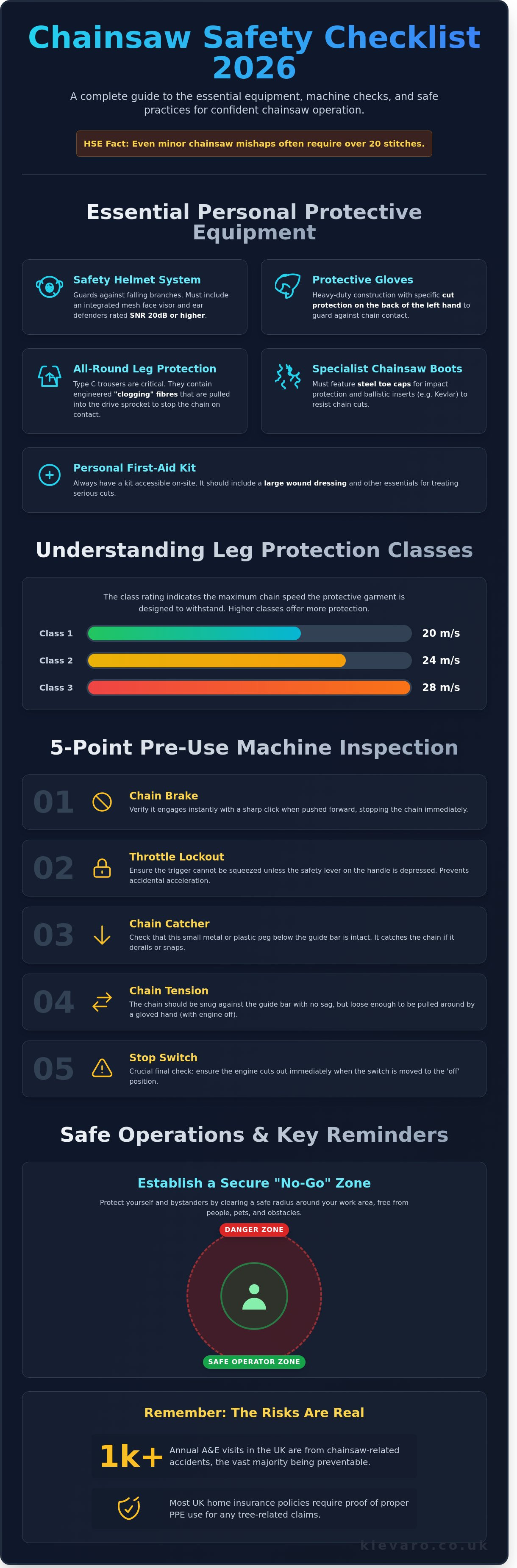
To operate a chainsaw safely in the UK, you require a safety helmet with an integrated face visor, ear defenders rated for at least 20dB, and chainsaw-specific trousers of Class 1 or higher. You also need specialist protective gloves and steel-toed boots with saw-protection inserts. This chainsaw safety equipment checklist is a mandatory starting point for any project, as most UK home insurance policies require proof of proper PPE use for tree-related claims. Safety isn't just about what you wear; it also involves a rigorous 5-point machine inspection before every use. Your primary goal is to prevent kickback, a dangerous event where the guide bar nose strikes an object and throws the saw back at you. You can source reliable gear from our tools and equipment collection to ensure your kit is up to the task.
The Essential Personal Protective Equipment (PPE) Checklist
Your head protection must include a multi-part system designed for the rigours of arboriculture. A hard-wearing safety helmet guards against falling branches, while an integrated mesh visor stops high-velocity wood chips from reaching your eyes without fogging up like plastic goggles. Hearing protection is equally vital for petrol-powered tools. You should look for ear defenders that provide a Single Number Rating (SNR) of 20dB or higher to prevent long-term damage from engine noise. Leg protection is perhaps the most critical layer for ground workers. You should wear chainsaw safety clothing like Type A or Type C trousers. These contain loose, high-strength fibres designed to pull into the saw's drive sprocket and stop the chain in milliseconds if it touches your leg. For your extremities, choose gloves with cut protection on the back of the left hand and boots that feature steel caps and ballistic Kevlar inserts.
The Critical Machine Integrity Checklist
Before starting the engine, you must verify the chain brake works perfectly. It should engage with a sharp click and stop the chain movement instantly when pushed forward, even at full throttle. The throttle lockout is your next priority; the trigger shouldn't move unless you have depressed the safety lever on top of the handle. This prevents accidental acceleration if the saw is caught on a branch or dropped. Inspect the chain catcher located at the bottom of the power head. This small metal or plastic peg is designed to catch the chain if it snaps or derails, protecting your hands and legs from a "whiplash" effect. You also need to assess the chain tension. It should be snug against the bottom of the guide bar with no visible sag, but you must be able to pull it around the bar freely by hand when the engine is switched off. Finally, check the stop switch. It's essential that the engine cuts out immediately when the switch is toggled to the 'off' position.
Following this chainsaw safety equipment checklist reduces the risk of life-changing injuries. In the UK, over 1,000 chainsaw-related accidents are reported to A&E departments annually, and the vast majority occur because of poor machine maintenance or missing PPE. By investing in high-quality gear and performing a 5-point check before every session, you can tackle your garden projects with confidence and professional-grade security.
Personal Protective Equipment (PPE): How Each Piece Protects You
Chainsaw PPE functions as a mechanical brake rather than a simple physical barrier. Modern protective clothing contains layers of long, loose synthetic fibres that pull into the saw's drive sprocket to stop the chain in under 100 milliseconds. A comprehensive chainsaw safety equipment checklist includes a helmet, mesh visor, ear defenders, and trousers rated for specific chain speeds. These ratings are divided into Class 1 (20 m/s), Class 2 (24 m/s), and Class 3 (28 m/s). While this gear provides a vital safety net, it remains the final line of defence and is never a substitute for correct cutting techniques. Proper fit is essential for these safety features to work. Gear that is too loose can easily snag on branches, while gear that is too tight restricts the blood flow and movement needed to operate the saw safely.
Think of your PPE as engineered armour. Unlike standard workwear, these garments are designed to sacrifice themselves to save your limbs. When a moving chain contacts the fabric, the outer layer tears away instantly to expose the protective core. This core consists of hundreds of individual strands that entangle the chain's teeth and wrap around the drive sprocket. This action stalls the engine almost instantly, preventing the teeth from reaching your skin. Always check the labels on your gear to ensure it matches the power of your saw. A Class 1 trouser is perfect for most domestic electric saws, but high-powered petrol models require the higher resistance of Class 2 or 3 gear.
Head, Eye, and Ear Protection Standards
A mesh visor is the standard choice for chainsaw work because it prevents the fogging issues common with plastic goggles. While goggles often steam up during physical exertion, a mesh screen allows constant airflow while still blocking large wood chips and flying debris. Petrol chainsaws frequently exceed 100 decibels. High-quality ear defenders are essential to prevent permanent hearing damage, as even short bursts of high-decibel noise can cause long-term harm. A safety helmet is mandatory even for ground-level work to protect against falling "widow-makers" or branches that become dislodged during the cutting process.
Leg Protection: How Chainsaw Trousers Stop the Blade
Chainsaw trousers work through a clever mechanical process where layers of Dyneema or Kevlar fibres are pulled into the saw mechanism. You must choose between Type A and Type C protection based on your experience level. Type A trousers only feature protective padding on the front of the legs. These are typically used by professional arborists working on the ground. For homeowners and beginners, Type C trousers are the superior choice because they provide all-round protection. This covers the back of your legs, which is a common impact site if the saw slips or if you lose your footing on uneven garden terrain. Before you start your next garden project, ensure you have the right reliable DIY tools to work with total confidence.
Specialist Gloves and Chainsaw Boots
Standard leather gardening gloves offer zero protection against a moving chain. Specialist chainsaw gloves feature multi-layered protective padding specifically on the back of the left hand. This design choice accounts for the fact that the left hand is most likely to be struck during a kickback event. Your footwear must also be purpose-built for the task. Chainsaw boots differ from standard work boots because they include steel toe caps and cut-resistant material that extends up the shin and across the tongue. This ensures there is no gap in protection between your trousers and your feet. Look for boots with deep cleats to maintain grip on wet logs or muddy ground, as a slip is often the first step toward an accident.
Pre-Operational Machine Inspection: A 5-Point Safety Check
A faulty machine is as dangerous as a careless operator. You must perform a 5-point safety check every time you refuel your saw to prevent mechanical failure. This inspection covers the chain brake, throttle lockout, chain tension, cutter sharpness, and fluid levels. By following this chainsaw safety equipment checklist consistently, you ensure the tool remains predictable and responsive. Never operate a saw that fails any part of this mechanical audit. Regular maintenance reduces the risk of accidents and extends the lifespan of your equipment.
Refuelling provides a natural break to inspect your gear. Don't just pour in the petrol and pull the cord. You should keep a small kit bag with your saw at all times. This makes it easy to handle minor adjustments without heading back to the shed. A well-stocked kit bag usually includes:
- A multi-tool or "scrench" for bar nuts and tensioning.
- A round file with a filing guide suited to your chain pitch.
- A flat file and depth gauge tool.
- A small brush to clear sawdust from the cooling fins.
Checking your oil and fuel levels is the final step of the basic check. Chain oil is vital for lubricating the bar and reducing friction. If the saw runs out of oil, the chain will overheat, expand, and eventually seize or snap. This can lead to the chain throwing itself off the bar at high speed. Always top up your chain oil every time you fill the petrol tank to ensure the system stays cool and functional.
Verifying the Chain Brake and Throttle Lockout
The chain brake is your primary defence against kickback. You can perform a manual check by pushing the front hand guard forward until it clicks firmly into place. The chain shouldn't move when you try to pull it along the bar by hand. Next, test the throttle lockout on the rear handle. This safety trigger ensures the saw only accelerates when your hand is in the correct operating position. If the engine revs without the lockout being pressed, the mechanism is faulty. If either of these fail, don't start the engine; seek professional repair from a certified technician immediately.
Assessing Chain Tension and Cutter Sharpness
Correct tension prevents the chain from jumping off the guide bar. Use the "snap test" to verify this. Pull the chain away from the bar in the centre; the drive links should stay in the bar groove, and the chain should snap back into position when released. If the chain hangs low or shows a gap, use your multi-tool to tighten the tensioner screw. A loose chain can fly off at speeds exceeding 50 mph, posing a severe risk to the operator.
Cutter sharpness dictates how much effort you need to put into a cut. You can spot a blunt chain by looking at the waste material produced. Sharp teeth produce large, curly wood chips, whereas a blunt chain creates fine, powdery dust. A dull saw requires you to apply more downward pressure. This extra force significantly increases the likelihood of a slip or a loss of balance. If you notice dust, use your round file to touch up the cutters. Maintaining your chainsaw safety equipment checklist ensures you work efficiently and safely on every DIY project. For more advice on maintaining your gear, explore our range of garden tools to find the right accessories for your kit.
Safe Operating Behaviours and Environment Setup
Safe chainsaw operation requires combining a robust chainsaw safety equipment checklist with disciplined physical habits and environment control. You must maintain a clear 45-degree escape path and keep bystanders at a distance of at least two tree-lengths, which is approximately 30 to 50 metres for mature UK hardwoods. Professional arborists attribute 23% of chainsaw accidents to poor footing or loss of control, proving that gear alone isn't enough. Always grip the tool with both hands, wrapping your left thumb firmly under the front handle. These behaviours ensure your PPE can actually do its job if a kickback occurs. Effective safety starts with the environment you create before the chain ever touches the wood.
Keeping others safe is your primary responsibility when working outdoors. Establish a "no-go" zone that extends at least two tree-lengths in every direction from the tree you're felling. If a tree is 15 metres tall, nobody should be within 30 metres of the trunk. This buffer accounts for the tree bouncing, sliding, or kicking back upon impact. It's also worth checking our home and garden collection for general safety gear to keep your workspace secure and tidy.
Never start a cut without a clear exit. You need a path at a 45-degree angle away from the line of fall to ensure you aren't in the path of a "butt kick," where the log jumps backwards off the stump. Clear this path of any debris before you even start the engine. Even small saplings can whip back with enough force to cause a concussion. Having a planned route ensures you aren't scrambling over logs when the wood begins to groan and shift.
Organising a Safe Cutting Zone
Clear the ground of trip hazards like loose branches, garden wire, or hidden stones. These items cause 15% of recorded falls during outdoor maintenance. Look up before you look down. Check for overhead power lines or "widow-makers," which are dead branches hanging loosely in the canopy. Finally, never cut anything above your shoulder height. This position makes the saw harder to control and increases the risk of the blade striking your face during a kickback.
Mastering the Two-Handed Grip and Stance
Your grip dictates your safety. Your left thumb must always be wrapped under the front handle, not just resting on top. This "locked-in" grip is the only thing stopping the saw from flying backwards if it hits a knot. Adopt a "boxer stance" with your feet shoulder-width apart and your knees slightly bent. This provides a stable centre of gravity. Never operate a chainsaw with one hand. Even small, lightweight saws can produce enough torque to twist out of your grasp in less than 0.1 seconds.
Ready to upgrade your outdoor toolkit? Explore the full Klevaro range for reliable tools and home essentials.
Maintaining Your Safety Gear for Long-Term Reliability
Your chainsaw safety equipment checklist is only effective if the gear is in peak condition. Protective equipment has a finite lifespan and requires specific maintenance to stay functional. You must replace trousers after any contact with a moving chain and swap helmets every 3 to 5 years regardless of their appearance. Storing gear in cool, dark places and washing fabrics at low temperatures without chemicals ensures the internal fibres can still stop a saw in an emergency.
Safety gear is not a "buy once" investment. Materials like the high-strength polymers in helmets and the ballistic fibres in trousers degrade over time. Exposure to sunlight, extreme heat, and common workshop chemicals can all weaken the structural integrity of your kit. Regular inspections are the only way to ensure your protective layers will actually perform when you need them most.
Proper Cleaning and Storage of Protective Fabrics
Protective fabrics like those in chainsaw trousers rely on thousands of loose, high-strength fibres. When a chain hits the fabric, these fibres pull out and jam the saw's drive sprocket to stop the engine. You must wash these garments at 30°C or 40°C to prevent shrinking the internal pads. Never use fabric softeners under any circumstances. Softeners coat the fibres and cause them to "glue" together, which prevents them from pulling out freely during an accident.
If you spill petrol or chain oil on your gear, clean it immediately. These fluids act as solvents that can slowly dissolve the synthetic protective layers over time. Once washed, always air dry your clothing. Tumble drying can cause the protective layers to shift or clump, creating dangerous gaps in your protection. Proper storage is equally vital for your head protection. UV light from the sun breaks down plastic polymers, so keep your helmet in a dark cupboard rather than on a sunny windowsill or a van dashboard.
Safety also extends to the machine itself. You will need specific hand and general tools like files and depth gauges to keep your saw in top condition. A sharp chain and a well-tensioned bar reduce the risk of kickback. This proactive maintenance ensures your chainsaw safety equipment checklist is your second line of defence, while a well-maintained tool is your first.
Recognising When Safety Equipment Must Be Replaced
You must follow the "one-hit rule" for all textile-based safety gear. If the saw chain makes contact with your trousers or jacket, the item is compromised and must be discarded. Even if the outer layer looks like it only has a small nick, the internal fibres have been pulled or cut. You cannot repair or sew chainsaw trousers because any stitching will interfere with the way the fibres deploy during a strike.
Helmets require replacement every 3 to 5 years, even if they have never been dropped. Look for signs of UV degradation such as a chalky appearance on the shell or a change in colour. If you notice any cracks, deep scratches, or if the internal harness is frayed, buy a new one immediately. Check the manufacture date stamped inside the rim to track the age of the plastic.
Investing in fresh gear is a smart move for any home or garden project. A new pair of trousers typically costs between £80 and £150, which is a small price to pay compared to an emergency room visit. Keeping your kit updated allows you to work with confidence, knowing you have the best possible protection for every job.
Master Your Next Project with Confidence and Safety
Keeping your chainsaw safety equipment checklist updated for 2026 ensures you're prepared for any task in the garden or woods. Prioritising high-quality PPE like ballistic nylon chaps and impact-resistant helmets reduces the risk of serious injury significantly during operation. Regular 5-point machine inspections and consistent gear maintenance are your best defences against equipment failure. These simple habits keep your tools running longer and your workspace much safer for everyone involved.
Klevaro is your trusted UK retailer for everything you need to fix, build, and create. We provide 100% quality-guaranteed products that help you transform your outdoor spaces safely and stylishly. You can rely on our fast UK delivery to get your essential safety gear to your door exactly when you need it. Our team is passionate about helping you achieve professional results at home with gear that won't let you down.
Don't leave your safety to chance when working on your home or garden. Explore our range of durable tools and safety equipment to find the perfect additions to your kit. Join the Klevaro community today and start your next project with total peace of mind.
Frequently Asked Questions
Do I really need chainsaw trousers for small garden jobs?
Yes, you must wear chainsaw trousers for every task, no matter how small. Chainsaw chains can move at speeds of 20 metres per second, meaning they can cause life-altering injuries in less than 0.1 seconds. Including protective trousers in your chainsaw safety equipment checklist is the only way to ensure your legs are shielded from accidental contact.
How often should I replace my chainsaw safety helmet?
You should replace your chainsaw helmet every 3 to 5 years under normal conditions. UV radiation from the sun weakens the plastic shell over time, making it brittle and less effective at absorbing impacts. Most manufacturers recommend a 3-year limit from the date of first use or 5 years from the date of manufacture stamped on the peak. If your helmet suffers a significant blow, replace it immediately.
Can I use standard steel-toed work boots for chainsaw work?
No, standard steel-toed boots don't provide the necessary protection for chainsaw use. While they protect your toes from falling logs, they lack the cut-resistant layers required to stop a moving chain. Professional chainsaw boots are tested to BS EN ISO 17249 standards and feature specialized fibres that clog the chain mechanism instantly. This protection covers the bridge of the foot and the shin area, which are high-risk zones.
What is the difference between Type A and Type C chainsaw trousers?
Type A trousers provide cut protection to the front of the legs only, whereas Type C trousers offer 360-degree protection around the entire leg. Type A is generally lighter and suitable for ground-based DIY users who are always facing their work. Type C is the standard choice for professional arborists or anyone working in awkward positions where a saw might kick back toward the rear of the leg.
How do I know if my chainsaw chain is tensioned correctly?
A correctly tensioned chain should fit snugly against the underside of the guide bar while still being easy to pull around by hand. You can test this by pulling the chain away from the bar; it should snap back into place without sagging. If the drive links clear the bar groove when you pull, the chain is too loose and risks jumping off during operation. Always check the tension after the first 10 minutes of use as the metal expands with heat.
What should I do if the chain brake fails the pre-start check?
Stop using the saw immediately and don't attempt to start your project. A faulty chain brake is a critical safety failure that prevents the saw from stopping during a kickback event, which usually happens in under 0.15 seconds. You should take the unit to a qualified technician to have the brake band and internal springs inspected. Never attempt a "quick fix" on this component as it's your primary defence against facial and neck injuries.
Does chainsaw safety gear protect against all types of saws?
No, chainsaw PPE is specifically engineered for use with petrol and electric chainsaws only. The protective fibres work by entanglement, designed to wrap around a chainsaw sprocket and stall the engine. They aren't effective against high-speed circular saws, grinders, or mitre saws, which use different cutting actions that can slice straight through the material. Always match your safety gear to the specific tool you're operating.
Can I wash my chainsaw trousers in a standard washing machine?
You can wash your trousers in a standard machine at 40°C, but you must avoid biological detergents and fabric softeners. These chemicals break down the synthetic fibres and cause them to mat together, which significantly reduces their ability to stop a chain. Always air dry your trousers instead of using a tumble dryer. Excessive heat from a dryer can shrink the internal safety layers and leave gaps in your protection.
Leave a comment