


Caterpillar Protector: The Ultimate Guide to Rugged Gear and Garden Safety
Searching for a "caterpillar protector" can lead you down two very different paths, and choosing the wrong one can cost you either a phone screen or your prize-winning cabbages.
It's completely understandable. You're either trying to shield your rugged Cat S62 Pro from a drop on the worksite or defend your vegetable patch from a hungry invasion. The solutions, from 9H tempered glass to fine-mesh garden netting, are worlds apart.
This guide clears up all the confusion. We promise to show you exactly how to choose the right shield for your phone and the perfect netting for your plants, complete with simple steps to install both for maximum durability.
Get ready to find the ideal solution for your tech and your garden, ensuring everything you value stays safe, sound, and ready for action.
Key Takeaways
- Understand the crucial difference between protectors for Cat-branded phones and protective netting for garden plants to choose the right solution.
- Learn why even rugged phones benefit from a tempered glass screen protector to guard against scratches from job-site dust and debris.
- Discover how fine mesh netting works as the most effective garden caterpillar protector, creating a physical barrier that saves your harvest from pests.
- Master the simple installation technique for screen protectors to ensure a perfect, bubble-free fit and maximum durability for your equipment.
What is a Caterpillar protector and which type do you need?
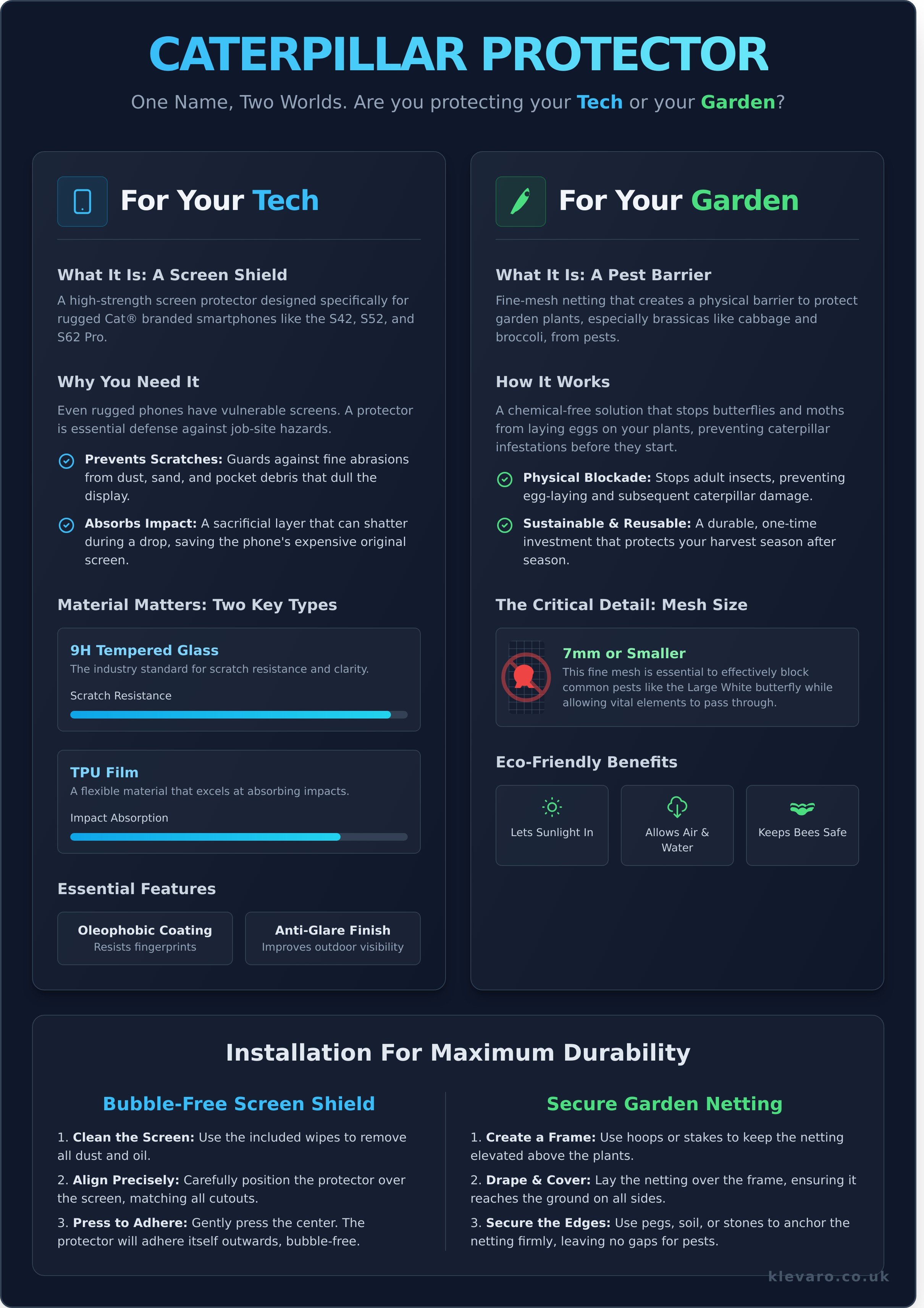
A Caterpillar protector refers to two completely different products designed for tough environments. The first is a rugged screen protector for Cat-branded smartphones, built to withstand job site conditions. The second is a protective fine-mesh netting used in gardens to shield plants from pests. Choosing the right one is simple: it depends entirely on whether you need to safeguard your digital tools or your home-grown produce.
Your goal determines your gear. If you're protecting a device from drops and scratches, you need a tech-focused screen shield. If you're defending your cabbage patch from hungry larvae, you need garden netting. Both provide essential defence, but in very different arenas.
Screen protectors for rugged Caterpillar phones
You might think a 'rugged' phone is invincible, but its screen is still the most vulnerable part. While built to resist drops and dust, the display can easily get micro-scratches from grit on a construction site or crack from a direct impact with a sharp tool. A high-quality screen protector is a small investment that preserves the longevity and visibility of your device.
When choosing a shield, you have two main options:
- Tempered Glass: With a 9H hardness rating, these protectors offer exceptional resistance to scratches from keys, sand, and tools. They provide crystal-clear visibility and a smooth feel, making them ideal for everyday defence.
- TPU Film: This flexible material excels at absorbing impact. While it may not resist deep scratches as well as glass, its self-healing properties can make minor scuffs disappear, and it's less likely to shatter from a direct hit.
Compatibility is crucial for a perfect fit. Ensure the protector you choose is specifically designed for your model, as devices from Caterpillar Inc. have unique dimensions. Popular models like the Cat S42, S52, and S62 Pro each require a precisely cut protector for full coverage.
Garden protectors for pest management
For gardeners, a caterpillar protector is a powerful, chemical-free tool for pest control. This fine-mesh netting creates a physical barrier that stops butterflies and moths from laying eggs on your prized plants, preventing an infestation before it can even begin. It’s a brilliant solution for anyone wanting a healthy, organic harvest.
The key to its effectiveness is the mesh size. To protect vulnerable brassicas like cabbage, broccoli, and kale, you need a mesh that is 7mm or smaller. This is fine enough to block the Large White butterfly, a common UK garden pest responsible for decimating crops, while still allowing vital sunlight, air, and water to reach your plants.
Using caterpillar netting is a cornerstone of a sustainable garden setup. It's a durable, reusable solution that eliminates the need for chemical sprays, which can harm beneficial insects like bees and ladybirds. By investing in quality netting, you protect your food and support a healthier local ecosystem. It’s a simple, practical step towards a more productive and eco-friendly garden.
Screen protectors are the best way to shield Caterpillar rugged phones
A quality screen protector is the most important accessory for your Caterpillar rugged phone. While these devices are built to withstand drops and harsh conditions, their screens remain the most vulnerable part. Everyday dust, sand, and pocket debris can cause micro-scratches that compromise visibility and screen integrity over time. A tempered glass protector provides a tough, sacrificial layer that absorbs impact energy during a fall, often shattering to save your phone's actual display from a costly replacement.
Think of the environment you work in. Grit from a building site or fine metal dust in a workshop can act like sandpaper against your screen. Over months, these tiny abrasions dull the display and can weaken the glass. A dedicated caterpillar protector ensures the original screen stays in pristine condition, preserving the phone's resale value and functionality.
High-quality protectors also feature an oleophobic coating. This oil-repellent surface is a game-changer on site, significantly reducing fingerprint smudges from greasy hands. The result is a clearer screen, which is crucial for visibility when you're working in the bright sunlight of a UK summer day.
For those who spend most of their time outdoors, an anti-glare (matte) finish is essential. This specialised surface diffuses harsh reflections, making it much easier to read plans, messages, or app data without squinting. It’s a small feature that makes a massive difference to daily usability for tradespeople, engineers, and agricultural workers.
Material matters: Tempered glass vs. PET film
When choosing a protector, 9H tempered glass is the undisputed industry standard for scratch resistance. The "9H" rating refers to its ability to resist scratches from the hardest graphite pencil, offering robust defence against keys, tools, and other sharp objects in your pocket or tool bag. This durable material gives you total peace of mind.
The best tempered glass protectors use a multi-layered design. This typically includes a silicone adhesive for a bubble-free installation, the 9H glass itself, and a final shatter-proof film. This film is vital because if the protector breaks from a severe impact, it holds the pieces together, preventing sharp shards from damaging your screen or your fingers.
While glass is superior for most conditions, PET film protectors have a specific advantage. This flexible plastic material offers better touch sensitivity, which can be noticeable when operating your phone with gloves on or in the extreme cold of a winter work morning.
Features to look for in a tech protector
Your Caterpillar phone has a unique, bulky housing. A protector must have a "case-friendly" design, meaning it's precisely cut to fit the screen without interfering with the rugged chassis. This prevents the edges from lifting up over time, which would allow dust and moisture to get underneath.
Look for a transparency rating of 99% or higher. Crystal-clear clarity is non-negotiable, especially for Cat phones equipped with specialised tools like thermal imaging cameras. As this detailed rugged smartphone review of the CAT S75 points out, advanced features demand a perfectly clear view, and a low-quality protector can distort the image.
Finally, the protector must be easy to clean. Working with oils, grease, or mud is part of the job for many Cat phone users. A protector with a strong oleophobic coating allows you to wipe the screen clean with a single swipe, keeping your display legible and ready for action. Finding the right fit is simple when you explore our collection of durable tech accessories designed for the toughest jobs.
Garden netting is the most effective caterpillar protector for plants
Protecting your garden from pests requires a physical barrier that stops their lifecycle before it starts. Garden netting is the most reliable solution, creating a fortress around your prized vegetables. It works by physically blocking adult butterflies and moths, such as the destructive Cabbage White, from landing on your plants and laying their eggs. This simple, preventative step eliminates the problem at its source, ensuring your brassicas, like cabbages and broccoli, remain hole-free and healthy.
Modern caterpillar netting is a fantastic piece of garden gear. It's incredibly lightweight, so it won't damage delicate seedlings. It is also UV-stabilised, meaning it won't break down or become brittle after a season in the UK sun. Most importantly, the fine mesh allows over 90% of sunlight, air, and water to reach your plants, creating a healthy growing environment while keeping pests out.
Using a physical barrier like netting drastically reduces or eliminates the need for chemical pesticides. This is a huge win for any home grower, especially in family gardens or allotments where children and pets play. You can harvest your crops with the confidence that they are free from harmful residues. It's the go-to method for organic gardening and a simple way to create a safer, more natural garden space.
When you invest in a quality caterpillar protector, you're making a smart financial choice. A properly installed and well-maintained net made from durable materials can last for multiple seasons, often between 3 to 5 years. Compared to the recurring annual cost of pesticides and sprays, netting provides an excellent return on investment and saves you time and worry year after year.
Choosing the right mesh for your garden
Not all netting is created equal. It's crucial to distinguish between bird netting, which typically has a large mesh size of 20mm or more, and fine insect mesh. The 'sweet spot' for blocking butterflies is a mesh size between 5mm and 7mm. This is small enough to stop pests but large enough to maintain great airflow and light penetration. Always look for netting made from High-density polyethylene (HDPE), a tough, rot-proof material designed for outdoor durability.
Supporting your garden protection
For your netting to be truly effective, it must be supported by a frame. Using flexible hoops or a simple wooden structure to create a tunnel or cage keeps the mesh from touching the plant leaves. This is a critical detail; if the net rests on the foliage, butterflies can still lay their eggs through the holes. You must also secure all edges firmly to the ground with pegs, soil, or weights to prevent pests from crawling underneath. Getting the right setup is simple. Explore our home and garden collection for essential supplies to build your perfect plant defence.
How to choose and install a Caterpillar protector for your equipment
Properly installing a protector for your equipment is a straightforward process that guarantees maximum defence. For digital screens, the key steps are to thoroughly clean the surface, align the protector with precision, and apply firm, even pressure to eliminate air bubbles. For garden plots, the method involves building a sturdy frame, draping the netting over it, and securing the edges firmly to the ground to create an impenetrable barrier. Following these core principles ensures your valuable assets are shielded from damage.
Whether you're safeguarding a rugged tablet on a construction site or protecting your prize-winning cabbages, the right installation technique makes all the difference. A flawless application prevents dust from getting trapped and ensures full functionality, giving you peace of mind.
Step-by-step tech protector application
Achieving a perfect, bubble-free installation on a recessed screen is easy with the 'hinge method'. Start by placing the protector on the screen and aligning it perfectly. Then, apply two pieces of tape to one edge, securing the protector to the side of the device like a hinge. This allows you to lift the protector, clean the screen, and then lay it back down in the exact same position for a flawless fit.
Even a clean room can have floating dust. Before you lower the protector, use the included adhesive 'dust absorber' sticker to dab the screen surface. This small but vital tool lifts any last-minute particles without leaving any residue. For optimal touch response after installation, check your device’s settings. Many rugged devices have a 'glove mode' or an option to increase screen sensitivity, which compensates for the extra layer and keeps your device responsive.
Setting up a garden protection system
Accurate measurement is the first step to a successful garden defence. Measure the length and width of your vegetable patch or raised bed, then add at least 30cm of extra material to each side. This overhang is crucial for securing the netting to the ground with pegs or weighing it down with bricks, preventing pests from crawling underneath.
A durable frame provides essential support and keeps the netting off your plants, allowing them to grow freely. You can build a simple and effective frame using bamboo canes, wooden stakes, or flexible PVC pipes. Assembling a sturdy structure is simple when you have the right equipment. Using a reliable set of hand and general tools ensures your connections are secure and the structure is built to last through the season.
Once your caterpillar protector netting is in place, regular maintenance will keep it effective. We recommend a quick inspection every week, especially after windy weather, to check for any new holes or tears that could let pests in. It's also important to clear away any fallen leaves or debris that can accumulate on the mesh, as the extra weight could cause it to sag or tear.
Quality DIY protection ensures your tools and garden last longer
Investing in quality protection upfront is the smartest decision any gardener or DIY enthusiast can make. A simple, durable caterpillar protector, costing as little as £15, can prevent the loss of an entire season's cabbage and broccoli harvest, which could easily cost over £100 in replacement plants and lost produce. This proactive approach isn't just about saving money; it's about safeguarding your hard work, time, and the satisfaction of a successful yield.
A thriving garden and reliable tools are two pillars of a well-maintained home. When your gear is rugged and your plants are healthy, your entire workspace functions more smoothly. Choosing trusted brands and high-quality materials is the secret to DIY success, ensuring your creations and repairs stand the test of time. Klevaro provides the essential, durable gear you need to fix, build, and protect your home and garden projects with complete confidence.
Building your protection toolkit
Every prepared DIYer needs a reliable stash of protective gear. Garden mesh, netting, and cloche covers are as essential to a gardener as a hammer is to a carpenter. Having these items on hand means you can act immediately at the first sign of cabbage white butterflies or a sudden cold snap, rather than reacting when it's too late. Your toolkit should include a variety of defences: fine mesh for pests, horticultural fleece for frost, and sturdy cloches for vulnerable seedlings.
A professional finish comes from combining robust protection with precision. Pairing your garden mesh with sturdy support canes and securing it properly with the right tools and equipment ensures your setup will withstand wind and rain. This 'protect first' mindset transforms your garden from a constant battleground into a thriving, well-managed space. The long-term benefits are clear: healthier plants, reduced need for chemical treatments, and more time spent enjoying the results of your labour.
This 'protect first' mindset applies to personal items as well. Just as you protect your tools and tech, ensuring your daily essentials are secure is equally important. For those who value durable, handcrafted quality, the Laveri Leather Store offers premium goods designed to protect your valuables in style.
Join the Klevaro community for more tips
Feeling inspired but not sure where to start? Join the Klevaro community! It's your go-to source for expert advice and practical tips from fellow UK home improvement and gardening fans. Whether you're building a raised bed or installing a new caterpillar protector, our community is here to help you get the job done right the first time. Sign up for our newsletter to get project guides and tutorials delivered straight to your inbox.
As part of our community, you'll also be the first to know about the best deals on garden accessories, DIY essentials, and new arrivals. We believe in making quality affordable, so you can get everything you need to protect your projects without stretching your budget. You'll gain exclusive access to promotions and product launches before anyone else.
Don't wait for pests to discover your prize-winning vegetables. Your next project is waiting, and the best time to protect it is now. Grab your gear, get inspired, and start building your garden's defences today. Let's create something brilliant together.
Protect Your Gear and Garden with Confidence
From the digital screen in your pocket to the fresh vegetables in your garden, effective protection is key to longevity. We've covered how a durable screen shield is the best defence for your Caterpillar rugged phone, while fine-mesh netting stands out as the most reliable garden caterpillar protector. Taking these proactive steps saves you from costly replacements and disappointing harvests down the line.
Feeling inspired to get started? Putting these plans into action is easier when you have the right equipment. You can find everything you need to fix, build, and grow with confidence in our curated collections.
Explore our complete selection and shop our full range of DIY tools and garden equipment today. As a Trusted UK Store for Home & Garden, we stand by our products with a Quality Guaranteed promise and get them to you quickly with Fast UK Delivery.
Your next successful project starts here. Go on, give your gear and garden the durable protection they deserve!
Frequently Asked Questions
Is a screen protector necessary for a Caterpillar phone if it's already rugged?
Yes, a screen protector is highly recommended for a Caterpillar phone even though the device is rugged. The phone's chassis is built to withstand drops and impact, but the screen is still vulnerable to scratches from abrasive materials like sand, dust, or tools found on a work site. A quality protector acts as a sacrificial layer, absorbing scratches that would otherwise permanently damage the original screen.
What is the best mesh size for a garden caterpillar protector?
The best mesh size for a garden caterpillar protector is between 0.8mm and 1.35mm. This fine weave is small enough to physically prevent cabbage white butterflies and other moths from laying eggs on your plants, especially brassicas. This size still allows over 90% of vital sunlight, air, and rainwater to pass through, ensuring your plants grow healthy and strong without being hindered.
Can I use a tempered glass protector with a rugged phone case?
Yes, you can and should use a tempered glass screen protector with a rugged phone case for complete protection. Most screen protectors are designed to be "case-friendly," leaving a tiny gap around the edges so the phone case doesn't lift the glass. This combination ensures the phone's body is safe from drops while the screen is shielded from direct impacts and scratches, giving you total peace of mind.
How do I remove air bubbles from a rugged screen protector?
To remove most air bubbles, use a credit card or the included squeegee wrapped in a microfibre cloth to gently push the bubbles towards the nearest edge. If a bubble persists, carefully lift the corner of the protector closest to it to release the trapped air, then slowly re-apply it. For bubbles caused by a speck of dust, use a sticky tab to lift the protector and dab the dust off the adhesive side.
Does caterpillar netting block sunlight or rain from my plants?
No, properly designed caterpillar netting allows plenty of sunlight and rain to reach your plants. High-quality netting is engineered with a fine mesh that lets essential elements like light, water, and air circulate freely while forming a physical barrier against pests. Most garden netting allows for more than 90% light transmission, so it won't negatively impact your plants' growth or health.
How long does a typical Caterpillar screen protector last on a construction site?
A quality tempered glass screen protector on a Caterpillar phone typically lasts between 6 and 12 months on an active UK construction site. The exact lifespan depends on daily use and exposure to abrasive materials. It will likely accumulate scratches and small chips before then, which shows it's doing its job. We advise replacing it as soon as any significant cracks appear to maintain screen integrity.
Are there different types of Caterpillar protectors for machinery and electronics?
Yes, there are many specialised protectors for both Caterpillar electronics and heavy machinery. For electronic devices like phones, you'll find tempered glass screen protectors and heavy-duty cases. For machinery, protectors include robust polycarbonate cab guards, screen shields for digital displays, and durable covers for hydraulic components. Each type of caterpillar protector is built to handle the specific risks of its environment.
Leave a comment